Mental status exam template 2026

Get Form
mental status examination example pdf Preview on Page 1

Here's how it works

01. Edit your mental status examination example pdf online
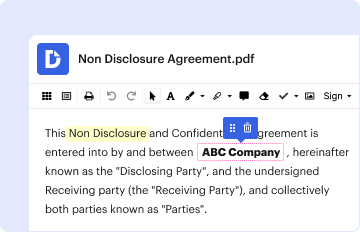
Type text, add images, blackout confidential details, add comments, highlights and more.

02. Sign it in a few clicks
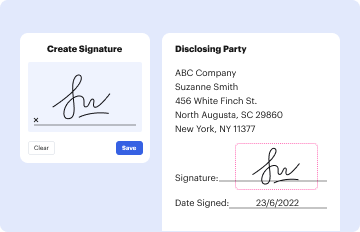
Draw your signature, type it, upload its image, or use your mobile device as a signature pad.
03. Share your form with others
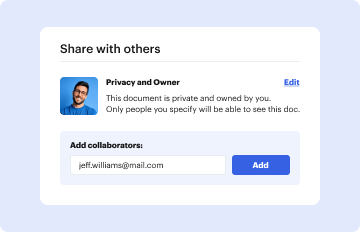
Send mental status exam template word doc via email, link, or fax. You can also download it, export it or print it out.

How to use or fill out mental status exam template with DocHub

Form edit decoration
9.5
Ease of Setup
DocHub User Ratings on G2
9.0
Ease of Use
DocHub User Ratings on G2
  1. Click ‘Get Form’ to open the mental status exam template in our editor.
  2. Begin by entering the patient's name and date of birth at the top of the form. This personal information is crucial for accurate record-keeping.
  3. Proceed to the 'Appearance' section. Select from options like 'Casual Dress' or describe any other notable features.
  4. In the 'Attitude' field, choose between options such as 'Calm and cooperative' or provide a description if different behaviors are observed.
  5. For 'Behavior', indicate any unusual movements or note self-stimulatory behavior as necessary.
  6. Fill out the 'Speech' section by selecting appropriate descriptors regarding rate, tone, and volume, or note if assessment was not possible.
  7. Continue through each section including 'Affect', 'Mood', and 'Thought Process', ensuring to document observations accurately.
  8. Complete the final sections on orientation, memory/concentration, and insight/judgment before signing off with your name and date.

Start using our platform today to easily fill out your mental status exam template for free!

See more mental status exam template versions

We've got more versions of the mental status exam template form. Select the right mental status exam template version from the list and start editing it straight away!
Versions Form popularity Fillable & printable
2004 4.8 Satisfied (121 Votes)
be ready to get more

Complete this form in 5 minutes or less

Get form

Got questions?

We have answers to the most popular questions from our customers. If you can't find an answer to your question, please contact us.
Contact us
The Mental Status Examination. Level of Consciousness. Appearance and General Behavior. Speech and Motor Activity. Affect and Mood. Thought and Perception. Attitude and Insight. Examiners Reaction to the Patient. Structured Examination of Cognitive Abilities.
The MSE can be divided into the following major categories: (1) General Appearance, (2) Emotions, (3) Thoughts, (4) Cognition, (5) Judgment and Insight.
The Mental Status Exam (MSE) Appearance: How does the patient look? Level of alertness: Is the patient conscious? Speech: Is it normal in tone, volume and quantity? Behavior: Pleasant? Awareness of environment, also referred to as orientation: Do they know where they are and what they are doing here?
The mental status examination should include the patients general awareness and responsiveness. Patient orientation, memory, judgment, and thought process could be noted. At the same time, the patients behavior and mood should undergo assessment.
The exam involves observations and questions to check your: General appearance. Behavior and movements. Perceptions. Mood and affect. Cognition, including attention, orientation, memory, reasoning and judgment.

Security and compliance

At DocHub, your data security is our priority. We follow HIPAA, SOC2, GDPR, and other standards, so you can work on your documents with confidence.

Learn more
ccpa2
pci-dss
gdpr-compliance
hipaa
soc-compliance
be ready to get more

Complete this form in 5 minutes or less

Get form

People also ask

The MSE includes ten key aspects that should be evaluated: appearance, behavior, speech, mood, affect, thoughts, perception, cognition, insight, and judgment. These domains provide a comprehensive understanding of an individuals mental state and contribute to the formulation of a working diagnosis.
The purpose of the MSE is to obtain a comprehensive cross-sectional description of the patients mental state, which, when combined with the biographical and historical information of the psychiatric history, allows the clinician to make an accurate diagnosis and formulation, which are required for coherent treatment

mse template word