




01. Edit your air pollution control bureau online
Type text, add images, blackout confidential details, add comments, highlights and more.

Type text, add images, blackout confidential details, add comments, highlights and more.

Draw your signature, type it, upload its image, or use your mobile device as a signature pad.

Send air pollution control bureau via email, link, or fax. You can also download it, export it or print it out.
The Air Pollution Control Bureau (APCB) plays a critical role in monitoring and regulating air quality standards to protect public health and the environment. It is a government entity focused on reducing and controlling air pollution through various measures and regulations. The bureau typically establishes permissible levels for pollutants, enforces compliance with air quality standards, and implements strategies for pollution reduction. It is instrumental in issuing permits and certificates for activities that could impact air quality, such as the operation of gasoline dispensing facilities with vapor recovery systems.
Engaging with the Air Pollution Control Bureau involves understanding the services and regulations they provide. Businesses and individuals can use the APCB to obtain necessary permits and certifications for activities that could potentially affect air quality. The bureau also serves as a resource for information on best practices for reducing emissions and complying with environmental regulations. It's essential to connect with the APCB to ensure all environmental practices meet local standards and contribute to a cleaner atmosphere.
Certification through the Air Pollution Control Bureau ensures compliance with local and federal environmental standards. It is a mandatory requirement for businesses engaged in operations that have potential environmental impacts. The certification process helps:
Having this certification demonstrates a commitment to environmental responsibility and community well-being.
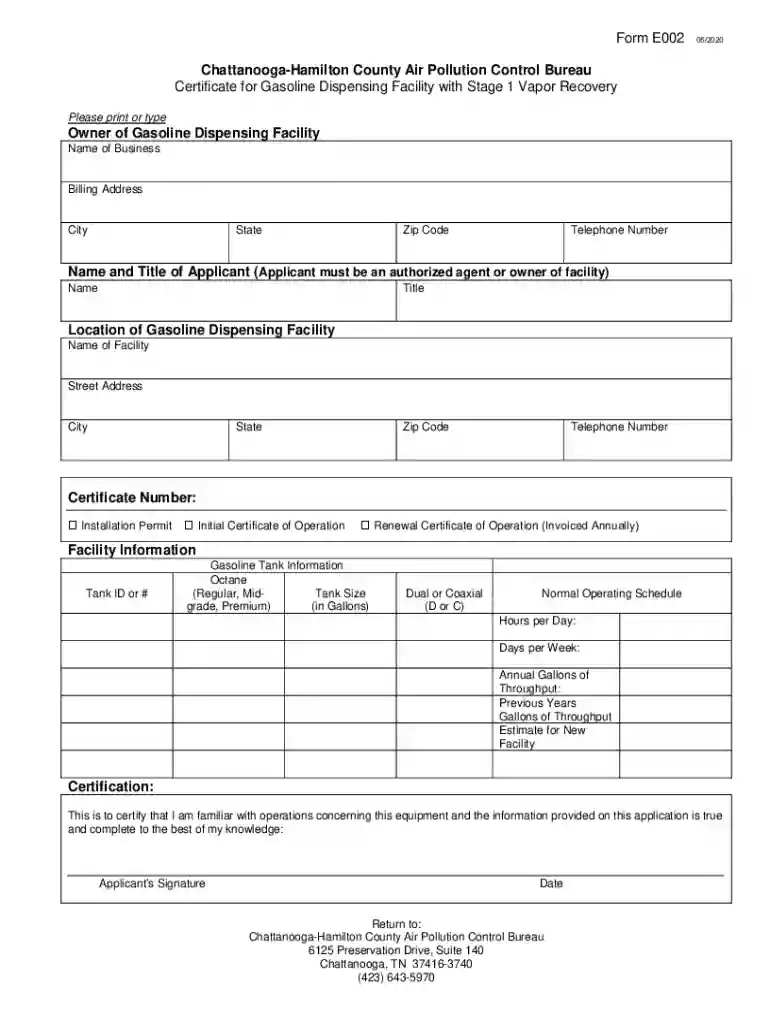
The Air Pollution Control Bureau form (E002) for gasoline dispensing facilities with Stage 1 vapor recovery includes specific sections requiring detailed information:
This structure ensures that all critical details necessary for regulatory compliance are accounted for.
The Air Pollution Control Bureau's services are critical for legally operating businesses that may impact air quality. Compliance with the bureau's regulations helps ensure that all business activities meet environmental standards, ultimately protecting both the public and the business from legal implications:
Adhering to these regulations is mandatory for all businesses to avoid penalties.
Each state may have specific rules and regulations governing air quality and pollution control. These rules can significantly influence how businesses comply with emission standards and obtain necessary permits:
Businesses operating across multiple states should be particularly attentive to variations in state-specific regulations.
The APCB form (E002) may be available in both digital and paper versions, each offering distinct advantages:
Businesses should select the format that best suits their workflow while ensuring compliance with submission guidelines prescribed by the bureau.
We've got more versions of the air pollution control bureau form. Select the right air pollution control bureau version from the list and start editing it straight away!
At DocHub, your data security is our priority. We follow HIPAA, SOC2, GDPR, and other standards, so you can work on your documents with confidence.


