
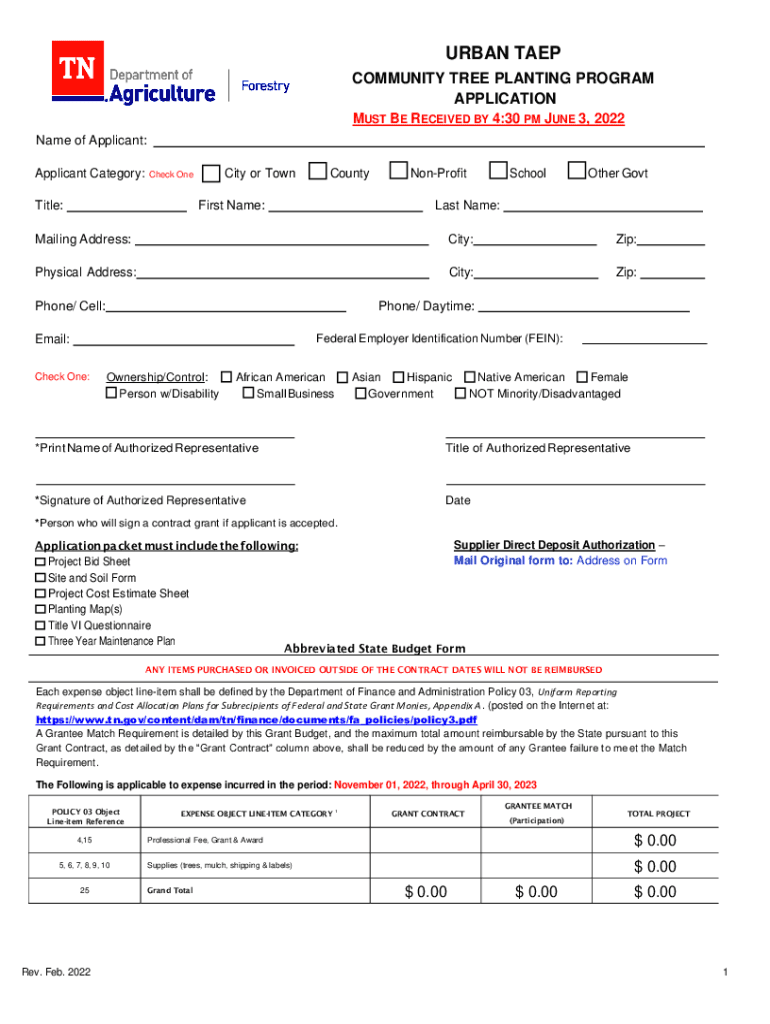







Definition and Meaning of the Program
The 2022 Tennessee Agricultural Enhancement Program (TAEP) Planting refers to a state-sponsored initiative aimed at improving agricultural productivity. This program provides financial incentives to Tennessee farmers for adopting best practices in planting, which include using high-quality seeds, implementing soil conservation practices, and enhancing crop management. The initiative supports the agricultural community by increasing yields, promoting sustainable farming practices, and ensuring food security within the state.
How to Use the TAEP Planting Program
To make the most out of the 2022 TAEP Planting Program, participants should begin by understanding the specific requirements and benefits of the program. Farmers need to identify the eligible activities under this program, such as planting cover crops, installing erosion control structures, or using organic amendments. Once the eligible activities are identified, participants should apply the recommended practices to their operations to benefit from enhanced productivity and potentially increase their financial return.
Common Strategies
- Planting cover crops to improve soil health.
- Implementing advanced irrigation techniques.
- Utilizing approved seeds and fertilizers for maximum yield.
Obtaining the TAEP Planting Program Details
Interested farmers can obtain detailed information about the 2022 TAEP Planting Program through various sources. The Tennessee Department of Agriculture's website offers comprehensive guidance, including eligibility criteria, required documentation, and application forms. Additionally, local agricultural extension offices across Tennessee provide in-person assistance and can help farmers understand the nuances of the program's requirements.
Steps to Complete the Application Process
Farmers interested in applying should follow these essential steps to ensure a smooth application process for the 2022 TAEP Planting Program.
- Review the Program Guidelines: It is essential to understand the full scope of the requirements and benefits.
- Prepare Required Documentation: Gather all necessary documents such as proof of land ownership, previous crop production records, and a detailed plan of proposed planting activities.
- Submit the Application: Forms can typically be submitted online via the TAEP portal, or via mail to the designated address.
- Await Program Approval: Once submitted, applications are reviewed, and notifications regarding approval or additional requirements are sent out.
- Implement the Program Requirements: Begin the planting activities as outlined in your application once approval is received.
Why Participate in the TAEP Planting Program
Participation in the 2022 TAEP Planting Program provides significant advantages to farmers. These include financial support for improved agricultural practices, which can lead to enhanced crop yields and more sustainable farming methods. The program also helps farmers meet environmental regulations by promoting practices that conserve water, reduce erosion, and improve soil fertility.
Target Users of the TAEP Planting Program
The primary participants of the TAEP Planting Program are small to medium-sized farm operators based in Tennessee who wish to enhance their agricultural practices. These farmers typically engage in growing crops such as corn, soybeans, and other staple crops. The program is also designed to support those committed to sustainable agricultural practices and innovations in farming technology.
Important Terms Related to the Program
Understanding critical terminology is crucial for effective participation in the TAEP Planting Program.
- Cover Crops: Plants used in rotation with cash crops to improve soil health and reduce erosion.
- Soil Conservation: Practices aimed at preserving soil integrity and fertility.
- Eligible Activities: Specific actions defined by the program that qualify for financial assistance.
State-Specific Rules and Considerations
Tennessee-specific regulations affect how the 2022 TAEP Planting Program is implemented. Participants must adhere to local environmental guidelines, zoning laws, and agricultural practices to ensure compliance. It is crucial for applicants to stay updated on any changes in policy or regional requirements that may impact their eligibility or the benefits received.
Examples of Successful Program Implementation
Many case studies illustrate the success of the TAEP Planting Program. For example, a Tennessee farmer integrated cover cropping into their rotation and experienced improved soil fertility and increased water retention, resulting in a 15% yield increase. Another farmer implemented drip irrigation and reduced water usage by 30%, leading to cost savings and more consistent crop health. These examples demonstrate the tangible benefits of participating in the program.
Key Dates and Deadlines
Understanding timelines is critical for participation.
- Application Period Open Date: Early spring 2022.
- Submission Deadline: June 3, 2022.
- Notification of Approval: Generally within eight weeks of submission.
- Implementation Deadline: Before the end of the planting season, typically by late fall.
Farmers should mark these dates on their calendar to ensure timely submission and participation in the program.




