




01. Edit your form online
Type text, add images, blackout confidential details, add comments, highlights and more.

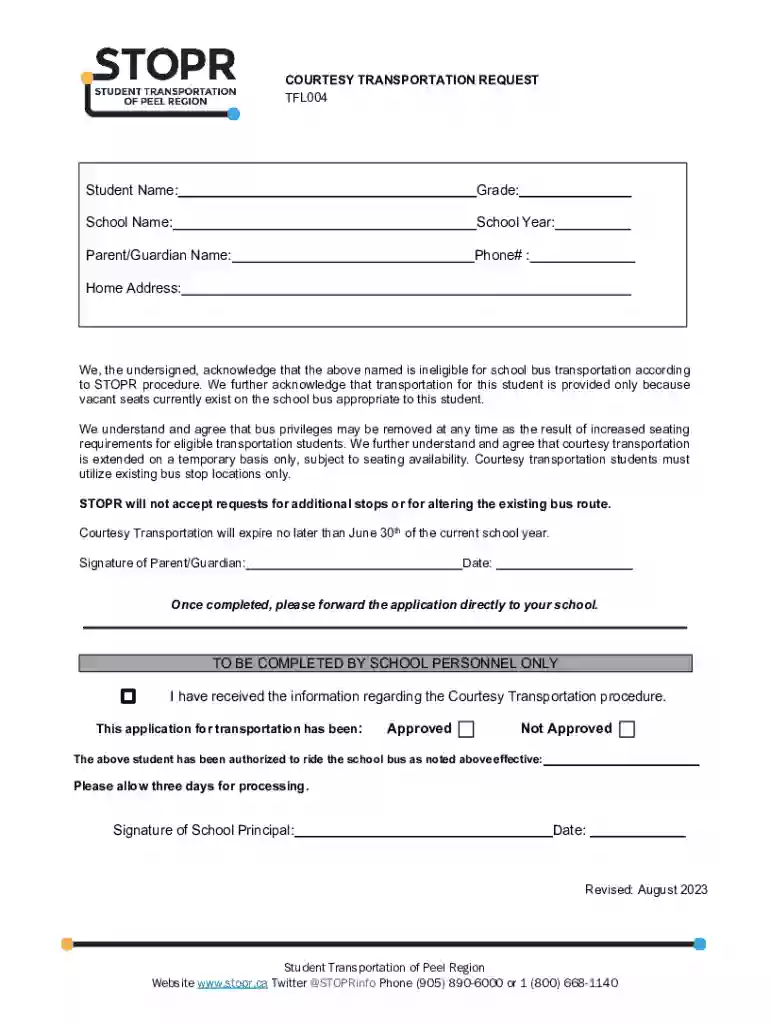
Type text, add images, blackout confidential details, add comments, highlights and more.

Draw your signature, type it, upload its image, or use your mobile device as a signature pad.

Send it via email, link, or fax. You can also download it, export it or print it out.
The "Courtesy Transportation Statement Procedures" refers to a formal process encompassing guidelines for managing transportation services for students not eligible for regular school bus transportation. It specifies the conditions for availing temporary transportation based on available seating. A primary purpose of the procedures is to delineate the responsibilities of both parents and the educational institution involved, ensuring clarity around transportation eligibility and service provisions.
Understanding this procedure is crucial for schools and parents to navigate the logistics of temporary student transportation effectively.
Utilizing the Courtesy Transportation Statement Procedures involves understanding and following a clear set of instructions designed to facilitate temporary student transportation efficiently. Here is a breakdown:
Review the Process: Start by familiarizing yourself with the conditions under which transportation can be requested.
Form Completion: Accurately complete the provided request form, ensuring all necessary details are captured.
Signatures Required: Obtain signatures from both the parent/guardian and an authorized school representative.
Submission and Tracking: Submit the completed form through designated channels – online or manually.
These steps ensure a structured approach to accessing courtesy transportation services effectively.
Completing the procedure involves several streamlined steps to ensure that the process is thorough and efficient. Here's how you can achieve this:
Information Gathering: Compile all relevant student details such as name, grade, and current transportation status.
Eligibility Check: Confirm the student's status for temporary transport eligibility.
Form Completion: Fill out the necessary fields on the request form with accurate and comprehensible data.
Authorization: Secure required signatures from parents/guardians and school officials.
Submission: Deliver the form to the appointed individual or department responsible for processing.
Pay close attention to detail throughout this process to ensure a smooth execution of the procedures.
Having a thorough understanding of the Courtesy Transportation Statement Procedures is essential for several reasons:
A complete knowledge of these procedures benefits both the families and the administrative side of educational institutions.
Several pivotal components make up the Courtesy Transportation Statement Procedures:
Each element plays a critical role in outlining the rules and accommodating successful transportation service delivery.
Understanding specific terminology within these procedures is crucial:
Familiarity with these terms enhances comprehension and correct application of the procedures.
These procedures are grounded in legal guidelines to ensure regulatory compliance within education and transportation frameworks:
Strict adherence to these legal aspects is crucial, protecting all parties involved and minimizing potential liabilities.
Real-world application scenarios are extensive:
These examples illustrate practical use cases where these procedures offer a viable solution for temporary student transport needs.
Submission of the Courtesy Transportation Statement form is flexible, offering various methods:
Selecting the best submission method depends on ease, preference, and urgency of the request. Each approach ensures comprehensive receipt and review by the relevant authorities.
We've got more versions of the Courtesy Transportation Statement Procedures form. Select the right Courtesy Transportation Statement Procedures version from the list and start editing it straight away!
At DocHub, your data security is our priority. We follow HIPAA, SOC2, GDPR, and other standards, so you can work on your documents with confidence.
Mar 4, 2025 Courtesy Transportation can only be provided to a customer during a Field Action repair when: The customer is eligible for GM Courtesy
This PSC Procedural Statement (PPS) sets forth requirements for authorizing university travel, determining travel expenses that can be covered by the universityRead more


