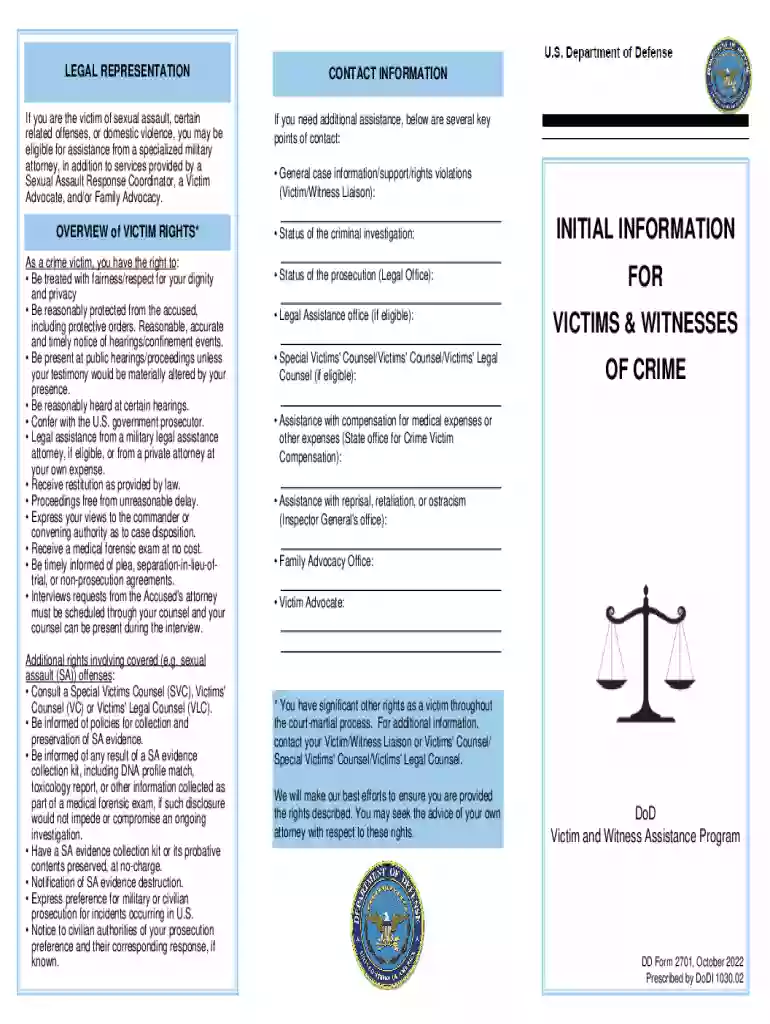
Definition and Purpose of DD Form 2701
DD Form 2701, titled "Initial Information for Victims and Witnesses of Crime, March 2016," serves as a critical document intended to provide essential information to victims and witnesses within a military context. This form is a vital component in ensuring that affected individuals understand their rights, the resources available to them, and the legal processes that may follow the onset of criminal proceedings. Notably, the form covers various aspects, including victims' rights, the protection from the accused, and access to both legal assistance and support services. Its primary function is to facilitate informed collaboration with legal representatives and victim advocates.
Importance of the Document
- Victim Rights: The form comprehensively explains the rights of victims, ensuring that they are aware of their entitlements and protections under military law.
- Resource Accessibility: It highlights available support services, aiding victims and witnesses in accessing necessary psychological and legal help.
- Communication Guidance: Emphasis is placed on maintaining communication with legal representatives throughout the process, ensuring that victims can make informed decisions.
How to Use DD Form 2701
Proper utilization of the DD Form 2701 involves understanding its structure and the steps required to ensure thorough comprehension of one's rights and resources. Users should pay particular attention to sections detailing the legal and emotional impacts of crime, as well as sections offering specific contacts for support services.
-
Read Thoroughly: Begin by reading the form's instructions and descriptions meticulously to understand the full scope of information provided.
-
Identify Relevant Sections: Highlight or make notes on sections that directly pertain to your situation, such as contact information for victim support and avenues for legal assistance.
-
Seek Clarification: If any part of the form is unclear, victims and witnesses are encouraged to reach out to a victim advocate or legal representative for further explanation.
Practical Applications
- Legal Proceedings: The form can be referred to in the context of ongoing legal actions, serving as a guide to navigating military judicial processes.
- Support Services: Utilize the contact information provided for accessing victim support services tailored to individual needs.
Who Typically Uses the Form
Primarily, DD Form 2701 is used by both victims and witnesses of crime within the U.S. military framework. However, its utility extends to several other stakeholders:

- Legal Representatives: To guide their clients through the judicial process while ensuring clarity about their rights and support options.
- Military Personnel: Both active service members and their families who may be involved in or affected by military judicial proceedings.
- Victim Advocates: Professionals who provide assistance and support to victims, leveraging the form to introduce resources and legal rights.
Key Elements of DD Form 2701
Understanding the key elements of the form helps in the effective dissemination of information and supports individuals in critical situations. Essential components of the form include:
- Victim and Witness Rights: Detailed explanations of what victims and witnesses can expect in terms of legal protection and procedural conduct.
- Support Services: Lists of available support systems, including psychological support, legal aid, and advocacy.
- Legal Proceedings Overview: Information on how criminal cases proceed under military jurisdiction, including potential impacts and outcomes.
Detailed Sections
- Explanation of Rights: Ensures that victims and witnesses are aware of their entitlements throughout the judicial process.
- Access to Support: Provides actionable steps to contact and engage with military and civilian support services.
Legal Use of DD Form 2701
The legal use of this form involves its application as an informational guide within military legal proceedings. It serves as an educational tool for:
- Informing: Ensuring victims and witnesses are knowledgeable about their legal standing and the protections afforded to them.
- Guiding: Facilitating informed discussions between legal representatives and their clients.
- Protecting: Offering instructions on obtaining protections from the accused, thereby safeguarding the emotional and physical well-being of victims.
Steps to Complete DD Form 2701
The completion of DD Form 2701 should be approached systematically:
- Initial Review: Thoroughly review all components of the form to understand the broad framework of information provided.
- Detail Verification: Verify all personal details and information related to the situation for accuracy.
- Consultation: Seek assistance from victim advocates or legal counsel for guidance on specific sections, ensuring complete comprehension.
- Submission: Ensure the form is accurately filled before submission to the appropriate military judicial authority, if required.
Special Considerations
- Incomplete Information: If any required information is missing, consult with a legal advisor to determine the best course of action.
- Supplementary Documentation: Attach additional documentation or notes if necessary to clarify specific points or questions raised within the form.
State-Specific Rules and Variations
While DD Form 2701 is standardized for military contexts, there may be state-specific adaptations or variations in its application:
- State Regulations: Certain states may have additional regulations or laws that augment or alter the form's use in civilian-military interactions.
- Supplementary Resources: Some states offer additional resources or contacts that could complement the form's information.
Key Variations
- Military vs. Civilian Jurisdiction: Distinctions between procedures and rights under different jurisdictions.
- State-Supported Services: Identification of state-specific victim support agencies beyond what is provided in the form.
Examples and Case Studies
Exploring practical examples and case studies enhances understanding and application of DD Form 2701:
- Example Scenarios: Review instances where the form has assisted individuals in navigating military criminal proceedings, especially in cases involving complex emotional or legal challenges.
- Case Studies: Analyze real-world cases where the form played a pivotal role in the victim's journey through the military justice system, highlighting successes and learning points.
Practical Outcomes
- Success Stories: How effective use of the form led to favorable outcomes and provided comprehensive support to victims and witnesses.
- Learning Points: Insights into potential improvements or challenges faced when relying on the form in different contexts.
By understanding the comprehensive nature and practical application of DD Form 2701, individuals involved in military justice proceedings can effectively utilize the form to safeguard their rights and access necessary support.