







Definition & Meaning
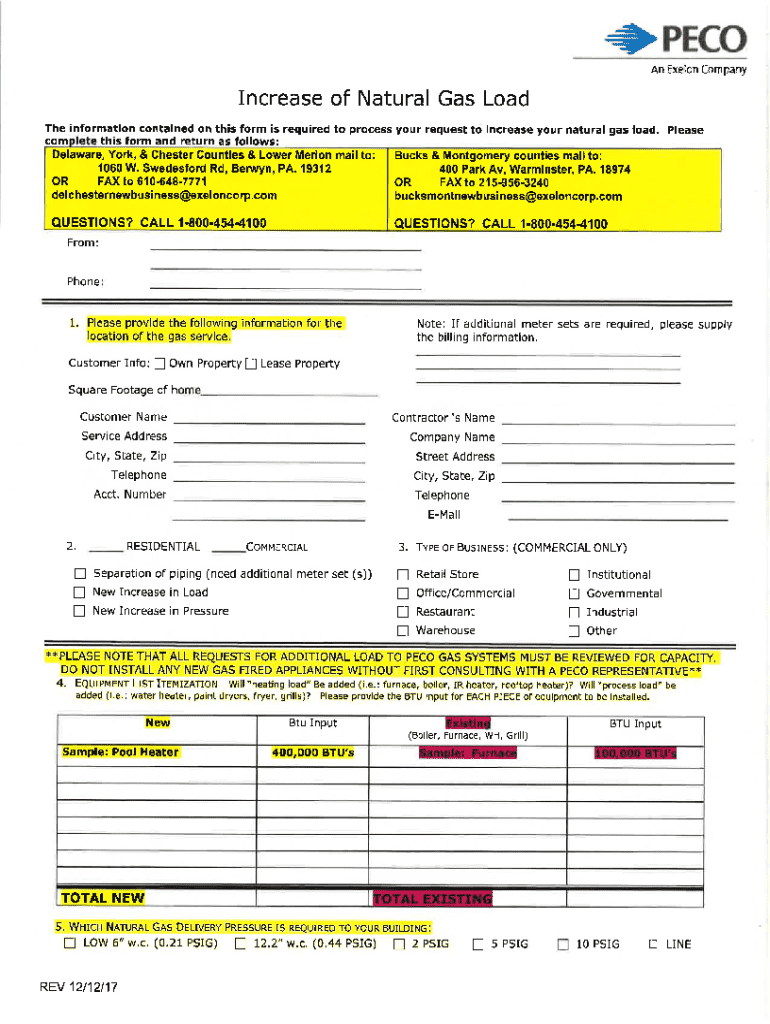
The "PECO Increase Of Natural Gas Load Form" serves as a formal request to increase a customer's natural gas capacity with PECO, a major utility provider. Typically intended for residential or commercial users requiring additional gas for new equipment or expanded facilities, the form streamlines the process of requesting a higher gas load capacity. It ensures that PECO understands the customer's specific needs, specifications, and reasons for the increase, enabling an efficient and safe modification to the existing service.
How to Obtain the PECO Increase Of Natural Gas Load Form
To acquire the PECO Increase Of Natural Gas Load Form, customers can visit the official PECO website where the form is usually accessible in the customer service or resource sections. Alternatively, contacting PECO's customer service directly can provide guidance for obtaining the form via email or mail. For those with an existing PECO account, logging into the customer portal might offer direct access to request or download the form from their dashboard.
Steps to Complete the PECO Increase Of Natural Gas Load Form
- Personal Information: Begin by entering your contact details, including name, address, and PECO account number to ensure accurate identification of your account.
- Current Load Details: Specify your existing natural gas load, detailing current appliances or equipment that utilize gas.
- Load Increase Request: Clearly articulate the desired increase in load capacity. Include detailed reasons for the increase, such as additional appliances, renovation, or new construction.
- Technical Specifications: Note any technical specifications or requirements associated with the increased load, like necessary pressure or specific equipment models.
- Contractor Information: If applicable, provide details of any contractors or third parties involved in the installation or upgrading process.
- Signatures: Conclude by signing the form, confirming that all information is accurate and complete. Additional signatures from contractors might be required if involved.
Who Typically Uses the PECO Increase Of Natural Gas Load Form
The form is generally used by residential and commercial clients who need to enhance their natural gas capacity. This might include homeowners installing additional appliances, commercial entities expanding operations, or developers working on new construction projects. Building managers overseeing renovations or landlords updating property features are also potential users, facilitating changes that align with new tenant requirements or upgrading facilities.


Key Elements of the PECO Increase Of Natural Gas Load Form
- Customer Information: Includes personal or company details to align the request with the correct account.
- Existing Gas Load: A snapshot of current usage levels, serving as a baseline for the requested increase.
- Requested Load Increase: Details on the desired additional capacity, including purpose and justification.
- Technical and Contractor Details: Pertinent specifications and third-party involvement, ensuring a clear understanding of the technical aspects and required expertise.
Important Terms Related to PECO Increase Of Natural Gas Load Form
- Natural Gas Load: Refers to the maximum capacity of gas that the existing system supports.
- Load Increase: An augmentation to the current gas capacity to accommodate higher usage needs.
- Capacity Requirements: The physical and technical specifications necessary to support the new load.
Legal Use of the PECO Increase Of Natural Gas Load Form
The PECO Increase Of Natural Gas Load Form must be filled out accurately and in compliance with state regulations. This includes disclosing any modifications or new equipment that contribute to increased gas use, ensuring both safety and legal alignment. Misrepresentation or omission of facts can lead to service issues or delayed processing, so it's important to provide thorough and honest entries.
Application Process & Approval Time
Submission of the form does not immediately result in approval. Once PECO receives the form, it undergoes a review process to assess feasibility, safety, and alignment with current infrastructure capacities. The timeline for approval can vary, but typically clients receive feedback or an acknowledgement within one to two weeks. During this period, additional documents or clarifications might be requested by PECO to facilitate a comprehensive review.




