




01. Edit your wv expungement forms online
Type text, add images, blackout confidential details, add comments, highlights and more.

Type text, add images, blackout confidential details, add comments, highlights and more.

Draw your signature, type it, upload its image, or use your mobile device as a signature pad.

Send west virginia expungement records via email, link, or fax. You can also download it, export it or print it out.
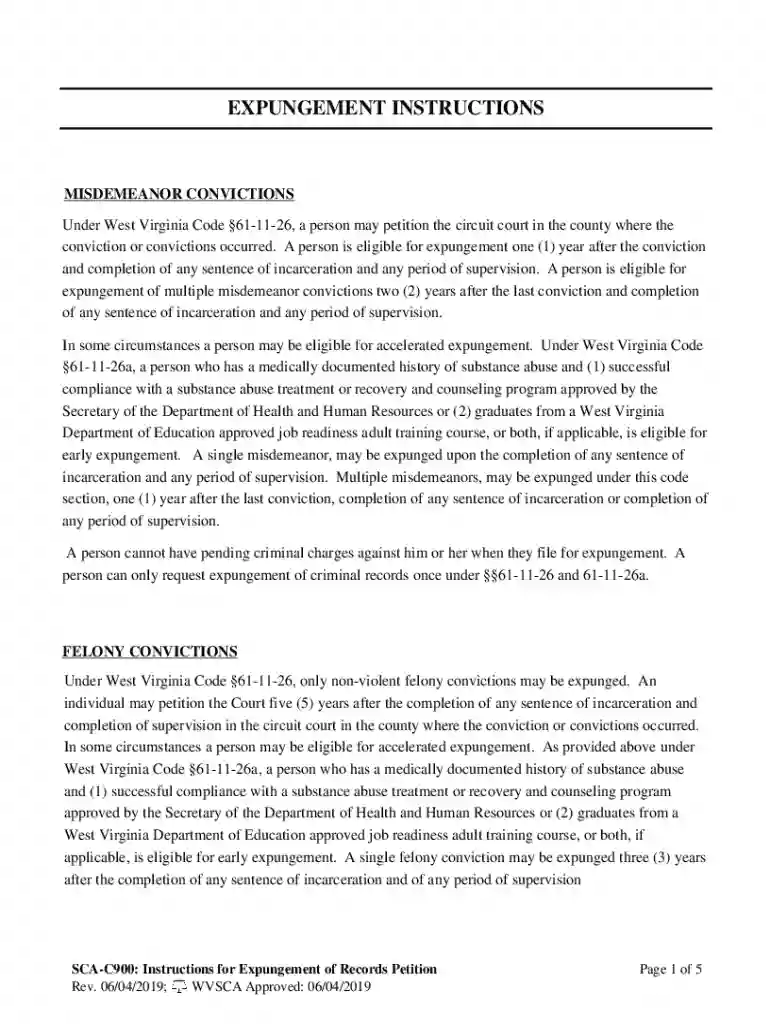
The SCA-C900 form provides essential guidelines for petitioning the expungement of criminal records, specifically focusing on misdemeanor and felony convictions in West Virginia. Expungement refers to the legal process of sealing or erasing a conviction from a person's record, thereby restoring their rights and opportunities for employment, housing, and education that might otherwise be limited by a criminal history. This document outlines the specific conditions under which a conviction can be expunged and the procedural steps necessary to file a petition effectively.
Eligibility for filing the SCA-C900 is strictly defined and includes several prerequisites that need to be met before a petition can be initiated. Not all convictions are eligible for expungement. Some criminal offenses, particularly those considered more severe, might be expressly excluded. Common criteria include:
These conditions ensure that only individuals who have demonstrated rehabilitation and compliance with their sentence conditions can apply for expungement.


Accurate completion of the SCA-C900 form is essential for its acceptance and subsequent processing. Here’s a step-by-step guide:
Several documents are typically required to accompany your SCA-C900 form, ensuring that your petition is comprehensive:
Submitting a complete document packet minimizes processing delays and increases the likelihood of a favorable outcome.
The legal implications of filing an SCA-C900 form involve the potential for significant personal and civil opportunities. When a record is expunged:
Navigating these legal components requires careful consideration and adherence to the specific instructions outlined in the form.
The expungement process is procedurally rigorous, with specific timelines governing each stage. After filing your SCA-C900:
Understanding these steps aids in preparing adequately and managing expectations regarding timeline and outcome.
Applicants can submit the SCA-C900 form via multiple channels, each with specific considerations:
Selecting the appropriate method depends on personal preference, urgency, and court capabilities.
Key elements within the SCA-C900 form provide the foundational structure for the expungement request. They include:
Each element contributes to a holistic view of the case as presented to the reviewing authorities and should be completed with precision and diligence.
Expunged records typically grant an individual the right to not disclose their past conviction in most situations. However, there are exceptions:
Understanding these exceptions ensures that the petitioner is prepared for any scenarios where disclosure might still be legally required.
We've got more versions of the wv expungement forms form. Select the right wv expungement forms version from the list and start editing it straight away!
At DocHub, your data security is our priority. We follow HIPAA, SOC2, GDPR, and other standards, so you can work on your documents with confidence.


