
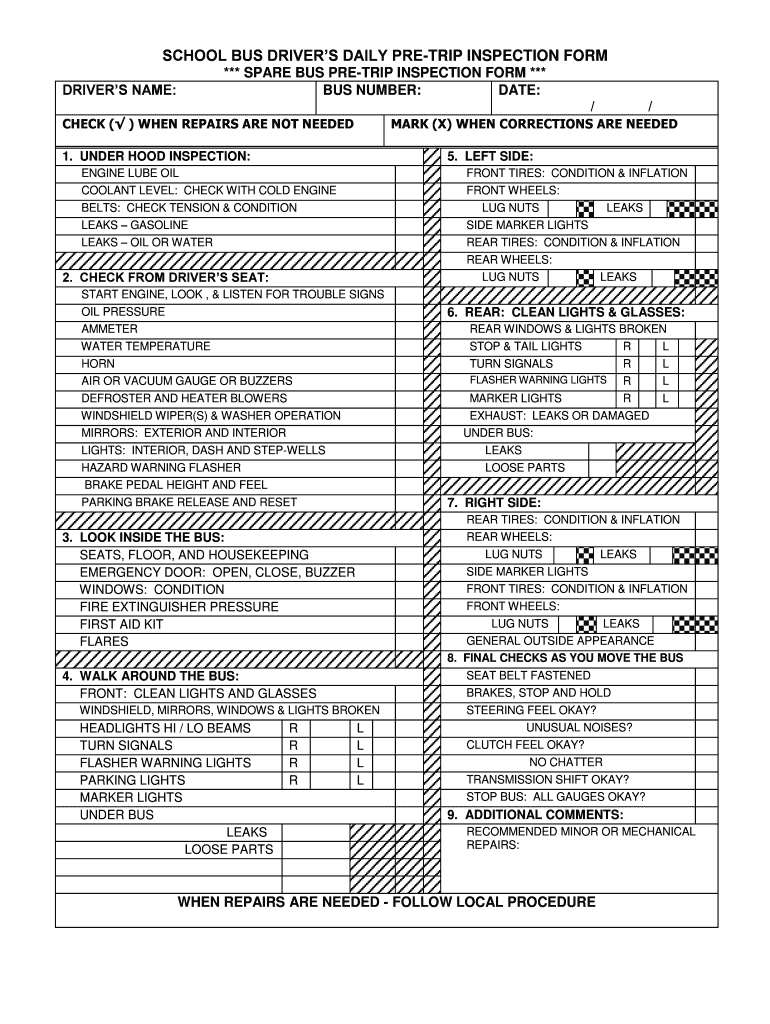







Definition and Purpose of the School Bus Drivers Daily Pre-Trip Inspection Form
The School Bus Drivers Daily Pre-Trip Inspection Form is an essential document used by school bus drivers to ensure that their vehicles are in safe, operational condition before commencing their daily routes. This form serves as a comprehensive checklist for inspecting various critical components of the bus, including the engine, tires, lights, brakes, and interior conditions. The purpose of this inspection is to identify any potential safety issues, thereby preventing accidents and maintaining health and safety standards.
Importance of the Inspection Form
- Safety Assurance: Ensures the school bus is safe for transportation.
- Regulatory Compliance: Helps schools comply with local and federal transportation regulations.
- Preventive Maintenance: Identifies potential issues early to prevent costly repairs.
Key Elements of the School Bus Drivers Daily Pre-Trip Inspection Form
The form typically includes multiple sections for different components of the school bus. Each section covers specific elements that need thorough inspection.
Engine and Mechanical Systems
- Fluids Inspection: Check oil, coolant, brake fluid, and transmission fluid levels.
- Belts and Hoses: Inspect for wear and leaks.
- Battery Condition: Ensure connections are secure and free of corrosion.
Exterior Bus Components
- Tires and Wheels: Assess tire pressure and tread depth, and inspect wheels for damage.
- Lights: Verify the functionality of headlights, taillights, turn signals, and hazard lights.
- Mirrors: Ensure all mirrors are correctly adjusted and free from damage.
Interior Conditions
- Seatbelts and Seating: Check that all seatbelts function and that seats are securely attached.
- Emergency Equipment: Verify the presence and condition of fire extinguishers and first-aid kits.
- Flooring: Inspect for tripping hazards or leaks.
Steps to Complete the School Bus Drivers Daily Pre-Trip Inspection Form
- Initial Walkaround: Conduct a full exterior inspection, noting any obvious damage or issues.
- Check Engine Compartment: Open the hood to examine fluid levels, belts, and other mechanical components.
- Test Electrical Systems: Inside the bus, operate all lights, horns, and signals.
- Inspect Interior: Ensure safety equipment is accessible and operational.
- Complete Documentation: Record findings on the form, noting any deficiencies or necessary repairs.
Why Use the School Bus Drivers Daily Pre-Trip Inspection Form?
Using this form is crucial for maintaining the safety and efficiency of school transportation systems. It promotes accountability and consistent safety checks, essential for protecting students, drivers, and other road users.
- Legal Requirement: Regular inspections are often mandated by state transportation departments.
- Peace of Mind: Provides confidence to parents, schools, and communities regarding student safety.
Obtaining the School Bus Drivers Daily Pre-Trip Inspection Form
Methods to Acquire the Form
- School District Office: Forms are commonly distributed to drivers by their school districts.
- Online Portals: Many districts offer downloadable versions of the form through their websites.
- Transport Department: Some state transportation departments provide standard forms.
Who Typically Uses the School Bus Drivers Daily Pre-Trip Inspection Form?
The primary users of the form are school bus drivers, who are responsible for completing it at the start of each shift. Additionally, school transportation supervisors may review completed forms to address any reported issues.
- Drivers: Perform the inspections and document findings.
- Supervisors: Oversee the process and ensure reported issues are resolved.


Legal Use of the School Bus Drivers Daily Pre-Trip Inspection Form
Compliance and Documentation
- Regulatory Compliance: Required documentation to meet safety regulations.
- Record Keeping: Forms serve as records to prove that inspections have been conducted regularly.
- Liability Protection: Documented inspections can be used in legal situations to demonstrate due diligence.
Examples and Case Studies Using the Form
In a case study from a Midwest school district, the implementation of a rigorous pre-trip inspection protocol using this form resulted in a significant decrease in mechanical failures and breakdowns during routes. Drivers reported that regular use of the inspection form made them more conscientious about vehicle condition and prompt in reporting issues.
- Improved Safety: Noteworthy drop in accidents due to preemptive identification of issues.
- Cost Savings: Reduction in emergency repair costs and related downtime.
By maintaining diligent use of the School Bus Drivers Daily Pre-Trip Inspection Form, school districts can ensure the safety and efficiency of their student transportation networks, adhering to legal requirements while fostering trust with parents and communities.




