Definition & Meaning
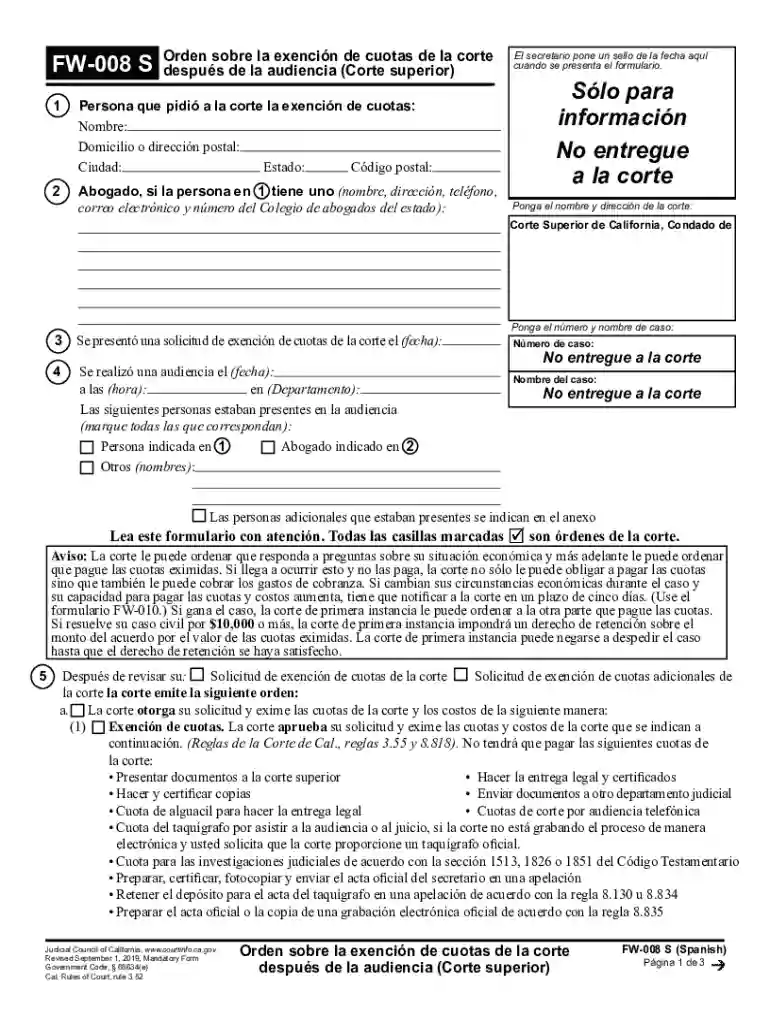
The "Orden sobre la exención de cuotas de la corte después de la audiencia (Corte Superior) Judicial Council" is a legal document used in the California Superior Courts to request a waiver of court fees after a hearing has occurred. This form is designed to aid individuals who cannot afford court-related expenses, such as filing fees or surcharges, by allowing them to apply for relief based on their financial situation. The primary purpose is to ensure that financial constraints do not prevent access to justice for low-income litigants.
How to Use the Form
To effectively use this form, eligible individuals must accurately fill out each section with relevant information about their financial status and the nature of their case.
- Personal Information: Provide detailed personal data, including name, address, and contact information.
- Financial Disclosure: Include comprehensive financial details, such as income, expenses, and dependents, to demonstrate eligibility for fee waiver.
- Case Details: Specify the type of legal case and any pertinent hearing information that relates to the fee waiver request.
- Supporting Documents: Attach any required supporting documents that substantiate the financial claims made in the form.
Important Considerations
- Verify all information for accuracy before submission to avoid delays.
- Keep a copy of the completed form and all attachments for personal records.
How to Obtain the Form
The form is available through several channels:
- Court Websites: Download the form directly from the official California Courts website in a printable PDF format.
- Court Clerks: Obtain a physical copy from the clerk's office at your local Superior Court.
- Legal Assistance Clinics: Many legal aid organizations offer the form as part of their community outreach efforts to assist low-income individuals.
Tips for Accessing the Form
- Ensure you have the latest version to avoid using outdated forms, which might not be accepted.
- If you are accessing the form online, ensure you have a PDF reader to view and print the document.
Steps to Complete the Form
Completing the "Orden sobre la exención de cuotas de la corte" requires careful attention to detail across multiple sections. Follow these step-by-step instructions:
- Gather Required Information: Collect all necessary personal and financial documents.
- Complete Personal Details: Fill in your full legal name, address, and contact information.
- Elaborate on Financial Need: Clearly articulate your income sources, monthly expenses, and liabilities.
- Specify Case Information: Indicate your case number and the type of hearing for which you need a fee waiver.
- Review and Attach Documents: Double-check the form for completeness and accuracy. Attach required documents such as pay stubs or benefit statements.
- Submit the Form: File the form with the court where your case is being heard either online, by mail, or in person, depending on the submission methods available.
Key Elements of the Form
Understanding the essential components of the form is crucial for a successful application:
- Applicant Information: Details about the individual requesting the fee waiver.
- Income and Expense Chart: A breakdown of monthly income versus expenses to demonstrate inability to pay.
- Declaration Statement: A sworn statement asserting the truthfulness of the information provided.
- Court Order Request: The specific relief sought, including a waiver of particular court fees.
Detailed Explanations
- Income vs. Expenses: Clearly differentiate between gross income and net income, listing all applicable deductions.
- Assets and Liabilities: Include details about any significant assets or liabilities that could affect financial standing.
Eligibility Criteria
Eligibility for a fee waiver is primarily based on financial necessity. The basic criteria include:

- Income Level: Applicants must generally fall below a specific income threshold, often tied to federal poverty guidelines.
- Asset Limitation: Total assets must not exceed a particular limit, excluding certain exempt categories like primary residence or essential vehicles.
- Government Assistance: Automatic eligibility for individuals currently receiving aid from government programs such as SNAP or TANF.
Practical Considerations
- Applicants might need to provide proof of government assistance eligibility if claiming automatic qualification.
Penalties for Non-Compliance
Failing to comply with form requirements or providing false information can lead to significant ramifications:
- Denial of Fee Waiver: Incomplete or inaccurate submissions can result in denied requests for fee exemption, causing the applicant to incur full court fees.
- Legal Consequences: Deliberately falsifying information can lead to contempt of court charges or other legal actions, including financial penalties.
- Loss of Legal Rights: Non-compliance can result in forfeiture of certain rights within the legal proceedings, complicating the individual’s case progress.
Versions or Alternatives to the Form
While this form is specific to California Superior Courts, alternative forms or variants might exist for different jurisdictions or purposes:
- Jurisdiction-Specific Forms: Other states may have analogous forms under different titles, maintaining a similar purpose of fee waiver request based on financial need.
- Electronic Form Variants: Some courts may offer electronic submissions for this form, provided through official online portals, ensuring a quicker and more streamlined process.