







Definition and Meaning
The Notice of No Trespass in Tennessee is a formal declaration utilized by property owners or authorized representatives to legally enforce their rights against unauthorized entry onto private property. This notice aligns with Tennessee law, providing a legal framework to address and mitigate instances of trespassing. It serves as a deterrent and provides grounds for legal action against violators, thus safeguarding the property owner's interests.
How to Use the Notice of No Trespass
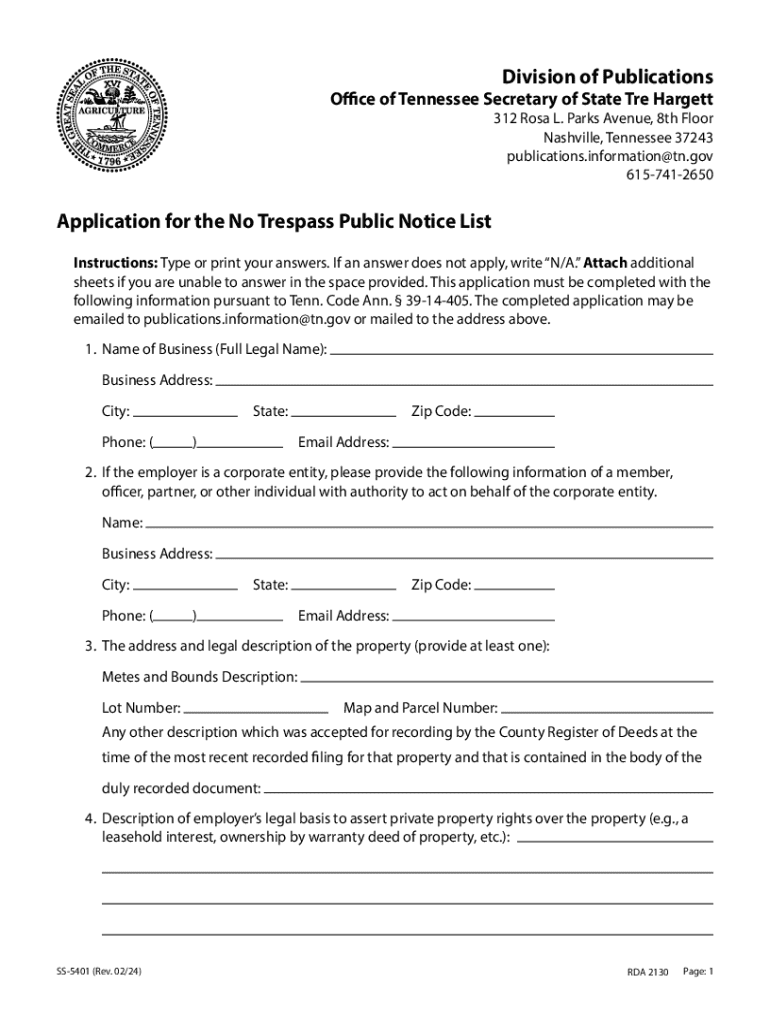
Using this form involves a clear understanding of its sections and purpose. Begin by accurately completing all relevant sections, detailing the property description, and specifying the legal basis for claiming property rights. It is important to issue the notice visibly on the property and to maintain copies for personal records. Ensure that any required signatures from authorized representatives are present. This document can also be shared with local law enforcement to aid in enforcement actions if necessary.
Steps to Complete the Notice of No Trespass
-
Fill in Business Details: Include the name of the business or individual, contact information, and physical address of the property.
-
Describe the Property: Clearly outline the geographic boundaries or landmarks that define the property to eliminate ambiguity about the area protected by the notice.
-
State the Legal Basis: Reference applicable Tennessee property laws that support your rights as a property owner or lessee.
-
Signatures: Obtain signatures from all authorized parties or representatives to validate the notice.
-
Review for Accuracy: Double-check all entered information to ensure accuracy and completeness.
-
Distribution: Post the notice prominently on the property and share with relevant local authorities.
Why Use the Notice of No Trespass
Utilizing this notice is crucial for any property owner looking to reinforce their right to exclude others from their land. It communicates to the public—and potential trespassers—that entry without permission is prohibited and subject to legal action. This is particularly important for businesses conducting sensitive operations, or for landowners with recurring issues of unauthorized entry.
Key Elements of the Notice of No Trespass
- Identification of Property: Precise description of the land in question to prevent misunderstandings.
- Legal Framework: Citing of specific Tennessee state laws that support the no trespass stipulation.
- Authorized Signatures: All required signatures from owners or legal stewards to confer legitimacy.
- Visible Placement: Instructions on where to post the notice to ensure maximum visibility.
State-Specific Rules for Tennessee
While the basic elements of a no trespass notice are fairly standard, Tennessee law includes specific criteria regarding the notice's phrasing and placement to be legally enforceable. This state requires that notices are written in a clear format, displayed conspicuously on the property, and that the property owner has the notice on file to facilitate ease of information sharing with law enforcement if applicable.
Legal Use of the Notice of No Trespass
The legal use of this notice involves its role as both a preventative measure and a tool for enforcing property rights. By issuing a notice, property owners can reduce legal ambiguity should a trespassing incident occur. Incorporating this document as part of your property management strategy could assist in legal proceedings by establishing that all due steps were taken to prevent unauthorized entry.
Examples of Using the Notice of No Trespass
Several practical cases illustrate the use of this notice. Agricultural landowners often employ it to prevent unauthorized hunting or ATV riding. Similarly, unused industrial properties use it to avert squatters or vandalism. Businesses with resource-heavy facilities might rely on this document to curb theft or misuse of their resources. It also plays a crucial role in residential settings to keep private areas undisturbed.
Penalties for Non-Compliance
Failing to use or enforce a Notice of No Trespass can result in challenges imposing legal consequences on violators. Additionally, without it, property owners might face increased risks of liability for incidents occurring on their property without explicit consent. Non-compliance with local regulations may also lead to difficulties in collaborating with law enforcement on related issues.
Form Submission Methods
The notice can be created and managed digitally via platforms like DocHub, offering fillable and printable options. This flexibility allows property owners to prepare, edit, and distribute the document efficiently. For those preferring traditional methods, it can be printed, signed, and mailed or posted in-person on the property premises. Digital submission to legal bodies, if necessary, can also be conducted through authorized channels.
By leveraging these detailed guidelines and insights, property owners and businesses in Tennessee can effectively utilize the Notice of No Trespass to protect their property rights.




