







Understanding the CRB 3 Crash Report
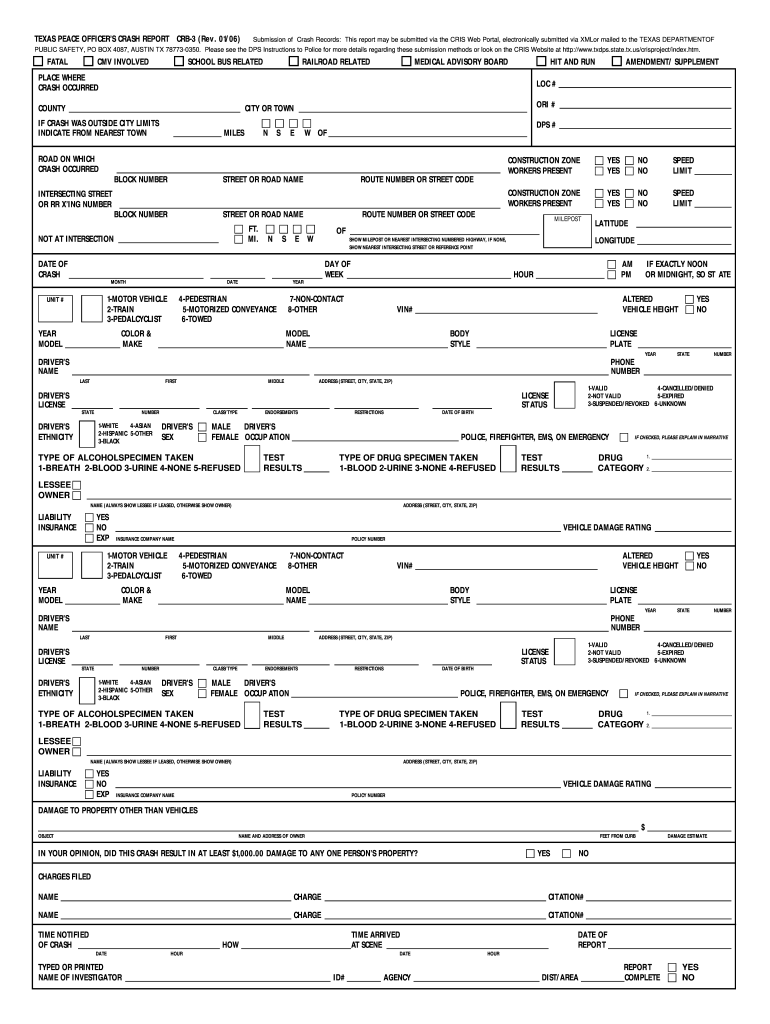
The CRB 3 crash report is a critical document used to officially record and report vehicle accidents in Texas. It provides law enforcement officers with a structured format to capture essential details about the crash, aiding in subsequent investigations and analyses. Understanding this form's components and its relevance is vital for parties involved in a vehicle crash, including drivers, insurance professionals, and legal representatives.
Key Elements of the CRB 3 Crash Report
The CRB 3 cover several important categories that must be documented accurately:
- Crash Location Details: Information regarding the precise location of the crash, including road names, mile markers, and geographic coordinates.
- Involved Parties: Names, addresses, phone numbers, and driver's license numbers of all individuals involved, including passengers and witnesses.
- Vehicle Information: Details about each vehicle, such as make, model, year, vehicle identification numbers (VIN), and license plate numbers.
- Contributing Factors: Identification of potential factors leading to the crash, such as weather conditions, visibility issues, or mechanical failures.
- Damage Assessment: A detailed account of the damages incurred by each vehicle and any injuries sustained by individuals involved.
Accurate completion of these elements is essential as they form the basis for insurance claims, legal proceedings, and statistical analyses of traffic safety.
Steps to Complete the CRB 3 Crash Report
Completing the CRB 3 crash report may appear daunting, but following these structured steps can facilitate a thorough and accurate report:
- Gather Necessary Information: Collect details from all drivers, passengers, and witnesses at the scene.
- Access the Form: Obtain the CRB 3 crash report form from the Texas Department of Public Safety (DPS) or through authorized law enforcement agencies.
- Fill Out the Form:
- Start with crash location and time.
- Record involved parties' data accurately.
- Document vehicle information comprehensively.
- Include any contributing factors to the crash.
- Review for Completeness: Ensure all sections are filled out and review for any missing information or errors.
- Submit the Report: Follow state guidelines for submitting the completed report, ensuring it reaches the appropriate jurisdiction.
Timeliness is key; ensure submission of the CRB 3 occurs soon after the incident to meet any legal requirements or deadlines.
Legal Use and Compliance with the CRB 3
The CRB 3 serves critical legal purposes in Texas. Here are essential considerations regarding its legal use:
- Legally Required: The completion and submission of this report may be legally required for certain accidents, particularly those involving injuries, fatalities, or significant property damage.
- Evidence in Court: The CRB 3 is often utilized as a formal piece of evidence in legal cases regarding traffic accidents. Inaccuracies or failures to file can have legal repercussions.
- Insurance Claims: Insurance companies frequently require the CRB 3 for processing claims promptly. Delays in filing or errors in the report may impede or reduce compensation.
Ensuring adherence to legal stipulations when completing and submitting the CRB 3 is vital for affected individuals or entities.
Common Challenges in Completing the CRB 3 Crash Report
Users of the CRB 3 may encounter specific challenges that can impede accurate reporting:
- Complexity of Information: Gathering detailed and sometimes technical information can be difficult, especially under stress after an accident.
- Miscommunication: Confusion among involved parties regarding fault or crash dynamics can lead to inaccurate reporting.
- Timeliness: Delays in completing or submitting the report can affect legal compliance and insurance processes.
Awareness of these challenges and proactive measures can help mitigate complications during the report completion process.
Resources Related to the CRB 3 Crash Report
Several resources can aid individuals looking to navigate the CRB 3 crash report process:
- Texas Department of Public Safety (DPS): The official DPS website provides access to the CRB 3 form and instructions for completion and submission.
- Local Law Enforcement Agencies: Officers can assist with the form at the scene of the accident or provide guidance on how to complete it afterward.
- Insurance Companies: Many insurance providers have resources and personnel available to assist with the completion of the report as part of the claims process.
Utilizing these resources can enhance the accuracy of the CRB 3 and facilitate compliance with legal and insurance requirements.




