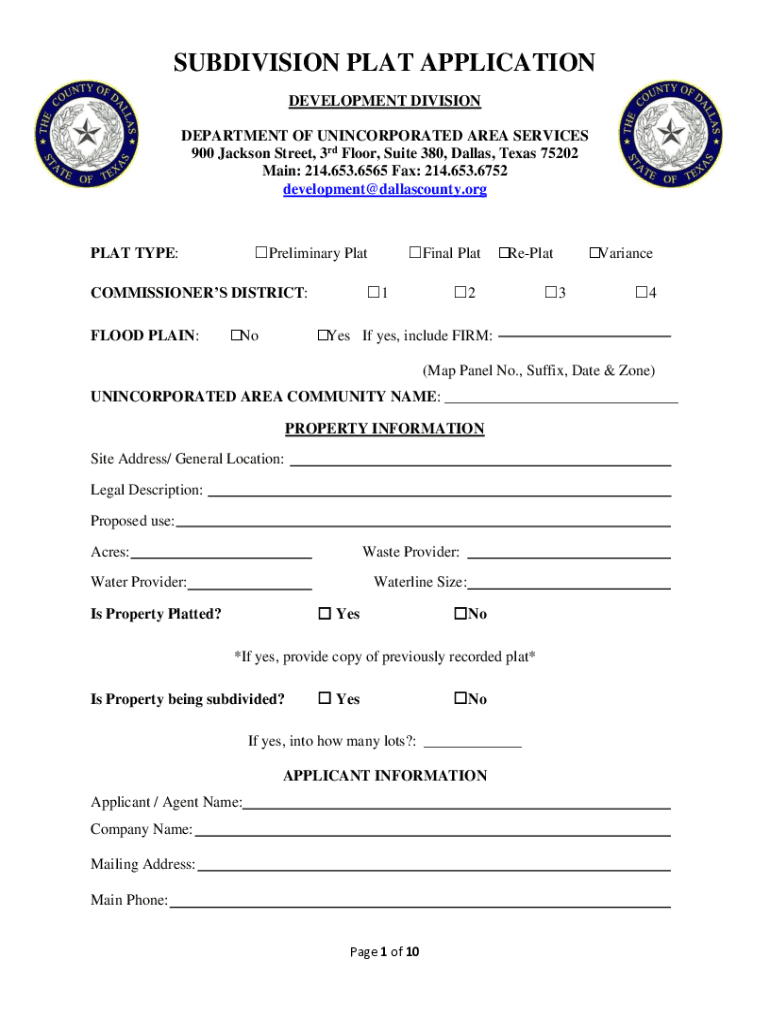
FLOODPLAIN DEVELOPMENT APPLICATION - RESIDENTIAL 2026

Get Form
FLOODPLAIN DEVELOPMENT APPLICATION - RESIDENTIAL Preview on Page 1

Here's how it works

01. Edit your form online
Type text, add images, blackout confidential details, add comments, highlights and more.
02. Sign it in a few clicks
Draw your signature, type it, upload its image, or use your mobile device as a signature pad.
03. Share your form with others
Send it via email, link, or fax. You can also download it, export it or print it out.

How to use or fill out FLOODPLAIN DEVELOPMENT APPLICATION - RESIDENTIAL with our platform

Form edit decoration
9.5
Ease of Setup
DocHub User Ratings on G2
9.0
Ease of Use
DocHub User Ratings on G2
  1. Click ‘Get Form’ to open the FLOODPLAIN DEVELOPMENT APPLICATION - RESIDENTIAL in the editor.
  2. Begin by filling out the 'Applicant Information' section. Enter your name, company name, mailing address, and contact details accurately.
  3. Proceed to the 'Property Information' section. Provide the site address, legal description, proposed use, and details about water and waste providers.
  4. In the 'Flood Plain' section, indicate whether your property is in a floodplain by checking 'Yes' or 'No'. If yes, include necessary FIRM details.
  5. Complete the 'Owner Information' section with the property owner's details and ensure all signatures are included where required.
  6. Review all sections for accuracy before saving your completed application. Utilize our platform's features to easily edit any mistakes.

Start using our platform today to streamline your FLOODPLAIN DEVELOPMENT APPLICATION process for free!

See more FLOODPLAIN DEVELOPMENT APPLICATION - RESIDENTIAL versions

We've got more versions of the FLOODPLAIN DEVELOPMENT APPLICATION - RESIDENTIAL form. Select the right FLOODPLAIN DEVELOPMENT APPLICATION - RESIDENTIAL version from the list and start editing it straight away!
Versions Form popularity Fillable & printable
2020 4.7 Satisfied (71 Votes)
be ready to get more

Complete this form in 5 minutes or less

Get form

Got questions?

We have answers to the most popular questions from our customers. If you can't find an answer to your question, please contact us.
Contact us
Most federal and state laws allow construction in floodplains if buildings are raised above the base flood elevation. To meet these requirements, many contractors use the fill and build method of filling the low-elevation land with dirt and then building on top.
The floodplain development permit requirement is intended to allow the City to monitor activities located in the SFHA to ensure the following: Base flood elevations do not docHubly change as a result of development Buildings in floodways and floodplains are constructed and maintained properly Substantially
Selling a home in a high-risk flood zone can present unique challenges. The propertys flood-zone status can affect its market value, even if the home has never actually suffered flood damage, and it may also take longer to find a buyer when you want to sell.
Climate risk data tells you whether a property youre considering on Zillow is at risk for flood, wildfire, high winds, extreme heat and/or poor air quality.
Risks of buying property in a flood zone include:1) Living in a flood zone can decrease your homes value and make it harder to resell,2) costly flood insurance requirement for properties in flood zones, 3) If your home floods, youll have to deal with structural issues and mold infestation,4) Regular hazard

Security and compliance

At DocHub, your data security is our priority. We follow HIPAA, SOC2, GDPR, and other standards, so you can work on your documents with confidence.

Learn more
ccpa2
pci-dss
gdpr-compliance
hipaa
soc-compliance
be ready to get more

Complete this form in 5 minutes or less

Get form

People also ask

Start by contacting your local floodplain manager. They often work for your citys or countys building, permitting, engineering or land use department. Ask them if there is an elevation certificate on file for your property.
Yes, you can build in a flood zone, but you will have to do your due diligence to make sure you follow building regulations.

Related links