
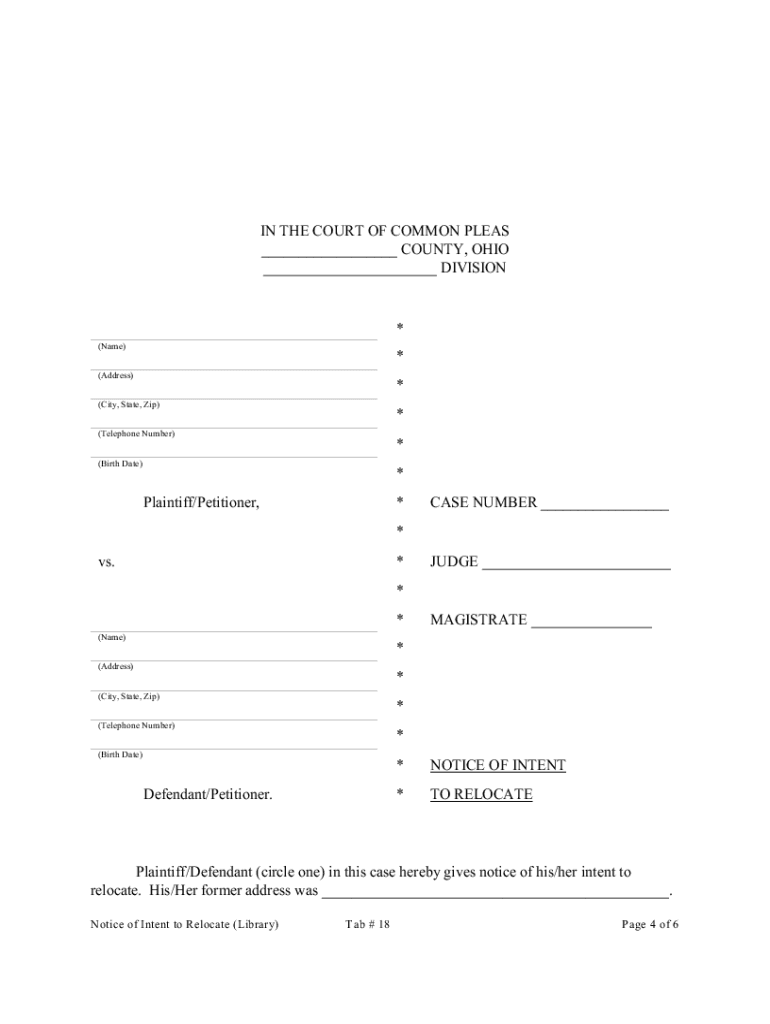







Key Components of a Child Custody Relocation Letter Template
A child custody relocation letter template serves as a formal document used by custodial parents intending to move to a new location with their child. This letter is essential for complying with legal requirements and maintaining clear communication between co-parents. Understanding the components of this template can ensure that all necessary information is included and that the document meets legal standards.
Essential Parts of the Relocation Letter
- Recipient Information: Clearly state the names and addresses of both the custodial and non-custodial parents. This ensures that the letter reaches the correct individual.
- Child's Information: Include the full names and dates of birth of the children involved in the custody agreement. This helps to identify the children the letter pertains to accurately.
- Notice of Relocation: Clearly state the intent to relocate. Specify the new address, city, and state to provide a complete picture of the move.
Legal Considerations
Familiarizing yourself with legal obligations in your state is crucial. In the United States, many states require custodial parents to notify the non-custodial parent, the court, and possibly other agencies of their intent to move. This section should cover:
- State-specific Laws: Review laws relevant to your state, as requirements can vary significantly.
- Notifying the Court: Provide information on how and when to file necessary forms with the court, if required.
- Potential Hearing: Outline what happens if the relocation is contested. This might include the need for mediation or attending a court hearing.
Sample Scenarios for the Relocation Letter
Including a few examples of how different situations may affect the letter can enhance understanding:
- Contested Move: If the non-custodial parent opposes the move, describe how to propose mediation to resolve the issue amicably.
- Uncontested Move: For a move where both parents agree, it is appropriate to mention modifications to the visitation schedule to accommodate the new location.
Instructions for Completing the Template
Providing a step-by-step guide can aid in effectively using the relocation letter template. Important steps may involve:
- Drafting the Letter: Use clear, straightforward language. Ensure all sections are filled out completely.
- Reviewing State Requirements: Research the legal context surrounding custody relocation in your state, ensuring compliance with local laws.
- Sending the Letter: Use certified mail to send the letter, ensuring you have records of delivery.
- Follow-Up: Detail how to follow up with the non-custodial parent and the court if there are no responses.
Best Practices for a Relocation Letter
Adhering to best practices can help maintain professionalism and clarity in the document:
- Keep Copies: Always save copies of the letters sent and any responses received for your records.
- Consult Legal Counsel: If unsure about the wording or legal obligations, seeking legal advice can provide clarity and reassurance.
- Maintain Open Communication: Encourage dialogue between parents about the relocation to foster a cooperative co-parenting relationship.
Conclusion
In summary, a child custody relocation letter template is an important legal document that outlines the intentions of a custodial parent to relocate. Comprehensively covering the essential parts of this template, legal considerations, sample scenarios, and instructions enables parents to navigate this potentially sensitive situation effectively. By adhering closely to the template and following best practices, a smooth transition can be facilitated for both the parent and the child involved.




