




01. Edit your red tractor grain passport template online
Type text, add images, blackout confidential details, add comments, highlights and more.

Type text, add images, blackout confidential details, add comments, highlights and more.

Draw your signature, type it, upload its image, or use your mobile device as a signature pad.

Send grain passport template via email, link, or fax. You can also download it, export it or print it out.
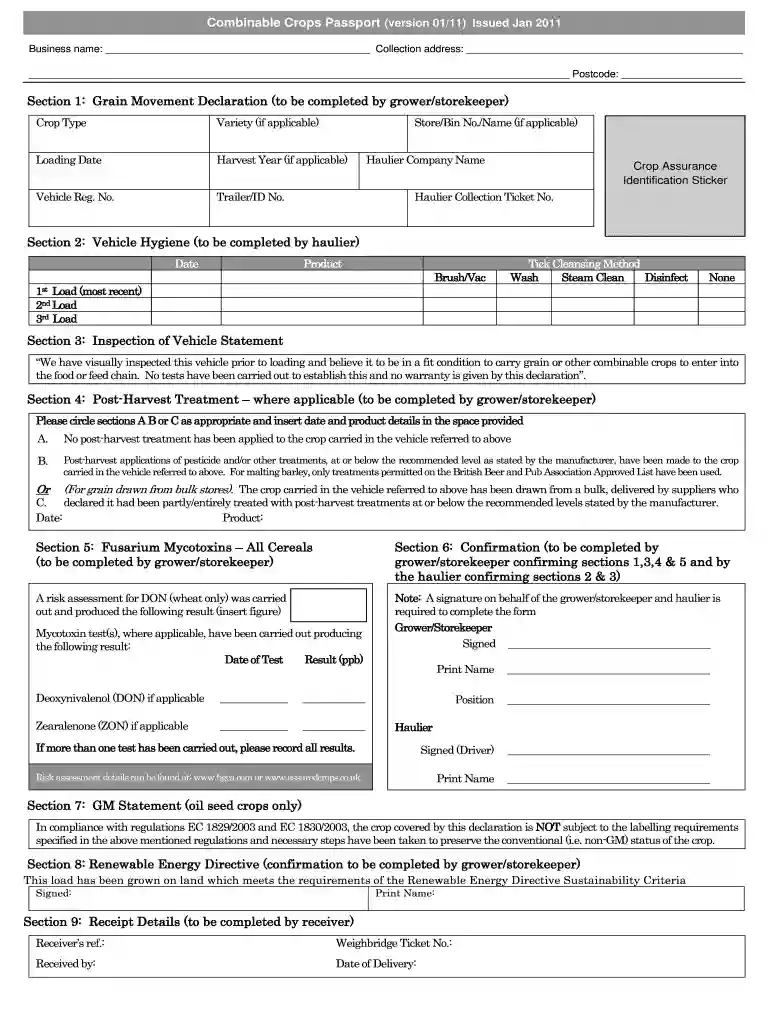
The combinable crops passport serves as a crucial documentation tool for growers, hauliers, and other stakeholders in the agricultural supply chain. Designed to outline the necessary declarations for grain movement, this passport encompasses several key requirements, including vehicle hygiene inspections, post-harvest treatments, mycotoxin testing, and compliance with regulations regarding genetically modified crops. The document aims to ensure adherence to food safety standards and promote sustainability within the agri-food sector.
Understanding these features is vital for effective management in agricultural practices, ensuring that all involved parties meet regulatory expectations.
Utilizing the combinable crops passport involves several steps that ensure compliance and proper documentation during the grain movement process. Below are key actions involved in using this passport effectively.
Incorporating these practices helps streamline operations while maintaining compliance with industry regulations.
Completing the combinable crops passport requires attention to detail and adherence to specific guidelines. The following steps provide a comprehensive approach to ensure accuracy.
Following these detailed steps can minimize discrepancies and enhance the effectiveness of the combinable crops passport.
The combinable crops passport is primarily utilized by various parties within the agricultural sector. Understanding who benefits from this document can clarify its importance in maintaining compliance.


Recognizing these stakeholders is essential for ensuring compliance throughout the supply chain.
The legal framework surrounding the combinable crops passport is essential for establishing its legitimacy in grain movement. This document must meet specific legal standards to ensure acceptance by authorities.
Familiarity with these legal aspects is critical for preventing non-compliance risks and promoting safe agricultural practices.
We've got more versions of the red tractor grain passport template form. Select the right red tractor grain passport template version from the list and start editing it straight away!
Upload your grain passport pdf to DocHub (once you’ve set up an account for this). If you need to complete fields in it, use appropriate tools from the upper pane. For instance, drop Signature Fields, assign each to specific person, and click on Sign → Request signatures from others. Change your message for your recipients and click Send Request. You can also send your document by fax or as a Signing link instead of using email (you’ll find these options by navigating to the Menu → Send)
If you edit your red tractor grain passport with DocHub, you will not need to look for other applications or services to sign it. An electronic signature is a component of DocHub’s substantial editing toolset, which enables you to implement changes in your form without jumping between websites. Simply complete your form, double-check the correctness of the information and place your electronic signature at the end to make it submission-ready in minutes.
At DocHub, your data security is our priority. We follow HIPAA, SOC2, GDPR, and other standards, so you can work on your documents with confidence.


