




01. Edit your vehicle inspection checklist pdf free online
Type text, add images, blackout confidential details, add comments, highlights and more.

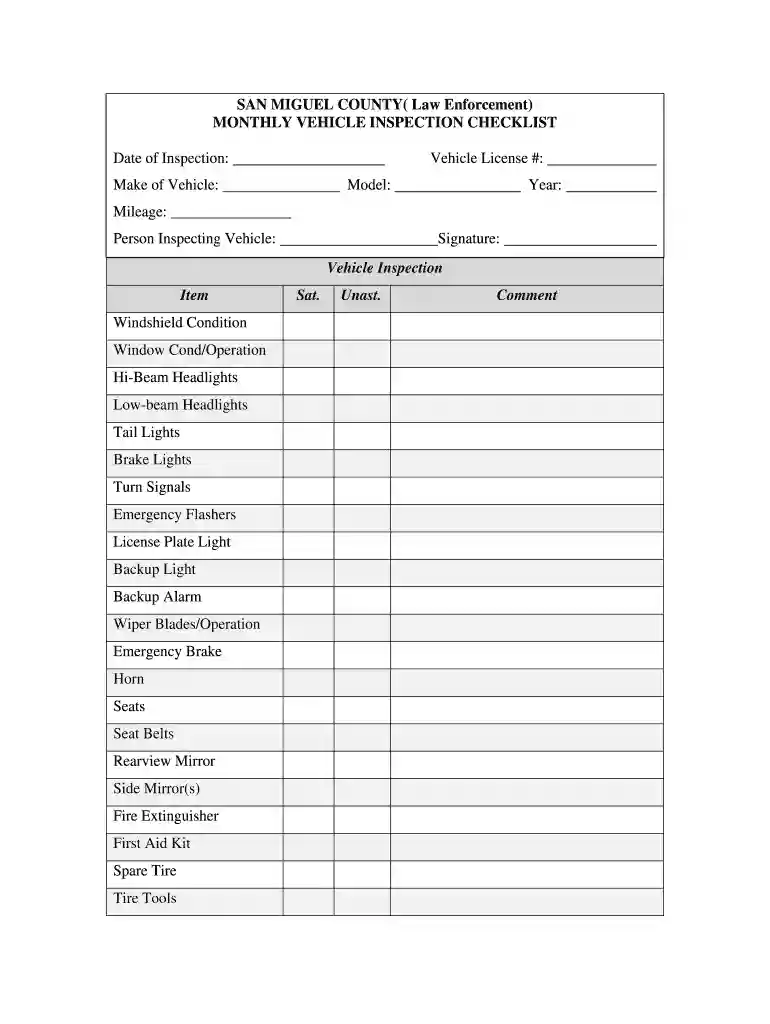
Type text, add images, blackout confidential details, add comments, highlights and more.

Draw your signature, type it, upload its image, or use your mobile device as a signature pad.

Send free vehicle inspection form pdf via email, link, or fax. You can also download it, export it or print it out.
A vehicle inspection checklist serves as a structured document used to systematically evaluate the condition and functionality of various components in a vehicle. This checklist ensures that all essential areas are assessed, helping to maintain safety and compliance with regulations. Typically, it includes sections for documenting vehicle details, the state of critical components like lights and brakes, and an overall safety assessment.
The checklist may include specific areas to be inspected, allowing for thorough documentation and tracking of vehicle conditions. A comprehensive vehicle inspection checklist often incorporates the following components:
Exterior Elements:
Mechanical Components:
Safety Equipment:
Performing a thorough vehicle inspection involves following a systematic approach to ensure that no area is overlooked. The steps include:
Gather Necessary Materials:
Conduct the Inspection:
Review and Rectify:
In many jurisdictions, fleet vehicles and vehicles used for commercial purposes must adhere to specific legal standards. A vehicle inspection checklist not only facilitates compliance with these regulations but also acts as a legal document during audits or inspections.
Different sectors apply vehicle inspection checklists to varying extents, tailored to their specific needs. Common users include:
Law Enforcement Agencies:
Transportation and Logistics Companies:
Personal Vehicle Owners:
Maintaining records of inspection checklists is crucial for several reasons, including accountability, safety tracking, and regulatory compliance. It is advisable to:
Store Records Securely:
Schedule Regular Follow-ups:
Review Trends Over Time:
Engaging with a structured vehicle inspection checklist not only enhances vehicle safety but also preserves the integrity of legal documentation and compliance measures. Regularly updating practices based on findings from these checklists can lead to improved operational efficiency across all users.
Sure, it is possible with DocHub. This safe and compliant online editor has a phone-based signing option. After you log in to your DocHub account and import your vehicle inspection checklist pdf free download to our editor, complete all necessary areas and utilize the Sign feature on the upper barf. Click on Create your signature and select Phone from the available choices. Here, you scan a QR code with your smartphone and draw your signature on your phone display, as you normally do when approving hard copies. If you access DocHub right from your mobile device, you can eSign your paperwork by drawing your eSignature, uploading its photo, or simply with a typed name.
In addition to an extensive toolset for editing PDFs on mobile devices, DocHub allows you to sign your free printable vehicle inspection checklist along the way. Open our editor in your internet browser, make modifications using DocHub’s toolset, and complete your editing by eSigning the finished form.
At DocHub, your data security is our priority. We follow HIPAA, SOC2, GDPR, and other standards, so you can work on your documents with confidence.


ITEM INSPECTED. OK. REPAIR. COMMENTS. Tires, including wear and air pressure. Engine fluid levels. Fuel, coolant and oil leaks. Belts and hoses.Read more
Car starts without hesitation. Cold engine idle. Warm engine idle. No abnormal engine noise present. Throttle operation. No abnormal exhaust noise present.Read more
VEHICLE INSPECTION FORM. Vehicle Number. License Plate. Mileage. Org/Unit #. After Use Inspection. X= Inspected. R= Requires Attention. N= Not Applicable. TiresRead more


