Definition & Meaning
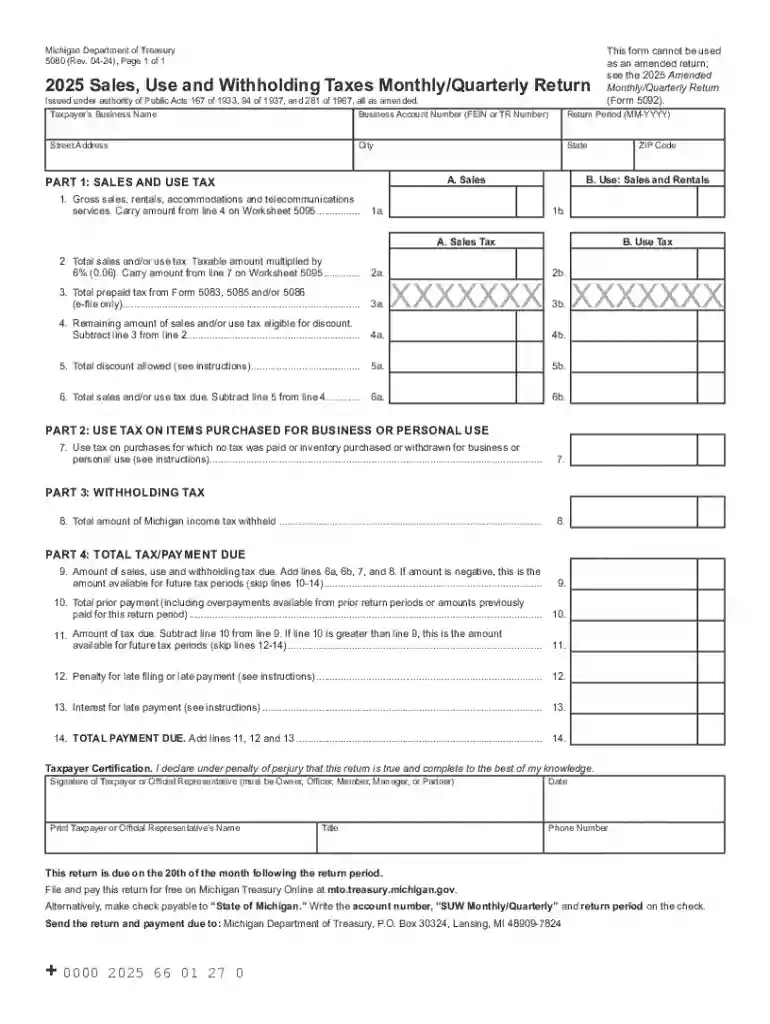
Sales and use tax forms are vital tools that facilitate the reporting and payment of taxes on goods and services. For the year 2025, these forms enable businesses and individuals to declare applicable sales tax for transactions completed within specific jurisdictions. Sales tax generally applies to goods sold, while use tax often pertains to goods purchased outside the state but used domestically. Understanding these distinctions is critical for accurate tax reporting. Individuals and businesses must fill out and submit the 2025 Sales and Use Tax Forms to comply with state tax laws and avoid potential penalties or interest charges.
Understanding Sales and Use Taxes
- Sales Tax: A consumption tax imposed by the government on the sale of goods and services.
- Use Tax: A complementary tax to the sales tax, applied to purchases made outside of one's state of residence for taxable items used, stored, or consumed in one's state of residence.
How to Use the 2025 Sales and Use Tax Forms
Filing the 2025 Sales and Use Tax Forms requires a clear step-by-step approach to ensure compliance and correct submission. Accurate completion involves a systematic process of documentation, calculation, and review.
Steps for Using the Tax Forms
- Gather Necessary Information: Collect all relevant business receipts and documents that contribute to taxable sales and purchases.
- Calculate Taxable Sales: Use business records to sum up all sales subject to sales tax within the jurisdiction.
- Determine Use Tax Obligations: Identify out-of-state purchases and calculate the use tax owed to your home state.
- Complete the Form: Fill in detailed sections requiring taxable sales, tax rates, and calculated tax amounts.
- Review and Verify Information: Double-check all entries for accuracy and completeness.
- Submit the Form: Mail, file online, or deliver the form in-person to the appropriate tax authority.
Steps to Complete the 2025 Sales and Use Tax Forms
Completing the 2025 Sales and Use Tax Forms involves meticulous attention to detail to ensure accuracy and compliance with state requirements.
Filling Out the Form
- Enter Basic Information: Include business name, taxpayer identification number, and contact details.
- Detail Taxable Sales: Accurately enter the total sales for the reporting period that are subject to sales tax.
- Include Exempt Sales: Report any exemptions or deductions applicable, reducing taxable sales.
- Calculate the Total Tax Due: Apply the appropriate tax rate to the taxable sales to determine the sales tax owed.
- Add Use Tax Details: Record out-of-state purchases and corresponding tax obligations.
- Complete Final Sections: Provide any additional required information, such as adjustments or credits, and total the amounts due.
Example Calculations
- Sales Tax Calculation: Taxable sales ($20,000) x State tax rate (6%) = $1,200 tax owed.
- Use Tax Calculation: Purchases ($5,000) x Use tax rate (6%) = $300 tax owed.
Filing Deadlines and Important Dates
Timely submission of the 2025 Sales and Use Tax Forms is crucial to avoid late fees or penalties. Each state may have varying deadlines based on filing frequencies and business types.
Key Dates to Remember
- Monthly Filers: Generally due the 20th of the following month.
- Quarterly Filers: Typically due the last day of the month following the quarter's end.
- Annual Filers: Often due by the end of January for the prior year's taxes.
Penalties for Non-Compliance
Failing to submit the 2025 Sales and Use Tax Forms accurately or punctually can result in severe consequences, including fines and legal action.
Common Penalties
- Late Filing Fee: A percentage of the tax due, typically escalating with prolonged delays.
- Interest on Unpaid Taxes: Applied to outstanding amounts, compounding monthly or daily.
- Potential Legal Actions: Severe cases of non-compliance may result in audits or litigation.
Who Typically Uses the 2025 Sales and Use Tax Forms
A range of entities utilizes these forms to maintain compliance with tax laws. Understanding who needs to file helps ensure that all necessary forms are submitted.

Typical Users
- Retail Businesses: Required for reporting direct sales within the state.
- Out-of-State Purchasers: For businesses buying goods out-of-state for use and consumption domestically.
- Service Providers: When services are taxable under specific state laws.
State-Specific Rules for the 2025 Sales and Use Tax Forms
Each state may have unique regulations and requirements for submitting sales and use tax forms. Being aware of these differences is vital for proper compliance.
Examples of Variations
- Exemption Definitions: Certain states may have more expansive lists of exempt items or services.
- Use Tax Rate Differences: Varies from state to state, influencing the total amount owed.
- Filing Requirements: States may vary in their expectations for electronic vs. paper submissions.
Key Elements of the 2025 Sales and Use Tax Forms
Understanding the main components of these forms is essential for accurate completion and compliance.
Essential Sections
- Business Information: Accurate representation of business details is required.
- Tax Calculations: Sections for calculating both sales and use taxes must be completed carefully.
- Declaration and Signature: Final affirmation of correctness, usually implying legal accountability.
Providing detailed instruction on these key topics ensures that taxpayers can appropriately complete the 2025 Sales and Use Tax Forms, remain compliant, and avoid any associated penalties.