




01. Edit your consent form for physiotherapy online
Type text, add images, blackout confidential details, add comments, highlights and more.

Type text, add images, blackout confidential details, add comments, highlights and more.

Draw your signature, type it, upload its image, or use your mobile device as a signature pad.

Send physiotherapy consent form template via email, link, or fax. You can also download it, export it or print it out.
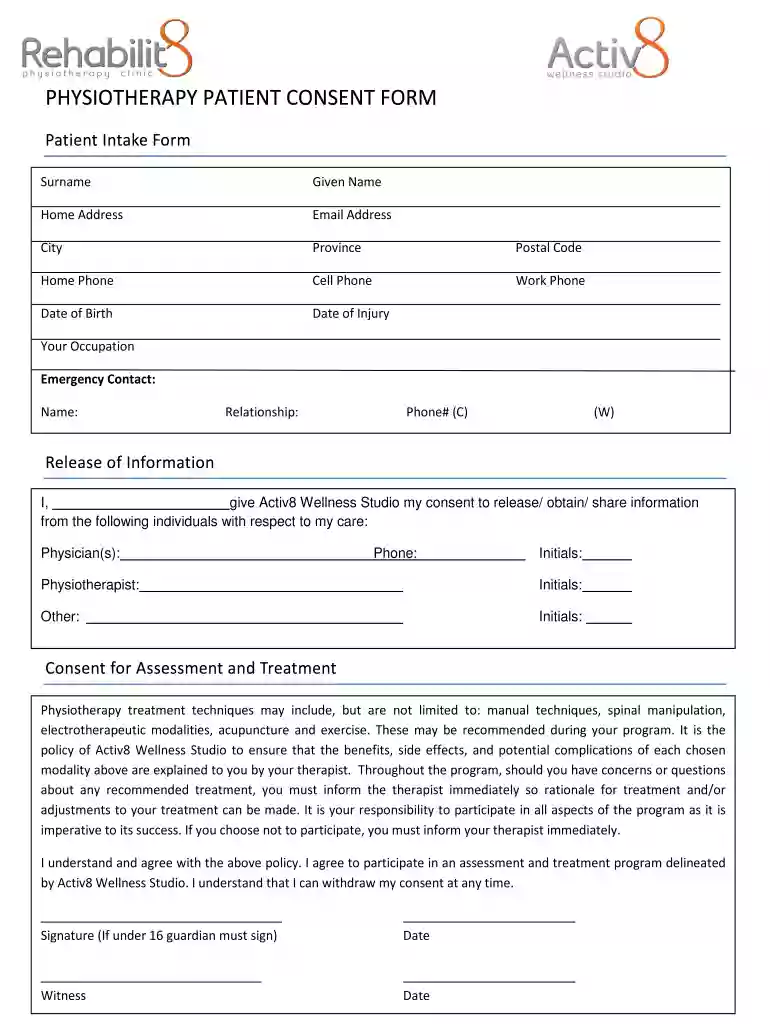
A consent form for physiotherapy is a critical document that grants healthcare providers permission to conduct assessments and treatments. It ensures that patients are informed about their rights, the procedures involved, potential outcomes, and the risks associated with physiotherapy. This form serves several essential functions:
A comprehensive physiotherapy consent form must include several key components to ensure clarity, legality, and thoroughness. Each section plays a role in protecting the rights of patients while providing essential information about the treatment process. Typical elements include:
Patient Information:
Treatment Details:
Risks and Benefits:
Financial Agreements:
Cancellation Policy:
Completing a physiotherapy consent form involves several steps to ensure accurate documentation and understanding. Providers should follow best practices, which include:
Educate Patients:
Provide Written Information:
Review the Form Together:
Allow Time for Consideration:
Ensure Legibility:
In the modern healthcare landscape, electronic signatures have become increasingly convenient and legitimate for consent forms. Implementation of electronic signatures offers several advantages:
Efficiency and Accessibility: Patients can complete forms online from the comfort of their homes, reducing the need for in-person visits and enhancing the speed of the documentation process.
Legal Compliance: Electronic signatures are legally recognized under the ESIGN Act in the United States, meaning they hold the same weight as traditional written signatures for consent documentation.
Audit Trails: Many electronic systems maintain a record of the signing process, creating an audit trail that details when the consent was given and any intermediary communications, thereby adding a layer of accountability.
When using electronic signatures, ensure that the chosen platform adheres to stringent security standards to protect patient confidentiality and data integrity.
Failing to use a consent form for physiotherapy can lead to several significant implications, affecting both the patient and the provider:
Legal Risks: Without documented consent, healthcare providers may face legal challenges if a patient claims they were not adequately informed about the treatment they received, especially in cases of adverse effects.
Ethical Concerns: Practicing without obtaining informed consent undermines ethical standards in healthcare. Patients have a right to understand the details of their treatment, and neglecting this obligation can damage the provider’s reputation.
Patient Trust: Not using a consent form may shake the trust patients place in their healthcare providers. Transparency in treatment plans fosters a collaborative environment and enhances the therapeutic relationship.
To mitigate these risks, practitioners should prioritize the integration of consent forms in their practice, ensuring that all patients have clear and comprehensive insights into their treatment plans.
Within the realm of physiotherapy, several variants of consent forms exist to cater to diverse treatment scenarios and patient needs. Understanding these alternatives is important for appropriate usage:
Informed Consent Forms: These forms provide detailed information regarding specific procedures, focusing on the risks and benefits of treatments such as manual therapy, electrotherapy, or therapeutic exercise.
Cash-Based Physical Therapy Consent Forms: These are specifically designed for practices operating on a cash-basis. They outline payment expectations and agreements, clarifying the terms for patients who are paying out of pocket.
Printable Physiotherapy Consent Forms: Available in various formats, these forms are designed to be printed and filled out manually by patients before an assessment, allowing for flexibility in environments with limited technology access.
Physical Therapy Waiver Forms: Certain situations may require patients to sign waiver forms, acknowledging potential risks and releasing the therapist from liability under specific circumstances, such as participation in high-risk sports rehabilitation.
Understanding the differences among these forms ensures that healthcare providers utilize the correct documentation that aligns with the specific nature of the treatment and the patient’s circumstances. This knowledge ultimately enhances the quality of patient care while maintaining compliance with legal and ethical standards.
We've got more versions of the consent form for physiotherapy form. Select the right consent form for physiotherapy version from the list and start editing it straight away!
| Versions | Form popularity | Fillable & printable |
|---|---|---|
| 2016 | 4.4 Satisfied (55 Votes) |
At DocHub, your data security is our priority. We follow HIPAA, SOC2, GDPR, and other standards, so you can work on your documents with confidence.
Your participation in this study is completely voluntary. If you are interested in learning more about this study, please review this consent form carefully andRead more
Jun 5, 2024 I have had the opportunity to ask questions, and all my questions have been answered to my satisfaction. I agree to participate in this study.Read more


