




Here's how it works
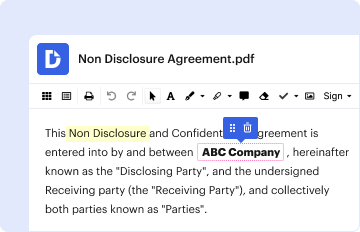
01. Edit your cc376 online
Type text, add images, blackout confidential details, add comments, highlights and more.
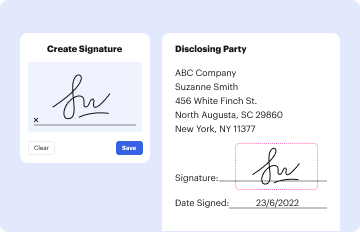
02. Sign it in a few clicks
Draw your signature, type it, upload its image, or use your mobile device as a signature pad.
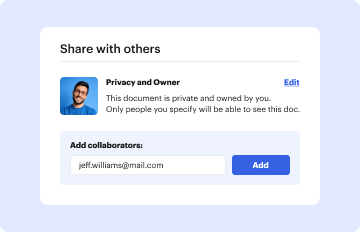
03. Share your form with others
Send it via email, link, or fax. You can also download it, export it or print it out.
How to use or fill out Form CC 376 PERSONAL PROTECTION ORDER (DOMESTIC - courts mi with our platform

- Click ‘Get Form’ to open it in the editor.
- Begin by completing Items A through D. If you checked box G on form CC 375, ensure to check the 'Ex Parte' box.
- Fill in the 'Case No.' from form CC 375 accurately to maintain consistency.
- Input your information as the petitioner. If privacy is a concern, consider using a relative's address or a P.O. Box instead of your own.
- Provide detailed information about the respondent, including race, sex, and date of birth, which are essential for law enforcement identification.
- Review all entries for accuracy before submitting the form to ensure that it meets court requirements.
Start filling out your Form CC 376 today for free and experience seamless document management with our platform!
Fill out Form CC 376 PERSONAL PROTECTION ORDER (DOMESTIC - courts mi online
It's free
It's free
See more Form CC 376 PERSONAL PROTECTION ORDER (DOMESTIC - courts mi versions
We've got more versions of the Form CC 376 PERSONAL PROTECTION ORDER (DOMESTIC - courts mi form. Select the right Form CC 376 PERSONAL PROTECTION ORDER (DOMESTIC - courts mi version from the list and start editing it straight away!
Got questions?
We have answers to the most popular questions from our customers. If you can't find an answer to your question, please contact us.
Contact us
How to get a PPO dismissed in Michigan?
In Michigan, a Personal Protection Order (PPO) can be terminated by the court upon the request of either party or by mutual agreement. While the absence of a police report or incident may be a relevant factor, its important to consult with an attorney.
How to get a no contact order dropped in Michigan?
A motion must be filed by a criminal defense professional with the court to request modification or termination of the order. The judge will consider factors such as the alleged victims safety, the accuseds compliance with the order, and the overall circumstances of the case.
What are the rules of a PPO in Michigan?
A domestic relationship PPO can prohibit the abuser from: Entering your home or another place. Assaulting, attacking, beating, molesting, or wounding you or another person. Threatening to or physically injure you or another person. Removing your children from you if you have legal custody of them.
What proof do you need for a restraining order in Michigan?
To get a Domestic Relationship PPO, you must prove that there is reasonable cause to believe that the abuser might physically hurt you, threaten you, stalk you, or do something else that interferes with your personal liberty or safety. Reasonable cause is a lower level of proof than what is required in a criminal case.
How to get a domestic violence case dismissed in Michigan?
How can a domestic violence case be dismissed? Lack of Evidence: If there is not enough evidence to support the domestic abuse charge, a lawyer may be able to get the charge dropped. False Accusations: Plea Bargain: Recanting of Testimony: Improper Police Procedure:
Security and compliance
At DocHub, your data security is our priority. We follow HIPAA, SOC2, GDPR, and other standards, so you can work on your documents with confidence.
Learn more


People also ask
Are personal protection orders public record in Michigan?
Having a Personal Protection Order (PPO) against you can be serious. A PPO case is not a criminal case and doesnt give you a criminal record. However, it can affect your freedom. For example, PPOs are entered in the police Law Enforcement Information Network (LEIN) and are matters of public record.
How to get a PPO removed in Michigan?
You can file a motion to modify or terminate the personal protection order any time after the personal protection order is issued. A hearing would be held where both parties can be present and the judge would decide whether or not to grant your request.
How much is a personal protection order in Michigan?
Personal Protection Orders (commonly referred to as PPOs) are orders of the Family Division of the Circuit Court that forbid a person from certain actions. There is no charge for filing a PPO. The person filing a PPO is the petitioner and the person the PPO is filed against is the respondent.