




01. Edit your youth group information sheet template online
Type text, add images, blackout confidential details, add comments, highlights and more.

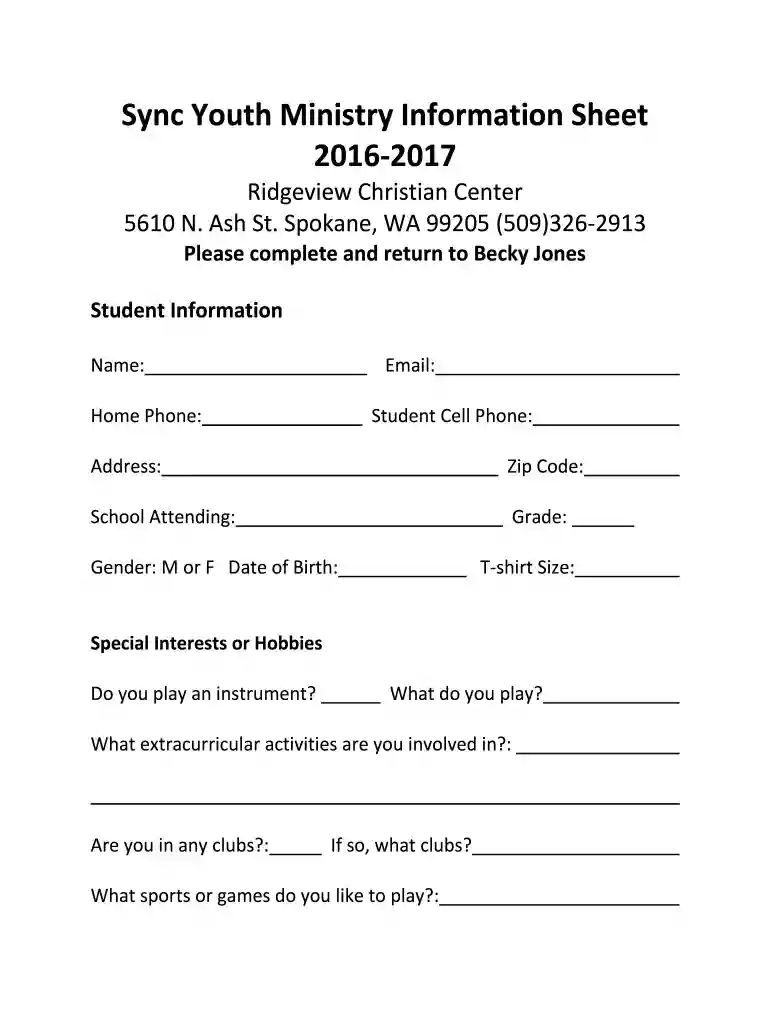
Type text, add images, blackout confidential details, add comments, highlights and more.

Draw your signature, type it, upload its image, or use your mobile device as a signature pad.

Send youth information form via email, link, or fax. You can also download it, export it or print it out.
A youth group information sheet serves as a crucial document for gathering data pertinent to the participants and their families within a youth ministry or group setting. This sheet plays a pivotal role in maintaining organized communication, fostering community engagement, and ensuring that the needs and preferences of each participant are understood and met. By collecting essential details, the group can tailor its activities and outreach efforts, ensuring a positive and inclusive environment.
Contact Information
Demographic Details
Interests and Hobbies
Parental Consent
Code of Conduct
Medical History
Emergency Procedures
Feedback Mechanisms
Opt-Out Options
A youth group information sheet can be effectively implemented in various contexts, including church groups, community centers, or school clubs. For instance:
Creating a youth group information sheet that encompasses these elements not only aids in logistics but also enhances the overall experience for participants. It brings a sense of community and accountability, fostering relationships among youth, their families, and the leaders guiding them.
We've got more versions of the youth group information sheet template form. Select the right youth group information sheet template version from the list and start editing it straight away!
| Versions | Form popularity | Fillable & printable |
|---|---|---|
| 2017 | 4.8 Satisfied (80 Votes) |
At DocHub, your data security is our priority. We follow HIPAA, SOC2, GDPR, and other standards, so you can work on your documents with confidence.
Develop a pack, troop, team, or crew information sheet to hand out. 14. Utilize display cases, bulletin boards, and business, church, and school marqueesRead more
CONTACT INFORMATION for Youth Groups. As the This information sheet is provided to help you prepare your group for their Challenge Course experience.Read more
Jul 21, 2007 ORGANIZING YOUTH ACTIVITIES By: Paul Cook. Introduction: Organizing a good youth ministry is like putting on a play.Read more


