




01. Edit your corrective deed florida pdf online
Type text, add images, blackout confidential details, add comments, highlights and more.

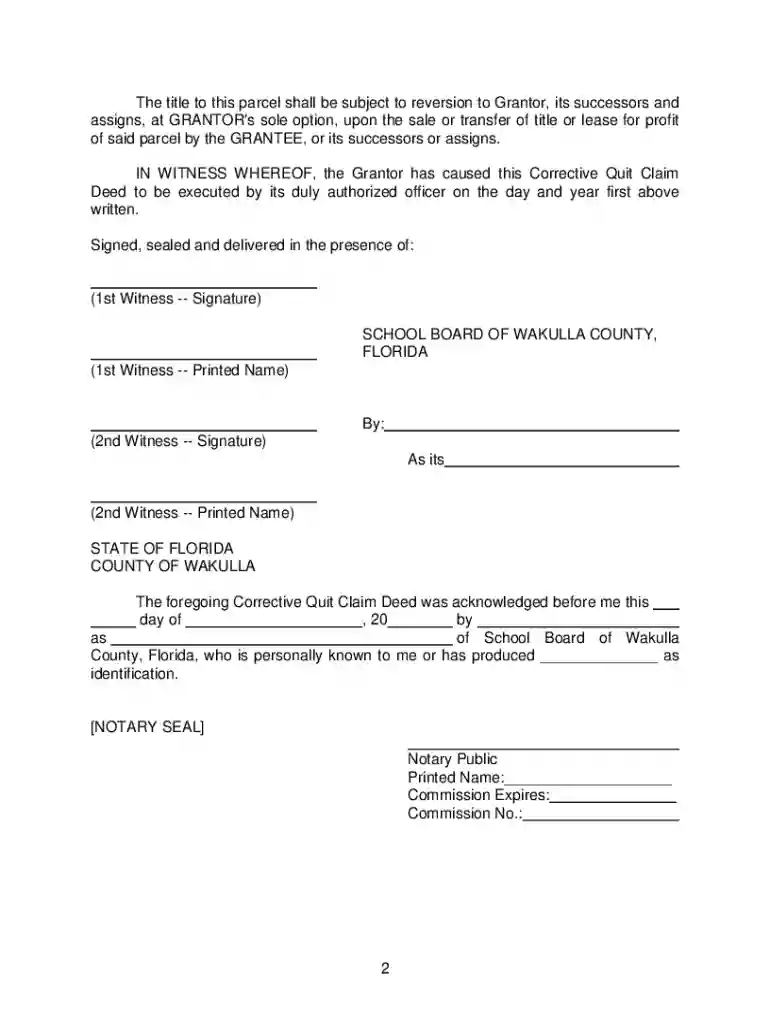
Type text, add images, blackout confidential details, add comments, highlights and more.

Draw your signature, type it, upload its image, or use your mobile device as a signature pad.

Send correction deed form via email, link, or fax. You can also download it, export it or print it out.
A corrective deed in Florida is a legal document used to amend or correct a prior deed that may contain errors or inaccuracies. Common reasons for executing a corrective deed include errors in the names of parties involved, incorrect legal descriptions of the property, or other mistakes that might affect the validity of the original document. This type of deed ensures that the intent of the original transfer of property is properly reflected and legally enforced.
Identification of the Original Deed: A corrective deed must reference the original deed that it seeks to correct, including the date the original deed was recorded and any pertinent details about the property involved.
Specific Corrections: It should clearly state the specific errors that are being corrected. This may involve changing names, clarifying property descriptions, or addressing any omissions.
Signatures: All parties involved in the original deed typically must sign the corrective deed to validate the amendments made.
Legal Description of Property: The corrected deed must include a precise legal description of the property, ensuring it meets all legal requirements.
Gather Necessary Information: Collect copies of the original deed and identify the specific corrections needed.
Drafting the Corrective Deed: Utilize a template or legal software to draft the corrective deed, incorporating all necessary details, including references to the original deed, corrections, and legal descriptions.
Obtain Signatures: Ensure that all parties involved in the original deed review and sign the corrective deed. If the property is owned by multiple parties, all will need to consent to the corrections.
Notarization: Have the corrective deed notarized to confirm the identities of the signers and the authenticity of the document.
Recording the Corrective Deed: Submit the corrective deed to the county clerk or recorder's office where the original deed was recorded. Pay any applicable fees and ensure the document is recorded properly.
Corrective deeds are primarily utilized by property owners, real estate attorneys, and title companies. Property owners may need to correct deeds when buying or selling property, especially if errors in the original deed could lead to potential disputes or title issues. Real estate professionals also use corrective deeds when managing transactions to ensure clear title and avoid complications during property transfers.
The corrective deed must be executed in accordance with Florida laws. This includes compliance with statutes regarding real property transfers and the requirements for notarization and recording. Failure to adhere to these legal stipulations may render the corrective deed ineffective, leaving the original errors unaddressed.
Typographical Errors: An original deed lists the name of one of the owners incorrectly (e.g., "John Doe" instead of "Johnathan Doe"). A corrective deed would amend this name to accurately reflect the legal owner's identity.
Incorrect Property Description: If the original deed contains an inaccurate legal description of the property, such as misidentifying the lot number, a corrective deed can specify the correct legal description.
Changes in Ownership: In the case of a property transfer that inadvertently included a missing owner due to clerical error, a corrective deed can be filed to add the omitted owner to the legal documentation.
These examples illustrate how the corrective deed serves as an essential tool for maintaining accurate and legally sound documentation related to property ownership in Florida.
We've got more versions of the corrective deed florida pdf form. Select the right corrective deed florida pdf version from the list and start editing it straight away!
| Versions | Form popularity | Fillable & printable |
|---|---|---|
| 2010 | 4.6 Satisfied (49 Votes) |
At DocHub, your data security is our priority. We follow HIPAA, SOC2, GDPR, and other standards, so you can work on your documents with confidence.
Apr 21, 1999 This Directive is being issued in Final form and should be used immediately as guidance for proposing, evaluating, and approving MonitoredRead more
Vandenberg, refused to sign a corrective deed which was necessary in order that respondent complete the correction. However, even in light of this failure.
(STATUTORY FORM - SECTION 689.02, F.S.). THIS CORRECTIVE WARRANTY DEED IS BEING RECORDED TO CORRECT AN ERROR IN THE LEGAL. DESCRIPTION OF WARRANTY DEEDRead more


