




01. Edit your hunting elements answer key online
Type text, add images, blackout confidential details, add comments, highlights and more.

Type text, add images, blackout confidential details, add comments, highlights and more.

Draw your signature, type it, upload its image, or use your mobile device as a signature pad.

Send nova hunting the elements answer key pdf via email, link, or fax. You can also download it, export it or print it out.
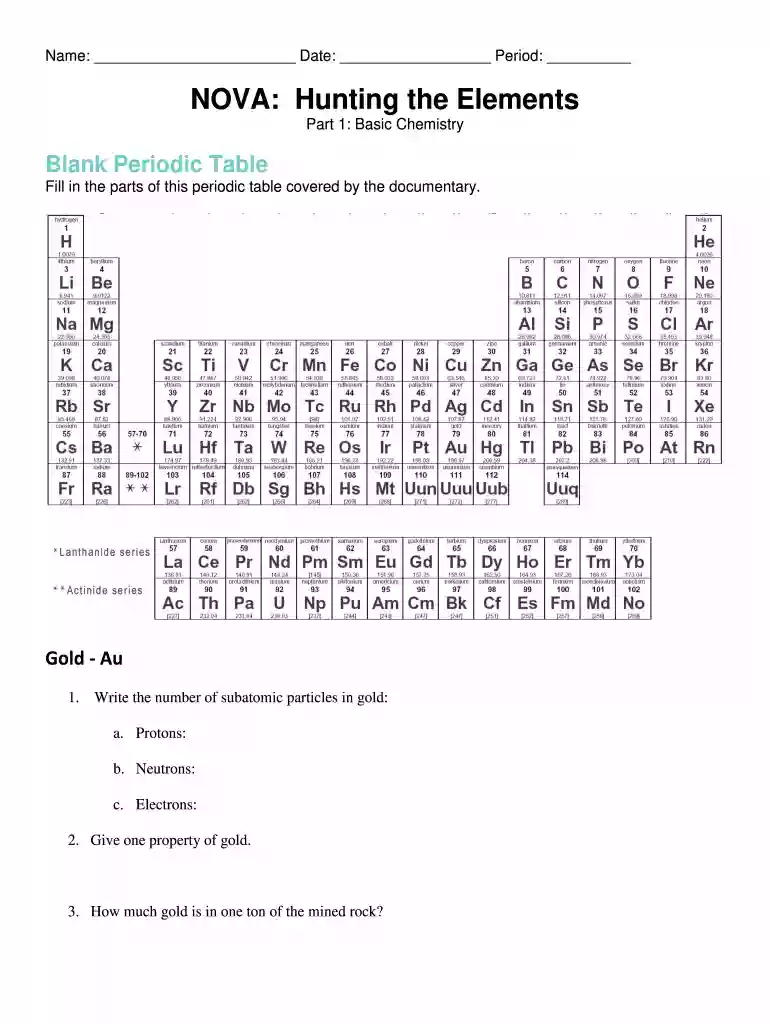
The NOVA documentary "Hunting the Elements" offers an engaging exploration of chemistry and elements, framed through an educational worksheet designed to enhance understanding. This resource dives into fundamental chemistry concepts, such as atomic structure, properties of different elements, and the chemistry of life. Here’s a comprehensive overview of the unique features of this educational document.
The "Hunting the Elements" worksheet is structured to facilitate student learning through targeted questions that align with the documentary's content. Key concepts include:
The worksheet incorporates different formats, enhancing both comprehension and engagement. Each section includes various types of questions, such as fill-in-the-blank and open-ended queries, making it versatile for diverse learning styles. For example:
This format not only aids students in revising concepts but also prepares them for assessments based on the documentary content.
"NOVA Hunting the Elements" aligns with standards set by educational institutions, covering important chemistry benchmarks. Educators can effectively use this resource to bolster curriculum goals in various subjects, including:
To maximize the educational impact of the "Hunting the Elements" worksheet, supplementary materials such as video guides and discussion questions can enhance the classroom experience. Resources for teachers may also include:
These resources create a comprehensive toolkit for educators, ensuring that they can support students effectively throughout their learning journey.
The digital format of the "Hunting the Elements" worksheet, available in PDF, enhances accessibility while ensuring secure access. Using platforms that prioritize user data protection, such as encryption and secure authentication, guarantees user trust, whether accessing through cloud storage or directly from educational websites.
This worksheet is designed for availability across multiple devices, allowing students and educators to access it anywhere, fostering an inclusive educational environment conducive to learning.
The "NOVA Hunting the Elements" educational worksheet serves as an invaluable resource for enhancing student understanding of chemistry. By integrating engaging content, structured questions, and supplementary resources, it provides a robust framework for teaching essential chemistry concepts while aligning with educational standards.
We've got more versions of the hunting elements answer key form. Select the right hunting elements answer key version from the list and start editing it straight away!
| Versions | Form popularity | Fillable & printable |
|---|---|---|
| 2013 | 4.9 Satisfied (55 Votes) |
Yes, electronically drawing your signature is acceptable, but only if you use a tool that complies with industry regulations and policies. Consider DocHub, which ensures eSignature validity under ESIGN and UETA requirements. All you need to approve your nova hunting the elements worksheet electronically is an account with DocHub and an internet connection. After you open your document in our editor, click Sign and choose the Draw tool.
You can find the latest and most relevant version of the nova hunting the elements worksheet answers part 1 in our DocHub forms library. Search it by categories or utilize the search field to get the exact template that fits your situation. You can open this form for editing once you find it.
At DocHub, your data security is our priority. We follow HIPAA, SOC2, GDPR, and other standards, so you can work on your documents with confidence.


