







Definition and Purpose of the Printable AED Inspection Checklist
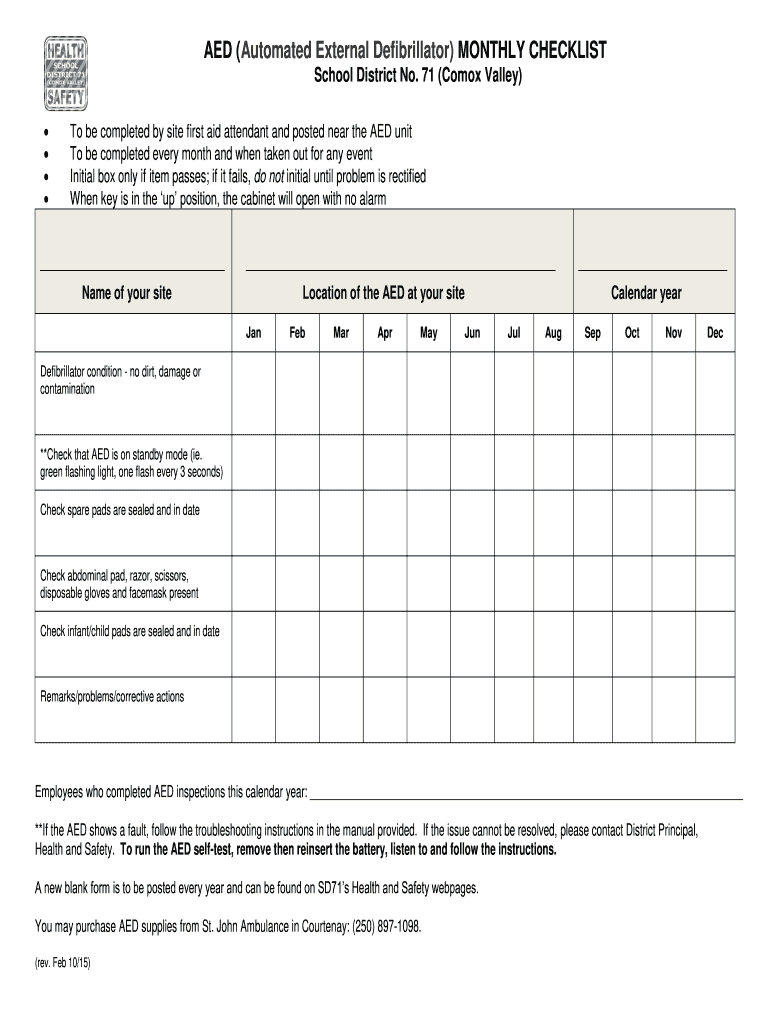
A printable AED inspection checklist is a vital tool used by organizations to ensure that Automated External Defibrillators (AEDs) are functioning correctly and are ready for use in emergencies. This checklist typically encompasses specific tasks and criteria that must be met on a routine basis, such as daily, weekly, or monthly inspections. It serves as a record-keeping device, documenting the status and maintenance of each AED. The primary goal is to ensure that these life-saving devices are in optimal condition and readily accessible when needed.
- Functionality Assessment: Checks include battery status, pad expiry dates, and readiness of the device to deliver a shock if required.
- Cleanliness and Accessibility: Ensures that the AED remains in a clean environment and is not obstructed, promoting ease of access during emergencies.
- Record Keeping: Helps in compliance with regulatory requirements and provides an audit trail for safety inspections.
Steps to Complete the Printable AED Inspection Checklist
Completing the printable AED inspection checklist requires a systematic approach to ensure all necessary components are examined. Below are key steps to facilitate this process effectively.
- Gather Required Information: Collect the necessary documents related to the AED and its previous inspection records before beginning the checklist.
- Visual Inspection: Conduct a thorough visual check of the AED for any physical damage or obstructions. Pay attention to the cleanliness of the device and its surroundings.
- Check Battery and Pads: Verify that the battery is fully charged and the pads have not reached their expiration date.
- Ensure Accessibility: Confirm that the AED is easily accessible and properly marked. It should be stored in a known location.
- Complete the Checklist: Fill out the printable AED inspection checklist clearly, noting the date of inspection, findings, and any actions taken.
- Report Issues: Document any discrepancies or faults noted during the inspection to discuss with appropriate personnel for immediate rectification.
- Maintain Records: Store the completed checklist in a designated area for future reference and compliance checks.
Key Elements of the Printable AED Inspection Checklist
Essential components of a well-structured AED inspection checklist provide clarity and comprehensive coverage of required actions. The following elements are crucial:
- Device Identification Information: Include the location, model, and serial number of the AED for easy identification.
- Inspection Frequency: Clearly state how often inspections should occur (daily, weekly, monthly) based on industry best practices.
- Checklist Sections: Breakdown into specific areas such as battery status, pad conditions, overall functionality, and environmental conditions.
- Signature and Date Lines: Space for the responsible person to sign and date the checklist, verifying that the inspection was completed.
- Comments Section: Provides a space for additional notes regarding any observations or concerns noted during the inspection.
Who Typically Uses the Printable AED Inspection Checklist
Many types of organizations utilize the printable AED inspection checklist to meet their health and safety obligations. Key users include:
- Healthcare Facilities: Hospitals and clinics that need to maintain compliance with health regulations.
- Educational Institutions: Schools and universities utilizing AEDs on campuses for student and staff safety.
- Corporate Offices: Businesses incorporating AEDs in the workplace to ensure employee safety.
- Government Buildings: Municipal structures that have a duty to protect public safety.
- Fitness Centers: Gyms and recreational centers that cater to a large number of individuals participating in physical activities.


Legal Use of the Printable AED Inspection Checklist
Utilizing the printable AED inspection checklist meets legal requirements that help organizations fulfill their duty of care responsibilities. Compliance with state and federal regulations can mitigate liability and enhance safety protocols.
- Regulatory Compliance: Many states have specific laws mandating the presence and maintenance of AEDs in public venues.
- Liability Reduction: Proper documentation through the checklist can provide legal protection during incidents where an AED is utilized.
- Training Requirements: Organizations may be required to train employees on AED use alongside regular maintenance checks, reinforcing the importance of preparedness.
Examples of Using the Printable AED Inspection Checklist
Practical applications of the printable AED inspection checklist provide insights into how organizations can effectively monitor their AEDs:
- Monthly Inspections in Schools: Schools can assign first aid team members to conduct monthly inspections using the checklist, ensuring all AEDs are operational and accessible.
- Corporate Safety Audits: Corporations may include AED inspections as part of their overall health and safety audits, integrating findings into broader risk management strategies.
- Event Planning: During large events, organizers can utilize a checklist to confirm that AEDs are fully stocked and operational before the event starts.
Important Terms Related to the Printable AED Inspection Checklist
Understanding key terminology can enhance comprehension of the AED inspection checklist’s significance:
- Automated External Defibrillator (AED): A portable device that checks heart rhythm and can send an electric shock to the heart to restore a normal rhythm.
- Maintenance Schedule: A timeline for regular checks and maintenance tasks prescribed by the manufacturer or regulatory standards.
- First Aid Attendant: An individual trained and responsible for providing first aid during emergencies, including operation of the AED.
- Inspection Report: A record detailing the inspection outcomes, including any maintenance required or completed.
Variants or Alternatives to the Printable AED Inspection Checklist
Organizations may encounter various alternatives to the standard printed AED inspection checklist, which can include:
- Digital Checklist Options: Many organizations opt for digital versions of the AED checklist, offering real-time access and updates.
- Customizable Templates: Several organizations tailor their own checklists to meet specific needs or compliance requirements, adjusting content accordingly.
- Automated Monitoring Tools: Advanced AEDs may come with built-in monitoring technology that automatically sends alerts if maintenance is needed, complementing traditional checklists.
Using the above sections provides a comprehensive review of the printable AED inspection checklist, highlighting its definition, application, legal standing, and practical usage scenarios.




