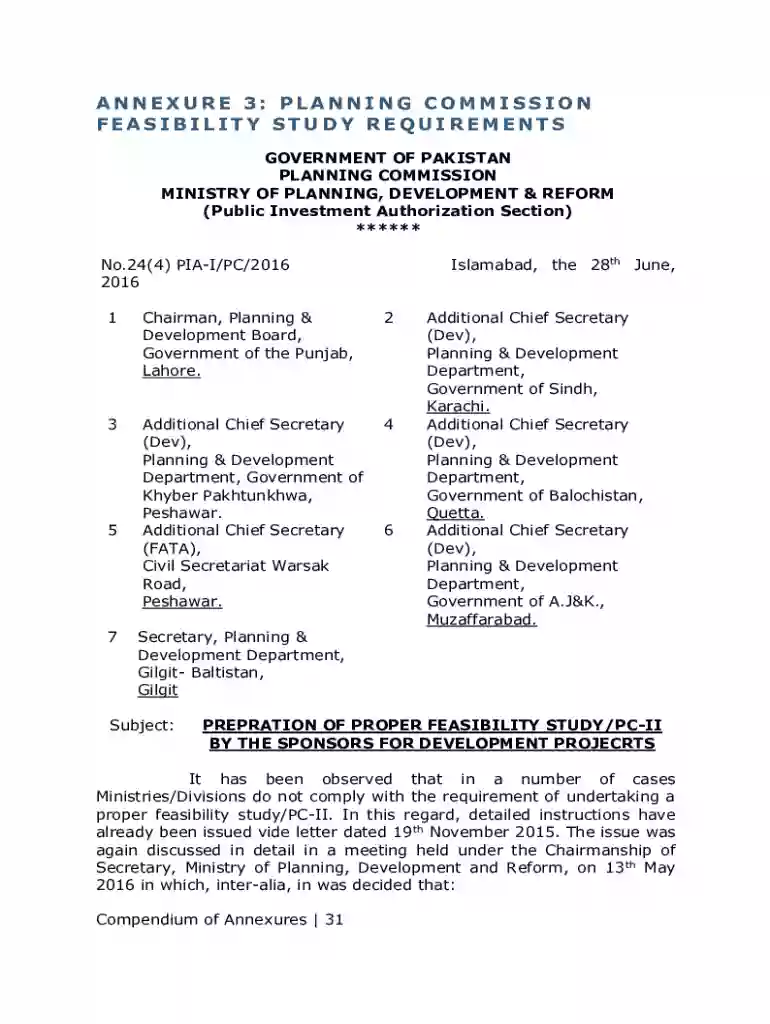
ANNEXURE 3: PLANNING COMMISSION FEASIBILITY STUDY REQUIREMENTS Preview on Page 1

ANNEXURE 3: PLANNING COMMISSION FEASIBILITY STUDY REQUIREMENTS 2026

Here's how it works

  • 01. Edit your form online

    Type text, add images, blackout confidential details, add comments, highlights and more.

  • 02. Sign it in a few clicks

    Draw your signature, type it, upload its image, or use your mobile device as a signature pad.

  • 03. Share your form with others

    Send it via email, link, or fax. You can also download it, export it or print it out.

How to use or fill out ANNEXURE 3: PLANNING COMMISSION FEASIBILITY STUDY REQUIREMENTS

Form edit decoration
9.5
Ease of Setup
DocHub User Ratings on G2
9.0
Ease of Use
DocHub User Ratings on G2
  1. Click ‘Get Form’ to open it in the editor.
  2. Begin by reviewing the introductory section, which outlines the purpose of the feasibility study. Ensure you understand the requirements set forth by the Planning Commission.
  3. Fill in your project details in the designated fields, including project name, location, and objectives. Be precise and clear to avoid any misunderstandings.
  4. Complete the financial analysis section by providing current data on costs, funding sources, and expected returns. Remember that outdated information will not be accepted.
  5. Review all sections for compliance with the guidelines provided. Make sure that your study adheres to the latest instructions from the Planning Commission.
  6. Once completed, utilize our platform’s signing feature to finalize your document before submission.

Start using our platform today for free to streamline your document editing and ensure a smooth submission process!

See more ANNEXURE 3: PLANNING COMMISSION FEASIBILITY STUDY REQUIREMENTS versions

We've got more versions of the ANNEXURE 3: PLANNING COMMISSION FEASIBILITY STUDY REQUIREMENTS form. Select the right ANNEXURE 3: PLANNING COMMISSION FEASIBILITY STUDY REQUIREMENTS version from the list and start editing it straight away!

VersionsForm popularityFillable & printable
20164.8 Satisfied (53 Votes)

be ready to get more

Complete this form in 5 minutes or less

Got questions?

We have answers to the most popular questions from our customers. If you can't find an answer to your question, please contact us.

Types of Feasibility Study. Feasibility studies can be categorized into five main types: technical feasibility, financial feasibility, market feasibility (also known as market fit), operational feasibility, and legal feasibility.
Different Types of Feasibility Study in Project Management Technical Feasibility. Operational Feasibility. Economic Feasibility. Legal Feasibility. Schedule Feasibility.
Conducting a Feasibility Study Step One: Conduct a Preliminary Analysis. Step Two: Prepare a Projected Income Statement. Step Three: Conduct a Market Survey. Step Four: Plan Business Organization and Operations. Step Five: Prepare an Opening Day Balance Sheet. Step Six: Review and Analyze All Data.
A feasibility study typically includes an executive summary, background on the project/business, industry analysis, market study, operations/technical analysis, financial analysis, socioeconomic impact assessment, and legal considerations.
The seven feasibility study steps Preliminary analysis. Defining the scope. Market research. Financial assessment. Roadblocks and alternative solutions. Reassessment. Go or no-go decision.

Security and compliance

At DocHub, your data security is our priority. We follow HIPAA, SOC2, GDPR, and other standards, so you can work on your documents with confidence.

Related links

The Australian Community Land Trust Manual

by L Crabtree Cited by 33 Use of a planning uplift mechanism. A change in planning regulations for a block of land can lead to a change in the value of the blockRead more

Learn more
If you believe that this page should be taken down, please follow our DMCA take down process here