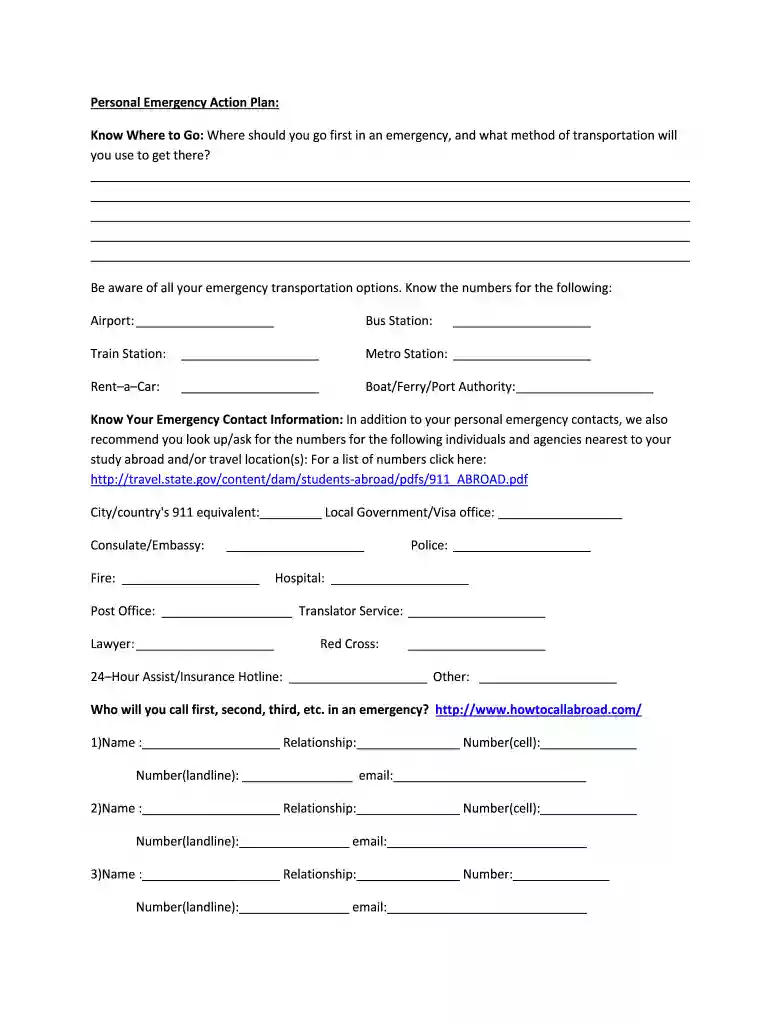
Disaster Preparedness PlanMake a PlanRed Cross 2026

Get Form
Disaster Preparedness PlanMake a PlanRed Cross Preview on Page 1

Here's how it works

01. Edit your form online
Type text, add images, blackout confidential details, add comments, highlights and more.

02. Sign it in a few clicks
Draw your signature, type it, upload its image, or use your mobile device as a signature pad.

03. Share your form with others
Send it via email, link, or fax. You can also download it, export it or print it out.

How to use or fill out Disaster Preparedness PlanMake a PlanRed Cross with our platform

Form edit decoration
9.5
Ease of Setup
DocHub User Ratings on G2
9.0
Ease of Use
DocHub User Ratings on G2
  1. Click ‘Get Form’ to open it in the editor.
  2. Begin by filling out the 'Know Where to Go' section. Clearly outline your primary destination during an emergency and specify your mode of transportation.
  3. In the 'Emergency Transportation Options' section, list contact numbers for local transport services such as airports, bus stations, and train stations.
  4. Complete the 'Know Your Emergency Contact Information' section. Include personal contacts and essential local agencies like the Red Cross, police, and hospitals.
  5. Utilize the checklist provided to ensure you have notified your emergency contacts and prepared necessary items for your emergency kit.
  6. Follow the 'Emergency Action Plan (EAP) Steps' carefully. Document any additional items or plans that may be relevant to your specific situation.

Start using our platform today to create a comprehensive Disaster Preparedness Plan for free!

See more Disaster Preparedness PlanMake a PlanRed Cross versions

We've got more versions of the Disaster Preparedness PlanMake a PlanRed Cross form. Select the right Disaster Preparedness PlanMake a PlanRed Cross version from the list and start editing it straight away!
Versions Form popularity Fillable & printable
2014 4.8 Satisfied (174 Votes)
be ready to get more

Complete this form in 5 minutes or less

Get form

Got questions?

We have answers to the most popular questions from our customers. If you can't find an answer to your question, please contact us.
Contact us
Include Common Emergency Scenarios When You Plan Plan for the emergencies that are most likely to happen where you live. Plan what to do in case you are separated during an emergency. Plan what to do if you have to evacuate. Plan for everyone in your home. Plan to let loved ones know youre safe.
Five Steps of Emergency Care Step 1: Stay Calm and Assess the Situation. Maintaining composure is the first most crucial stage in emergency urgent care. Step 2: Call for Professional Help. Step 3: Prioritize Basic Life Support. Step 4: Comfort and Reassure. Step 5: Follow Up and Seek Professional Guidance.
In an unpredictable world, the 5 Ps of Preparedness provide a comprehensive framework for being ready for any emergency or disaster. Prioritizing planning, procuring supplies, preparing your environment, practicing and training, and preserving peace of mind are all essential aspects of being prepared.
The National Preparedness Goal describes five mission areas prevention, protection, mitigation, response and recovery and 32 activities, called core capabilities, that address the greatest risks to the nation.
Be sure to remember the Five Ps of Evacuation: People, Prescriptions, Papers, Personal Needs, and Priceless Items. - While your safety and your familys safety are most important, there are things you can do before evacuating that can help firefighters.

Security and compliance

At DocHub, your data security is our priority. We follow HIPAA, SOC2, GDPR, and other standards, so you can work on your documents with confidence.

Learn more
ccpa2
pci-dss
gdpr-compliance
hipaa
soc-compliance

People also ask

For your evacuation planning: Arrange your evacuation ahead of time. Dont wait until the last minute to plan your evacuation. Plan what to take. Many families choose to have a go bag ready with some of these critical items. Create a home inventory. Gather important documents. Real-time test.
Learn from experts about the 4 pillars of preparedness: make a plan, build a kit, know your neighbors, and stay informed.
Prevention, mitigation, preparedness, response and recovery are the five steps of Emergency Management.

Related links