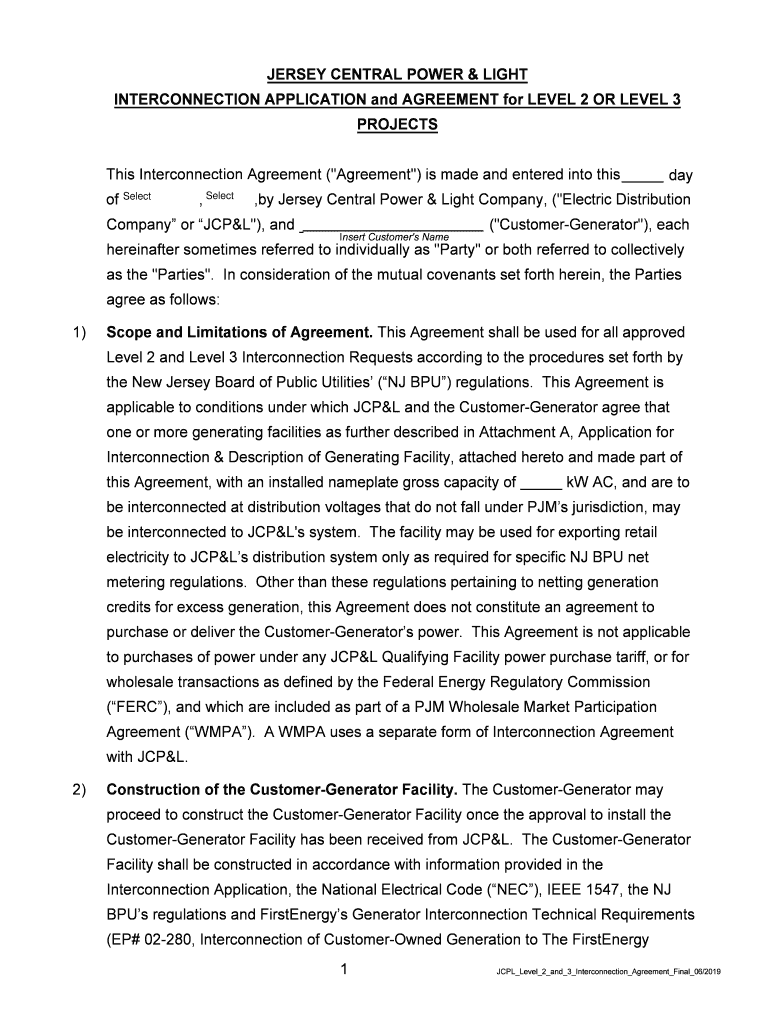
01. Edit your level 2 interconnection application online
Type text, add images, blackout confidential details, add comments, highlights and more.
02. Sign it in a few clicks
Draw your signature, type it, upload its image, or use your mobile device as a signature pad.
03. Share your form with others
Send level 3 interconnection via email, link, or fax. You can also download it, export it or print it out.
How to use or fill out level 2 interconnection with our platform
Ease of Setup
DocHub User Ratings on G2
Ease of Use
DocHub User Ratings on G2
Click ‘Get Form’ to open the Level 2 Interconnection Agreement in the editor.
Begin by filling out the Customer-Generator's legal name and mailing address. Ensure all required fields marked with an asterisk are completed.
Provide details about the Customer-Generator Facility, including the facility address, account number, and energy source. Select options from dropdown menus where applicable.
Complete the sections regarding equipment installation contractors and electrical contractors if applicable. Include their contact information.
Attach necessary documents such as the application fee, one-line diagram, and site plan. Confirm that these attachments are included before submission.
Review all entries for accuracy and completeness. Once satisfied, sign and date the application to certify that all information is true.
Start your Level 2 Interconnection process today using our platform for free!
We've got more versions of the level 2 interconnection form. Select the right level 2 interconnection version from the list and start editing it straight away!
Interconnection standards refer to the technical, contractual, rate, and metering rules that govern the connection of a customers electric-generating system to the grid, facilitating competition among generation utilities and enhancing market participation.
What does an interconnection agreement do?
How much does solar interconnection cost? Costs vary by utility, but interconnection fees typically range from $0 to $200 and are often included in your overall solar system price. Additional costs may apply if: Your service panel needs an upgrade.
What is the point of interconnection?
Types of interconnection solutions The three main types of interconnection are physical interconnection, virtual interconnection and cloud interconnection. Each type of interconnection solution has its own unique benefits and applications.
What is the primary purpose of an interconnection security agreement?
The ISA documents the security protections that must operate on interconnected systems to ensure that transmission between systems permits only acceptable transactions. An ISA includes descriptive, technical, procedural, and planning information.
What is the purpose of an interconnection agreement?
An interconnect agreement is a business contract between a utility and a customer for the purpose of interconnecting their facility for the potential of exchanging electric energy. The agreement documents the terms of the relationship and the requirements of both parties.
2nd level interconnect The interconnect between the package and the board. It also includes the interconnect between the package and capacitors (not shown) that are added to filter out spikes in electrical signals.
The EDC shall use the level 2 interconnection review procedure for an application to interconnect a customer-generator facility that meets both of theRead more
Cookie consent notice
This site uses cookies to enhance site navigation and personalize your experience.
By using this site you agree to our use of cookies as described in our Privacy Notice.
You can modify your selections by visiting our Cookie and Advertising Notice.