01. Edit your blower door test results form online
Type text, add images, blackout confidential details, add comments, highlights and more.
02. Sign it in a few clicks
Draw your signature, type it, upload its image, or use your mobile device as a signature pad.
03. Share your form with others
Send it via email, link, or fax. You can also download it, export it or print it out.
How to use or fill out blower door test results form with our platform
Ease of Setup
DocHub User Ratings on G2
Ease of Use
DocHub User Ratings on G2
Click ‘Get Form’ to open the blower door test results form in the editor.
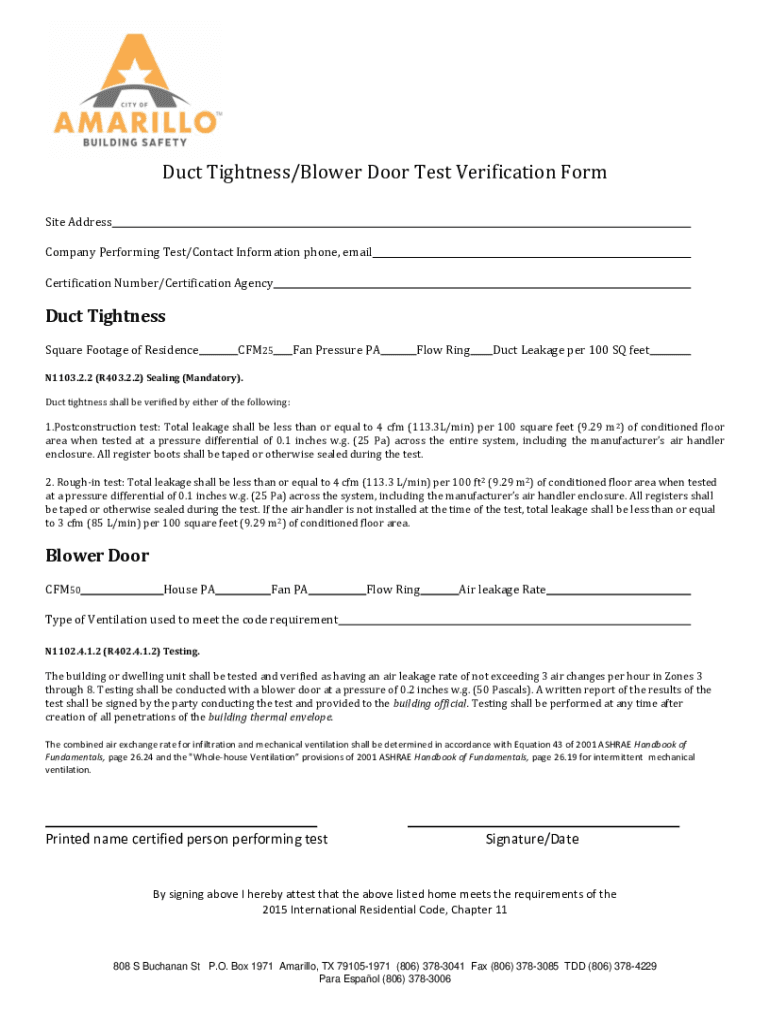
Begin by entering the site address at the top of the form. This is crucial for identifying the location of the test.
Fill in the company performing the test along with their contact information, including phone and email. This ensures proper communication regarding the results.
Input the certification number and agency responsible for certifying the test. This adds credibility to your documentation.
For duct tightness, provide details such as square footage of residence, CFM25, fan pressure PA, and flow ring data. Ensure accuracy for compliance.
Complete sections on duct leakage per 100 square feet and specify whether a post-construction or rough-in test was conducted.
In the blower door section, enter CFM50, house PA, fan PA, and air leakage rate. Also indicate type of ventilation used to meet code requirements.
Finally, have a certified person print their name and sign/date at the bottom of the form to attest that all information is accurate and meets regulatory standards.
Start filling out your blower door test results form online for free today!
Fill out blower door test results form online It's free
We've got more versions of the blower door test results form form. Select the right blower door test results form version from the list and start editing it straight away!
Blower door test results form pdfFree blower door test results formAir leakage blower door test results formEnergy Code compliance formSeattle Energy Code formsPrescriptive Energy Code compliance form
Security and compliance
At DocHub, your data security is our priority. We follow HIPAA, SOC2, GDPR, and other standards, so you can work on your documents with confidence.
MF Blower Door Test Result: CFM@50Pa. CFM/EA (enclosure area) SF. Ring (circle one if applicable):. Open. A. B. C. D. Blower door fan location: WeatherRead more
Aug 16, 2023 A written report of the results of the test shall be signed by the party conducting the test and provided to the code official. TestingRead more
CPM tests include blower doors, A commercial blower door panel, is recommended for CPM testing. comes from empirical analysis of test results. Photos of a
Cookie consent notice
This site uses cookies to enhance site navigation and personalize your experience.
By using this site you agree to our use of cookies as described in our Privacy Notice.
You can modify your selections by visiting our Cookie and Advertising Notice.