Protective Orders: What does the new legislation mean? 2026

Get Form
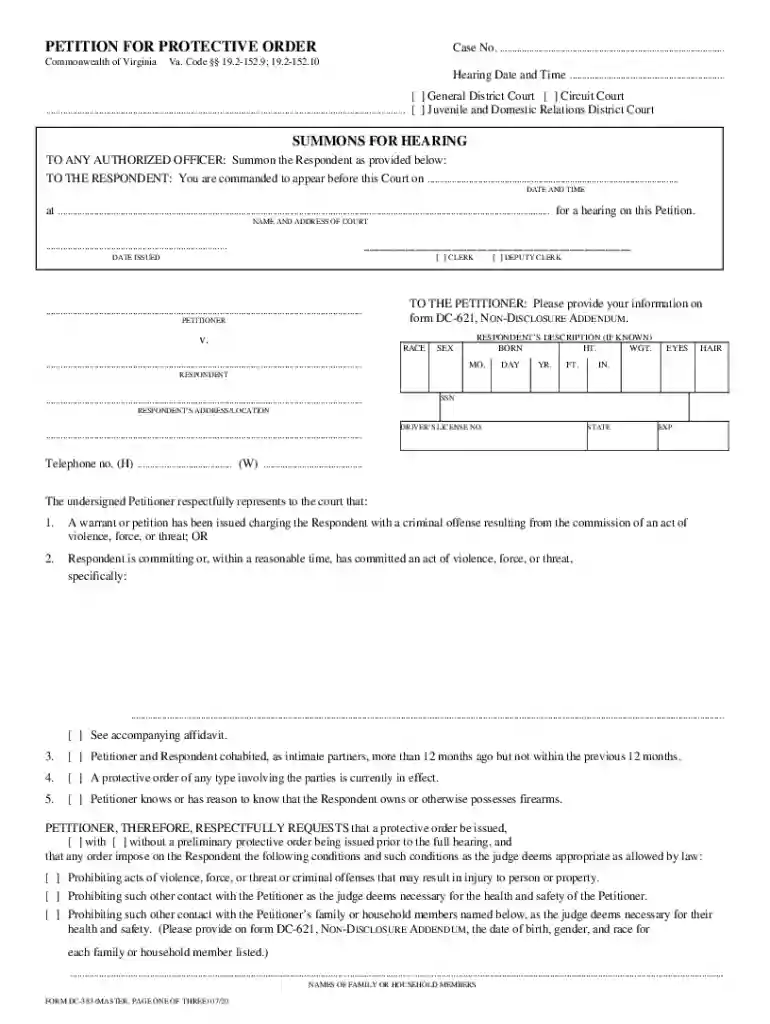
dc 383 Preview on Page 1

Here's how it works

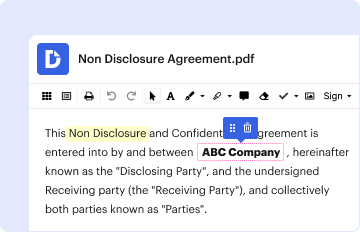
01. Edit your dc 383 online
Type text, add images, blackout confidential details, add comments, highlights and more.

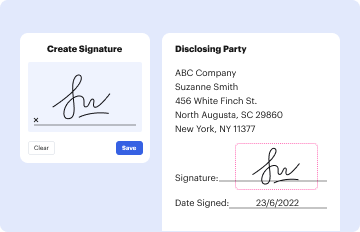
02. Sign it in a few clicks
Draw your signature, type it, upload its image, or use your mobile device as a signature pad.
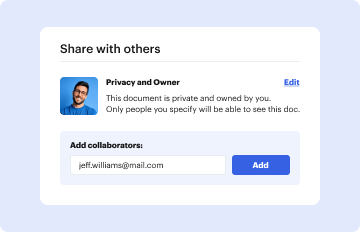
03. Share your form with others
Send petition protective order via email, link, or fax. You can also download it, export it or print it out.

How to use or fill out Protective Orders: What does the new legislation mean? with our platform

Form edit decoration
9.5
Ease of Setup
DocHub User Ratings on G2
9.0
Ease of Use
DocHub User Ratings on G2
  1. Click ‘Get Form’ to open it in the editor.
  2. Begin by entering the case number at the top of the form. This is essential for tracking your petition.
  3. Fill in the hearing date and time, ensuring accuracy as this information is crucial for court proceedings.
  4. Select the appropriate court type by checking one of the boxes provided (General District Court, Circuit Court, or Juvenile and Domestic Relations District Court).
  5. Provide your personal details as the Petitioner, including your name and address. Ensure that all information is complete and accurate.
  6. In the section regarding the Respondent, fill in their description if known, including race, sex, height, weight, and any other relevant details.
  7. Clearly state your reasons for requesting a protective order in the designated area. Be specific about any acts of violence or threats you have experienced.
  8. Review all sections carefully before submitting to ensure that all necessary fields are completed accurately.

Start using our platform today to easily fill out your Protective Order form online for free!

See more Protective Orders: What does the new legislation mean? versions

We've got more versions of the Protective Orders: What does the new legislation mean? form. Select the right Protective Orders: What does the new legislation mean? version from the list and start editing it straight away!
Versions Form popularity Fillable & printable
2020 4.1 Satisfied (53 Votes)
2018 4.9 Satisfied (38 Votes)
2014 4.8 Satisfied (50 Votes)
be ready to get more

Complete this form in 5 minutes or less

Get form

Got questions?

We have answers to the most popular questions from our customers. If you can't find an answer to your question, please contact us.
Contact us
All fifty states and the District of Columbia have statutes for some form of protection order (also called protective order or restraining order) (Findlaw.com, 2014), a legal order issued by a state court that requires one person to stop harming another person (WomensLaw.org, 2015).
In California, orders of protection can fall into two primary categories: civil and criminal. Understanding the difference between these two types of protective orders is essential for anyone seeking safety or clarity in a legal dispute.
An order can include a number of restrictions to keep an abuser or offender from causing future harm to the victim, their family, and members of their household. In family violence cases, some restrictions may apply to either party. People sometimes say restraining order when referring to a protective order.

Security and compliance

At DocHub, your data security is our priority. We follow HIPAA, SOC2, GDPR, and other standards, so you can work on your documents with confidence.

Learn more
ccpa2
pci-dss
gdpr-compliance
hipaa
soc-compliance
be ready to get more

Complete this form in 5 minutes or less

Get form