







Understanding TNCC Skills Station Scenarios
Definition and Purpose of TNCC Skills Station Scenarios
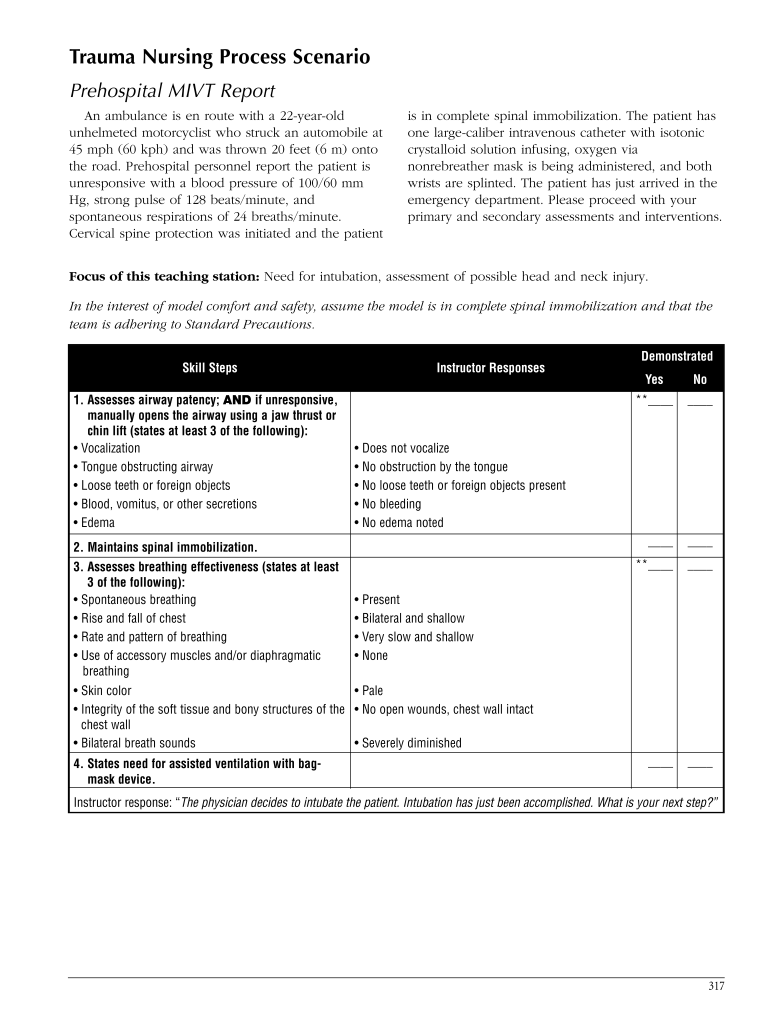
TNCC skills station scenarios are structured simulations utilized in the Trauma Nursing Core Course (TNCC) to train healthcare professionals in critical assessment and intervention skills during trauma situations. The purpose of these scenarios is to provide a hands-on, practical experience that enables participants to apply their theoretical knowledge in a controlled environment. By engaging in these simulations, nurses can refine their critical thinking, decision-making, and technical skills, which are essential during actual trauma cases.
Components of TNCC Skills Station Scenarios
TNCC skills station scenarios are designed to cover various elements critical to trauma nursing. Key components include:
- Assessment Techniques: Scenarios emphasize both primary and secondary assessments, allowing participants to practice vital sign evaluation, trauma history collection, and physical examinations.
- Intervention Skills: These include airway management, hemorrhage control, intravenous access, and stabilization techniques, crucial for effective trauma care.
- Decision-Making Under Pressure: Scenarios are typically time-sensitive, creating an environment where participants must prioritize interventions and react quickly to evolving patient conditions.
Examples of Common Scenarios
Among the many scenarios used in TNCC skills stations, several frequently appear due to their educational value:
- Traumatic Brain Injury: Participants evaluate a patient with potential head trauma, focusing on assessment criteria, neurological checks, and necessary interventions.
- Spinal Injury: This scenario involves recognizing spinal cord injury signs, implementing spinal precautions, and ensuring proper patient positioning.
- Shock Assessment: In cases of hypovolemic or septic shock, trainees practice fluid resuscitation techniques and vital sign monitoring, emphasizing the importance of rapid recognition and intervention.
How to Conduct a Skills Station Scenario
Facilitating a TNCC skills station scenario requires meticulous planning and execution. Key steps to follow include:
- Preparation of the Environment: Set up the station with appropriate tools and materials, such as mannequins, medical supplies, and assessment forms.
- Clear Instructions: Provide a brief overview and clear instructions to the participants before starting the simulation. This includes the scenario focus, objectives, and expected outcomes.
- Active Participation and Observation: Encourage participants to engage fully in the scenario while ensuring observers or instructors monitor performance to provide feedback.
- Debriefing Sessions: After the scenario concludes, a debriefing session is essential to review performance, discuss challenges faced, and highlight best practices.
Importance of Debriefing in TNCC Skills Station Scenarios
Debriefing is a crucial component of the TNCC training process. It allows participants to reflect on their experiences, identify areas for improvement, and reinforce learning outcomes. Effective debriefing should include:
- Feedback Mechanism: Both peer and instructor feedback help participants understand their strengths and weaknesses.
- Discussion of Clinical Guidelines: Reviewing relevant clinical protocols and guidelines reinforces the theoretical knowledge that supports practice.
- Encouragement of Critical Thinking: Questioning participants about their decision-making processes during the scenario fosters an environment of critical evaluation and self-reflection.
Resources for TNCC Skills Station Scenarios
To further enhance learning, several resources can provide additional practice and reference materials:
- TNCC Practice Scenarios PDFs: Supplementary documents that outline various scenarios for practice outside of the skills stations.
- Assessment Checklists: Tools to guide participants through assessment steps and ensure all critical areas are addressed.
- Cheat Sheets: Quick reference guides summarizing key assessment techniques and interventions vital for trauma care.
Comprehensive exposure to TNCC skills station scenarios equips nursing professionals with the tools necessary for effective trauma management, ultimately benefiting patient outcomes in emergency settings.




