
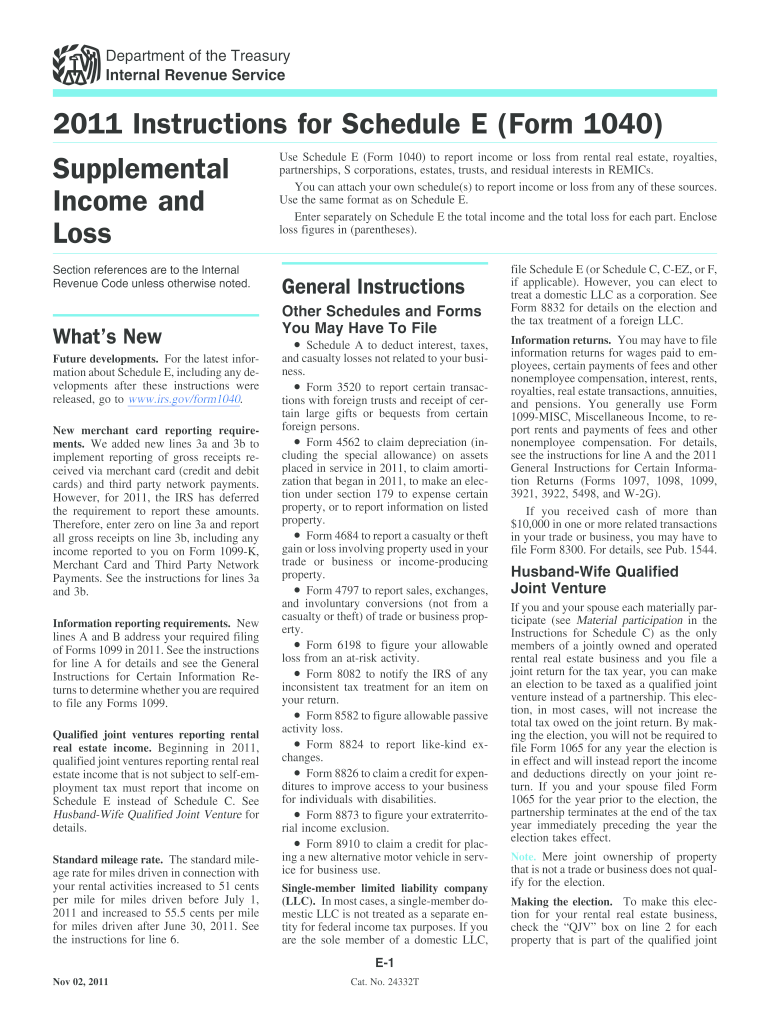







Definition and Purpose of the 2011 E Form
The 2011 E Form, often referred to as Schedule E (Form 1040), serves as a crucial component in the landscape of U.S. tax documentation. It is designed to report supplemental income and loss from various sources. This includes income derived from rental real estate, royalties, partnerships, S corporations, estates, and trusts. For taxpayers who receive income outside of traditional salaries and wages, understanding the specifics of Schedule E is essential for accurate tax reporting.
Examples of Income Sources
- Rental Real Estate: Income from leasing property.
- Royalties: Payments for intellectual property such as books or music.
- Partnerships: Income from a business structured as a partnership.
- S Corporations: Earnings distributed from businesses that are structured as S corporations.
- Estates and Trusts: Distributions received as beneficiaries.
Steps to Complete the 2011 E Form
Comprehensive completion of the 2011 E Form involves several specific steps and considerations. Understanding these ensures accurate filing and compliance with IRS requirements.
Step-by-Step Instructions
- Gather Necessary Documents: Collect any documents related to your supplemental income, such as rental agreements, K-1 forms from partnerships, or royalty statements.
- Fill Out Part I for Rental Income: Report income and expenses related to rental real estate. Include details like property address, income received, and deductible expenses.
- Complete Part II for Partnership and S Corporation Income: This requires entering information from Schedule K-1 (Form 1065 or 1120S).
- Input Royalty Income in Part III: Indicate any royalties received during the tax year.
- Report Estates and Trusts Income in Part IV: Complete this section using information from Schedule K-1 (Form 1041).
- Calculate Totals and Finalize: Sum all parts to determine your total supplemental income or loss.
Who Typically Uses the 2011 E Form
The 2011 E Form is primarily used by individuals and entities with interests in real estate, royalties, partnerships, or similar arrangements. Its versatility makes it applicable across various sectors.


Common Users
- Real Estate Investors: Individuals owning multiple rental properties.
- Artists and Authors: Those who earn significant income from royalties.
- Entrepreneurs: Partners in business ventures that utilize partnership structures.
- Beneficiaries: Individuals receiving distributions from trusts or estates.

Key Elements of the 2011 E Form
Understanding the layout and key elements of the 2011 E Form enables efficient completion and ensures all necessary data is accurately captured.
Primary Sections
- Income Lines: Sections for reporting income from each applicable category, such as rents or royalties.
- Expense Categories: Includes specific lines for reporting related expenses like mortgage interest and repairs.
- Total Supplement Income: A summary section that identifies the total amount of supplemental income reported.
Required Documents for the 2011 E Form
Before commencing the completion of the 2011 E Form, it is crucial to have all necessary supporting documents at hand. These documents verify the income reported and support any deductions or credits claimed.
Essential Documents
- Rental Agreements: For those reporting rental income.
- Form K-1: For partnerships, S corporations, estates, and trusts distributions.
- Royalty Statements: Detailing the royalties received.
- Receipts and Invoices: For deducting legitimate expenses such as repairs or property management fees.
Legal Use and Compliance of the 2011 E Form
Using the 2011 E Form properly ensures compliance with IRS guidelines and helps avoid legal repercussions.
IRS Compliance Requirements
- Accurate Reporting: All income and expenses must be accurately reported to avoid penalties.
- Record Keeping: Maintain all records for a minimum of three years, as IRS audits may require substantiation.
- Filing Deadlines: Ensure the form is submitted by the IRS deadline, typically coinciding with Form 1040 deadlines.
Examples of Using the 2011 E Form
Practical scenarios illustrate the application and benefit of accurately completing the 2011 E Form.
Case Studies
- Real Estate Scenario: Jane, an owner of two rental properties, reports rental income and expenses across Part I of the form. This includes property management fees, maintenance, and mortgage interest.
- Artist Income: Tom, a musician earning royalties, captures these earnings in Part III, ensuring to deduct related expenses such as studio rental and equipment costs.
Filing Deadlines and Important Dates for the 2011 E Form
Timely submission of the 2011 E Form is critical to avoid late filing penalties and interest.
Key Deadlines
- Standard Tax Filing Date: Aligns with the federal tax filing deadline, usually April 15.
- Extension Requests: File for a six-month extension using Form 4868 to avoid penalties if unable to meet the initial deadline.
Proper adherence to these deadlines underscores the importance of timely and accurate tax filings, ensuring the avoidance of additional charges or audits.




