




Definition and Meaning of the Adult ADHD Self-Report Scale (ASRS) Symptom Checklist
The Adult ADHD Self-Report Scale (ASRS) Symptom Checklist is a standardized tool used by healthcare professionals to evaluate symptoms associated with attention-deficit/hyperactivity disorder (ADHD) in adults. This checklist serves to identify a range of inattentive and hyperactive-impulsive symptoms, aligning with the diagnostic criteria set forth in the DSM-IV. The ASRS is instrumental in guiding clinicians in assessing the likelihood of ADHD and determining if further evaluation or diagnosis is warranted.
ADHD manifests differently in adults compared to children, and the ASRS is designed to capture these adult-specific symptoms. The scale consists of a comprehensive set of questions that explore various facets of attention, focus, organization, and impulse control. Healthcare providers utilize the ASRS to gain insights into a patient’s symptom history, which is crucial for a nuanced understanding of how these symptoms impact daily functioning in personal, social, and work contexts.
Key characteristics of the ASRS include:
- Self-Assessment Format: Adults fill out the scale themselves, providing subjective insights into their experiences.
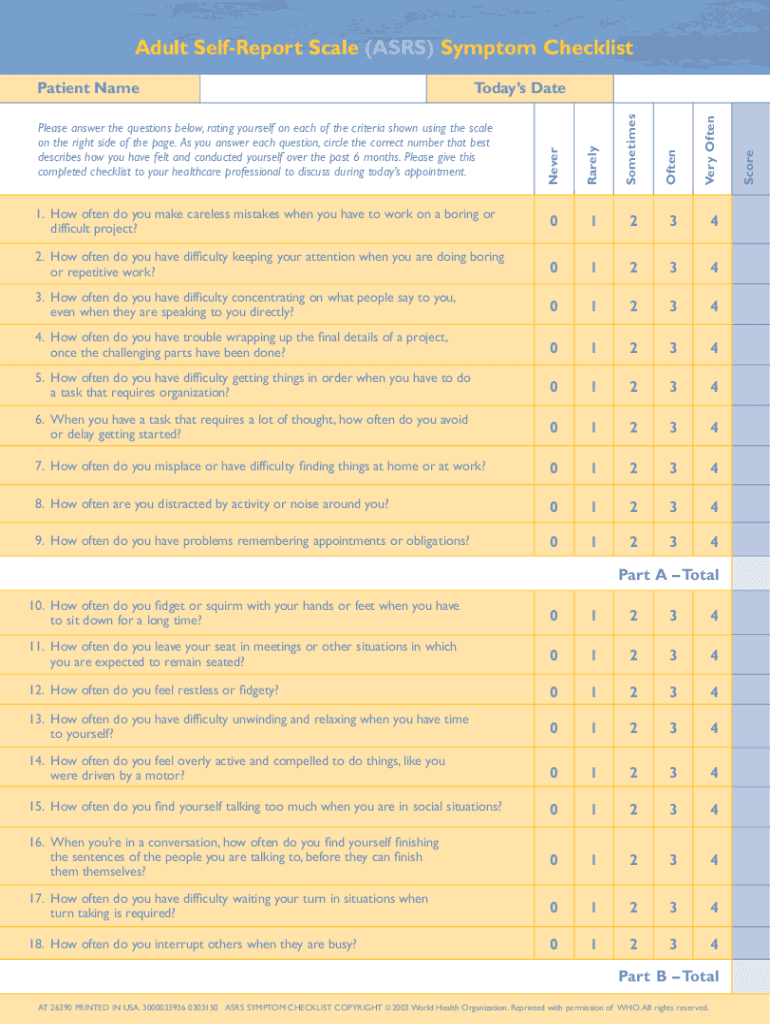
- Symptom Identification: The checklist focuses on 18 symptoms categorized under two primary types: inattentive and hyperactive-impulsive.
- Scoring and Interpretation: After completion, scores are calculated to determine the presence and severity of ADHD symptoms, facilitating a structured discussion between the patient and the clinician.
How to Use the Adult ADHD Self-Report Scale (ASRS) Symptom Checklist
Utilizing the Adult ADHD Self-Report Scale involves a systematic approach to ensure accurate assessment and interpretation of symptoms. This process helps achieve reliable results, which can significantly aid in diagnosis and treatment planning. Here is a breakdown of how to effectively use the ASRS.
-
Administering the Checklist:
- Ensure the patient understands that the ASRS is a self-report tool intended for personal reflection.
- Provide a calm environment free from distractions to facilitate honest responses.
- The patient should complete the checklist independently, as this will yield the most accurate reflection of their symptoms.
-
Scoring the ASRS:
- The ASRS features a scoring guide that assists in interpreting results. Each symptom is rated on a scale from zero to three based on frequency.
- After the patient completes the checklist, add the scores to derive a total score for both inattentive and hyperactive-impulsive symptoms.
- Determine if the scores meet the cutoff points established for further evaluation or diagnosis.
-
Reviewing Results with the Patient:
- Schedule a follow-up appointment to discuss the results with the patient.
- Provide a supportive environment to encourage open discussion about their scores, experiences, and any related concerns.
- Use the results as a basis to explore additional factors like family history and impairment in daily activities, which are also important for a comprehensive assessment.
-
Post-Assessment Actions:
- Depending on the assessment results, consider additional evaluations or referrals for mental health professionals if ADHD is suspected.
- Discuss treatment options, including therapy, medication, or lifestyle changes, tailored to the individual patient's needs.
Key Elements of the Adult ADHD Self-Report Scale (ASRS) Symptom Checklist
The Adult ADHD Self-Report Scale includes several essential components that structure its effectiveness as an assessment tool. Recognizing these key elements helps both professionals and patients appreciate how the ASRS operates.
-
Symptom Categories: The ASRS divides symptoms into two primary types:
- Inattentive Symptoms: These include difficulties in sustaining attention, challenges with organization, and forgetfulness in daily activities.
- Hyperactive-Impulsive Symptoms: These represent fidgeting, interrupting others, and experiencing restlessness.
-
Scoring System: Each question on the ASRS is designed to be rated on a four-point scale:
- 0 = Never
- 1 = Rarely
- 2 = Sometimes
- 3 = Often
-
Cutoff Scores: Specific cutoff scores are established within the ASRS for determining the likelihood of ADHD:
- High cutoff scores suggest a significant level of concern and the potential for an ADHD diagnosis.
- Lower scores indicate fewer symptoms and may not necessitate further evaluation.
-
Intended Audience: Typically filled out by adults experiencing ADHD symptoms, the ASRS can also be administered by healthcare providers to assess patients comprehensively.
Important Terms Related to the Adult ADHD Self-Report Scale (ASRS) Symptom Checklist
Understanding terms related to the ASRS provides clarity and context for healthcare providers and patients. Here are some critical terms often associated with the Adult ADHD Self-Report Scale:
- DSM-IV: The Diagnostic and Statistical Manual of Mental Disorders, Fourth Edition, which outlines the criteria for diagnosing ADHD.
- Self-Report: A method where individuals provide assessments of their symptoms or experiences based on their perspective.
- Symptoms: Observable behaviors and feelings that are indicative of ADHD, categorized as either inattentive or hyperactive-impulsive.
- Diagnosis: The formal identification of a condition based on a set of criteria, often following the completion of standardized assessments.
- Cutoff Score: The pre-established score threshold used to determine whether further evaluation for ADHD is recommended.
Who Uses the Adult ADHD Self-Report Scale (ASRS) Symptom Checklist?
The Adult ADHD Self-Report Scale is employed by a diverse range of individuals and professionals across various settings. Understanding who typically utilizes the ASRS can provide insight into its importance and application in real-life scenarios.
-
Healthcare Professionals: Psychiatrists, psychologists, and primary care physicians often use the ASRS to aid in diagnosing ADHD. This tool allows them to gather detailed information regarding a patient's symptoms and functioning.
-
Mental Health Counselors: Licensed counselors and therapists may use the ASRS as part of a comprehensive assessment during initial consultations with clients presenting ADHD-related concerns.
-
Individuals Seeking Diagnosis: Adults who suspect they might have ADHD frequently fill out the ASRS independently. This self-assessment aids in initiating discussions with healthcare professionals.
-
Research and Educational Institutions: Organizations focusing on ADHD research utilize the ASRS in studies to assess prevalence and effectiveness of treatment approaches in adult populations.
By recognizing the various users of the ASRS, one can appreciate its multifaceted role in ADHD assessment and management, ultimately contributing to better health outcomes for those affected.