Motion for discovery template texas 2026

Get Form
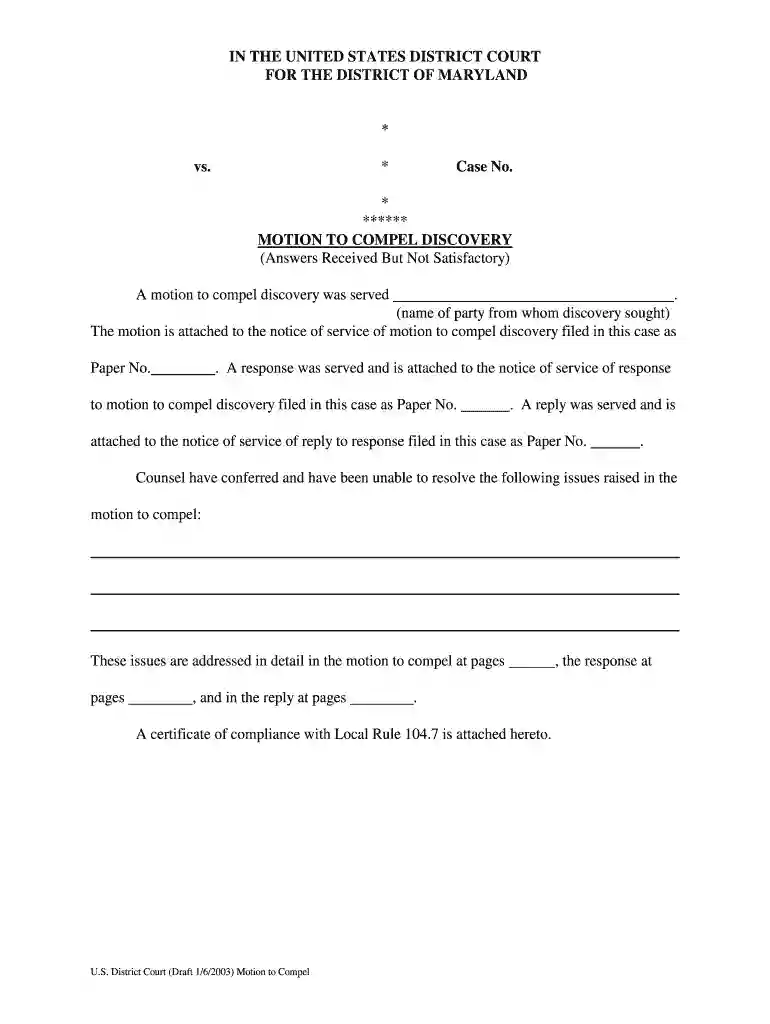
motion for discovery template Preview on Page 1

Here's how it works

01. Edit your motion for discovery template online
Type text, add images, blackout confidential details, add comments, highlights and more.

02. Sign it in a few clicks
Draw your signature, type it, upload its image, or use your mobile device as a signature pad.

03. Share your form with others
Send motion for discovery form texas via email, link, or fax. You can also download it, export it or print it out.

Definition and Significance of Motion for Discovery Template Texas

A motion for discovery is a formal request initiated by a party in a legal proceeding to obtain evidence from another party. This template serves as a standardized framework for parties in litigation, particularly in Texas, to request pertinent information, documents, or testimonies that are essential for building a case. The significance of using a motion for discovery template in Texas lies in its ability to streamline the process of gathering evidence while adhering to the local rules of court, which govern discovery procedures.

  • Purpose: The primary purpose of the motion is to ensure that all parties have access to relevant information that may influence the outcome of the case.
  • Legal Framework: In Texas, the rules governing discovery are outlined in the Texas Rules of Civil Procedure, making it vital for the template to align with these regulations to be effective in court.
  • Enforcement: If a party fails to provide requested discovery, this motion can be used to compel compliance, which may involve the court imposing sanctions on non-compliant parties.

How to Use the Motion for Discovery Template Texas

Utilizing the motion for discovery template in Texas involves several steps that ensure compliance with legal standards and procedural requirements.

  1. Identify Relevant Information: Start by detailing the specific pieces of information or documents you need from the other party. Be precise in your requests to avoid objections.
  2. Fill Out the Template: Use the standardized template to state your request formally. This includes:
    • Caption: Include the court name, case number, and parties involved.
    • Title: Clearly label the document as a "Motion for Discovery."
    • Body: Provide a detailed explanation of what you are requesting and why it is necessary for your case.
  3. Cite Legal Justifications: Reference the pertinent Texas laws and rules that authorize your request, grounding it in legal context.
  4. File with the Court: Submit the completed motion to the appropriate court for filing, ensuring compliance with local rules regarding formatting and filing procedures.
  5. Serve the Other Party: After filing, serve the motion on the opposing party to provide proper notice and allow them to respond.

Steps to Complete the Motion for Discovery Template Texas

Completing a motion for discovery template requires attention to detail and adherence to specific procedural steps.

  1. Gather Information:

    • Collect all relevant facts and evidence needed for your motion.
    • Understand what you can request under Texas law.
  2. Draft the Motion:

    • Use the template to create a structured document.
    • Start with the case title, followed by the motion title, and then the body of the motion.
  3. Explain Requests Clearly:

    • Articulate each request concisely, using clear language.
    • Include categories of documents or specify types of testimony sought.
  4. Justification:

    • Clearly state why the requested information is essential for the case.
    • Reference relevant legal statutes to bolster your arguments.
  5. Finalize and Review:

    • Proofread the document for errors and ensure that all necessary elements are included.
    • Verify compliance with any required formatting guidelines as specified by the court.
  6. Submit and Serve:

    • File the motion with the court clerk.
    • Serve the opposing party through a process server or mail, following the requirements for notification.

Important Terms Related to Motion for Discovery Template Texas

Understanding key terms associated with the motion for discovery can enhance comprehension and effectiveness when engaging in legal processes.

  • Discovery: The pre-trial phase in a lawsuit where parties exchange information.
  • Request for Production: A specific type of discovery request asking for documents or evidence.
  • Interrogatories: Written questions that one party sends to another, requiring written responses.
  • Deposition: A sworn statement taken out of court, often involving a witness or party.
  • Motion to Compel: A request made to the court to enforce compliance with a discovery request.
  • Protective Order: An order granted by the court to protect a party from undue burden or harassment during the discovery process.

Legal Use of the Motion for Discovery Template Texas

The legal framework surrounding a motion for discovery in Texas is rooted in the state's procedural rules, which ensure a fair process for gathering relevant information.

  • Compliance with Texas Rules of Civil Procedure: The motion must comply with specific sections of the Texas Rules of Civil Procedure concerning discovery, including the types of information that can be requested.
  • Limitations and Exemptions: Certain information may be protected under legal privilege, such as attorney-client communications or work product, which must be respected in any discovery request.
  • Court's Discretion: Courts in Texas have discretion in granting or denying motions for discovery, often requiring a showing of relevance and necessity before granting access to requested documents or information.

Understanding the legal implications of using the motion for discovery template can significantly influence litigation strategies and outcomes in Texas.

See more motion for discovery template texas versions

We've got more versions of the motion for discovery template texas form. Select the right motion for discovery template texas version from the list and start editing it straight away!
Versions Form popularity Fillable & printable
2016 4.8 Satisfied (73 Votes)
2003 4.4 Satisfied (51 Votes)
be ready to get more

Complete this form in 5 minutes or less

Get form

Got questions?

We have answers to the most popular questions from our customers. If you can't find an answer to your question, please contact us.
Contact us
Reasons To File A Motion To Dismiss In Texas Insufficient Evidence. In a criminal trial, the prosecution must prove the charge against the defendant beyond any reasonable doubt. Statute Of Limitations. Violation Of The Right To A Speedy Trial. Double Jeopardy. Errors In Filing The Complaint. Other Reasons.
Discovery is not limited to tangible things, but may extend to knowledge, mental impressions, and opinions of persons who will testify; explanations of documents or tangible things, or information contained therein; and other relevant information within the knowledge or control of the entity from whom discovery is
Levels of Discovery either Level 1 or 2. Most cases occur under Level 2 discovery. Level 3 discovery will only happen if a court specifically orders that discovery be conducted at Level 3. Under a Level 1 discovery plan, the discovery period lasts for 180 days from the date of the first request for discovery.
The party requesting discovery must give the responding party at least 30 days to respond to a post-judgment discovery request. The responding party may file a written objection with the court within 30 days of receiving the request.
A Motion for Discovery must be in writing, with a signature, and be served on the other party in accordance with the T.R.C.P 501.4. A Certificate of Service must be attached to the motion that states when and how you served the document on the other party and it must be signed.

Security and compliance

At DocHub, your data security is our priority. We follow HIPAA, SOC2, GDPR, and other standards, so you can work on your documents with confidence.

Learn more
ccpa2
pci-dss
gdpr-compliance
hipaa
soc-compliance

People also ask

Reciprocal discovery is integral to promoting fairness and transparency in federal criminal trials. By mandating the exchange of information, it levels the playing field, allowing both sides to prepare their cases effectively.
Pursuant to Article 39.14(c) of the Texas Code of Criminal Procedure, the Defendant requests that the State provide written notice of any portion of any document, item or information withheld from discovery or redacted by the State or its agents.

motion of discovery form