




Here's how it works
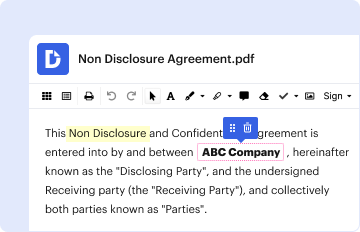
01. Edit your form online
Type text, add images, blackout confidential details, add comments, highlights and more.

02. Sign it in a few clicks
Draw your signature, type it, upload its image, or use your mobile device as a signature pad.

03. Share your form with others
Send it via email, link, or fax. You can also download it, export it or print it out.
How to use or fill out Anesthetic Procedure Consent Form - St Francis Animal Hospital

- Click ‘Get Form’ to open it in the editor.
- Begin by entering your pet's name and the date at the top of the form. This ensures that all information is accurately linked to your pet's procedure.
- Fill in your contact details, including phone numbers and email address, so the veterinary staff can reach you before, during, and after the procedure.
- Indicate any additional services required for your pet, such as vaccinations or grooming, by checking the appropriate boxes.
- Review the section detailing what to expect during the procedure. Make sure you understand each point and feel free to ask questions if needed.
- In the emergency treatment section, select whether you consent to CPR or prefer a Do Not Resuscitate (DNR) order by initialing your choice.
- Finally, sign and date the form at the bottom to confirm your understanding and agreement with all outlined procedures.
Start filling out your Anesthetic Procedure Consent Form today using our platform for a seamless experience!
Fill out Anesthetic Procedure Consent Form - St Francis Animal Hospital online
It's free
It's free
See more Anesthetic Procedure Consent Form - St Francis Animal Hospital versions
We've got more versions of the Anesthetic Procedure Consent Form - St Francis Animal Hospital form. Select the right Anesthetic Procedure Consent Form - St Francis Animal Hospital version from the list and start editing it straight away!
Got questions?
We have answers to the most popular questions from our customers. If you can't find an answer to your question, please contact us.
Contact us
How to consent for anesthesia?
Informed consent for anesthesia is an exchange between the patient and physician in, which information including the benefits of anesthesia, associated risks, and alternatives are discussed so patients are aware of all the necessary information to make an informed decision.
How to consent for anaesthesia?
Respond fully and record your discussions. Note the risks, benefits and alternatives (including no treatment). A separate consent form is not required for anaesthetic procedures undertaken to facilitate another treatment. Consent is an ongoing process and may require repeated discussion.
What are the 5 steps to obtaining consent?
Obtaining informed consent in medicine is a process that should include describing the proposed intervention, emphasizing the patients role in decision-making, discussing alternatives to the proposed intervention, discussing the risks and benefits of the proposed intervention, and eliciting the patients preference,
What are the risks of anesthesia consent?
Potential side effects/risks include: infection, bleeding, pneumothorax, hoarse voice, Horners syndrome (droopy eyelid, pinpoint pupil and dry, flushed face), difficulty breathing, nerve damage, and incomplete nerve block.
What are the 4 steps of consent?
There are 4 components of informed consent including decision capacity, documentation of consent, disclosure, and competency. Doctors will give you information about a particular treatment or test in order for you to decide whether or not you wish to undergo a treatment or test.
Security and compliance
At DocHub, your data security is our priority. We follow HIPAA, SOC2, GDPR, and other standards, so you can work on your documents with confidence.
Learn more


People also ask
What is the consent for anesthesia and surgical procedures?
Consent for anesthesia has traditionally been considered as implied once the patient consents to surgery, with the surgical consent stating that anesthesia will be needed for the surgery and there are associated risks with anesthesia.