
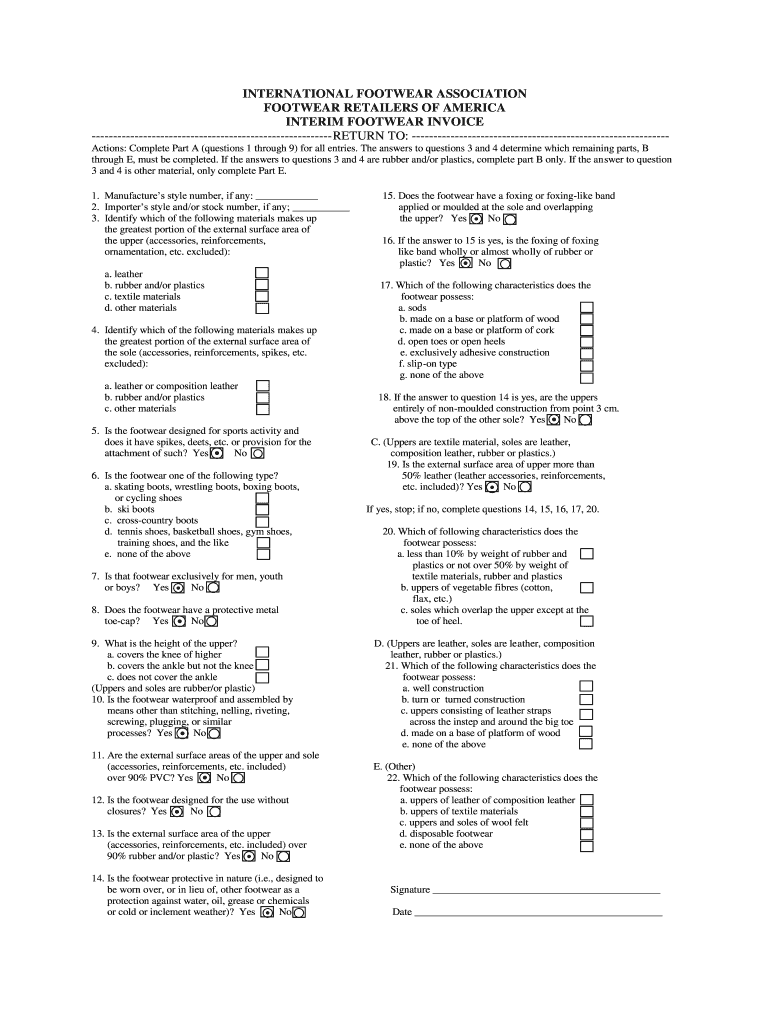







Definition and Meaning of the International Footwear Association Footwear Retailers of - FedEx
The International Footwear Association (IFA) and Footwear Retailers of America (FRA) collaborate to provide a form that addresses specific logistics protocols for footwear distribution via FedEx. This form is vital for ensuring compliance with customs regulations and logistical standards for footwear products being shipped internationally. Its purpose is to streamline the documentation process, making it easier for retailers to manage their inventory and ensure that shipments meet the required regulations.
This form typically includes essential details about the shipment, such as the type of footwear being transported, the materials used, and the intended market. The data collected serves multiple purposes, including analysis for market trends, compliance with international trade laws, and adherence to shipping guidelines established by FedEx. Understanding this form is crucial for any business engaged in international footwear trade, as it helps navigate the complexities of logistical requirements.
How to Use the International Footwear Association Footwear Retailers of - FedEx
Using the International Footwear Association and Footwear Retailers of America form requires a systematic approach. Here's how to effectively utilize this form to facilitate seamless shipping processes:
-
Document Preparation: Begin by gathering all necessary information about the footwear. This includes details about upper and sole materials, design specifications, and any special attributes associated with the product.
-
Completing the Form:
- Fill out pertinent sections including descriptions of the footwear types, materials involved, and any certifications needed for international shipping.
- Pay careful attention to any specific requirements that may relate to the being transported, thereby ensuring compliance with FedEx protocols.
-
Review and Verification: Once completed, review the form for accuracy. Verification is essential as any discrepancies can lead to delays or issues with customs and shipping.
-
Submission: Depending on the shipping method chosen, you may submit the form electronically or as a hard copy. Ensure that you keep a record of submissions for your records.
-
Follow-Up: After submission, monitor the shipping process via FedEx to ensure that the document is processed correctly and that the shipment arrives on time.
This methodical approach ensures that all aspects of sending footwear internationally are addressed, reducing the likelihood of errors and enhancing shipping efficiency.
Steps to Complete the International Footwear Association Footwear Retailers of - FedEx
Completing the International Footwear Association footwear retailers of - FedEx form involves the following steps:
-
Identify Required Information: Begin by determining the specific information needed for your footwear shipment. Common data includes:
- Type of footwear
- Material composition
- Quantity being shipped
-
Fill Out the Form:
- Start with basic shipping details, including sender and recipient information.
- Specify the footwear attributes in the corresponding sections. Be as detailed as possible to prevent delays.
-
Add Additional Information: Include any necessary documentation required by customs. This may include:
- Certificates of authenticity or compliance.
- Trade agreements or licenses related to the footwear being shipped.
-
Proofreading: Before finalizing the form, revisit all section entries to confirm that the information is complete and accurate.
-
Sign and Date: Ensure that any required signatures are added, and the document is dated correctly to maintain authenticity.
-
Submit the Form: Follow the submission methods as outlined, either sending it online or via mail, as required.
By adhering to these steps, businesses can ensure that their footwear shipments are well-documented and compliant, facilitating a smoother shipping experience.
Who Typically Uses the International Footwear Association Footwear Retailers of - FedEx
The International Footwear Association and Footwear Retailers of America form is primarily used by various stakeholders in the footwear industry, including:
-
Footwear Manufacturers: Producers of shoes that export products internationally rely on this form to ensure compliance and streamline logistics.
-
Retailers and Distributors: Businesses that sell directly to consumers or distribute footwear products use this form for their inventory shipments, ensuring that they meet both regulatory and logistical requirements.
-
Shipping Companies: Companies, especially FedEx, utilize these details for handling international shipments and ensuring that footwear complies with shipping regulations.
-
Customs Brokers: Professionals handling international shipments may use this form to facilitate customs clearance. Understanding the specifications of the footwear enhances the efficiency of the clearance process.
-
Importers: Businesses that bring footwear products into the country benefit from detailed information provided in this form to satisfy requirements set forth by U.S. customs.
These users collectively contribute to the footwear supply chain, and their adherence to the guidelines provided by the form helps maintain smooth operations within the industry.


Important Terms Related to the International Footwear Association Footwear Retailers of - FedEx
Understanding key terms associated with the International Footwear Association footwear retailers of - FedEx form is essential for accurate completion and compliance. Some important terms include:
-
Customs Clearance: The process by which goods are allowed to enter a country after meeting necessary requirements. This form aids in ensuring compliance during this process.
-
Declaration of Origin: A statement detailing where the footwear was manufactured, which can affect tariffs and import duties.
-
Tariffs and Duties: Taxes imposed by governments on imported goods. Accurate reporting on the form can help businesses manage these additional costs.
-
Descriptive Terminology: Specific language and classifications used to describe the footwear accurately, ensuring detailed descriptions conform to international standards.
-
Logistics and Shipping Protocols: Guidelines set by shipping providers, like FedEx, to ensure safety and efficiency in global shipping practices.
Understanding these terms enhances the user's ability to navigate the complexities of international shipping and compliance effectively.
Legal Use of the International Footwear Association Footwear Retailers of - FedEx
The legal utilization of the International Footwear Association footwear retailers of - FedEx form is crucial for ensuring adherence to international trade laws and U.S. regulations. Here are key legal considerations:
-
Compliance with Trade Regulations: The form must be completed in accordance with international trade laws to facilitate legal transportation of goods across borders. Failing to do so can result in penalties or seizure of goods.
-
Documentation Requirement: Proper documentation is legally required for all international shipments. The accuracy of the information provided can significantly impact the legality of the shipment.
-
Enforcement of Intellectual Property Rights: Correctly identifying the footwear trademarks and patents on the form protects against potential legal disputes over rights and ownership.
-
Liability Acknowledgment: Users often must sign the form, acknowledging their responsibility for the accuracy of the information, which can carry legal implications in case of misrepresentation.
-
Adherence to U.S. Customs Regulations: The form aligns with guidelines set forth by U.S. Customs and Border Protection (CBP), ensuring that all customs requirements are met to avoid legal repercussions.
Ensuring legal compliance reduces the risk of complications during the shipping process and fosters trust with both regulatory agencies and partners involved in the distribution chain.




