




01. Edit your not fit to fly certificate template online
Type text, add images, blackout confidential details, add comments, highlights and more.

Type text, add images, blackout confidential details, add comments, highlights and more.

Draw your signature, type it, upload its image, or use your mobile device as a signature pad.

Send not fit to fly certificate via email, link, or fax. You can also download it, export it or print it out.
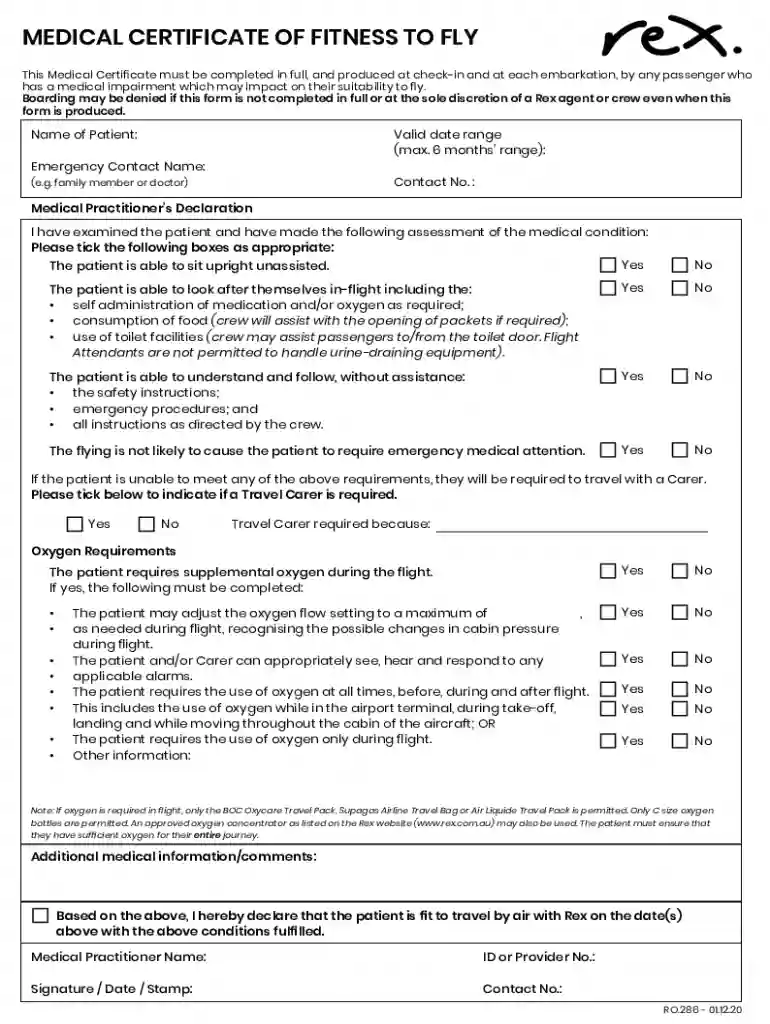
The Medical Certificate referred to as "This Medical Certificate must be completed in full, and produced at check-in and at each embarkation" is a formal document that validates a passenger's fitness to fly. This certificate is specifically required for individuals whose medical conditions might interfere with their travel or aviation safety. It assures airlines that the passenger is capable of managing their health needs during the flight and can sit upright without assistance.
For the certificate to be deemed valid, it must be filled out entirely. Incomplete forms can lead to delays or denial of boarding. The certificate assesses key factors such as:
If the passenger is unable to meet these criteria, engaging a Travel Carer becomes mandatory. This ensures that any assistance needed during the flight is readily available, ultimately prioritizing passenger safety.
Acquiring the Medical Certificate necessitates a visit to a qualified healthcare professional who can evaluate the individual's health status and determine their fitness to fly. Here’s how to go about obtaining one:
The complete certificate must include:
Filling out the Medical Certificate properly is essential for a smooth travel experience. The following steps should be followed:
Before submission, double-check every detail for accuracy. An error or omission can result in complications at check-in or during boarding.
Legally, the Medical Certificate serves as proof of a passenger's fitness to travel. Under regulations established by airlines and aviation authorities, this document must conform to certain standards to be legally recognized. Some critical aspects include:
Failure to carry a valid Medical Certificate or providing false information can result in:
Understanding the essential components of the Medical Certificate ensures that passengers adequately prepare for their journey. Key elements include:
Various individuals might require this Medical Certificate before flying:
By understanding the definition, obtaining procedures, completion guidelines, and requisite components, passengers can adequately prepare to present the Medical Certificate during check-in and embarkation, ensuring a smoother travel experience.
We've got more versions of the not fit to fly certificate template form. Select the right not fit to fly certificate template version from the list and start editing it straight away!
At DocHub, your data security is our priority. We follow HIPAA, SOC2, GDPR, and other standards, so you can work on your documents with confidence.
All resident students must complete and sign the Residence Hall Agreement and Application before being placed into a room. The Residence Hall Agreement remainsRead more
Oct 5, 2018 To provide protections for certain sports medicine professionals, to reauthorize Fed- eral aviation programs, to improve aircraft safetyRead more
Oct 29, 2021 Passengers on simulated voyages must be at least 12 years old, provide their informed consent, and submit a medical certification to the cruise


