




01. Edit your comprehensive geriatric assessment template online
Type text, add images, blackout confidential details, add comments, highlights and more.

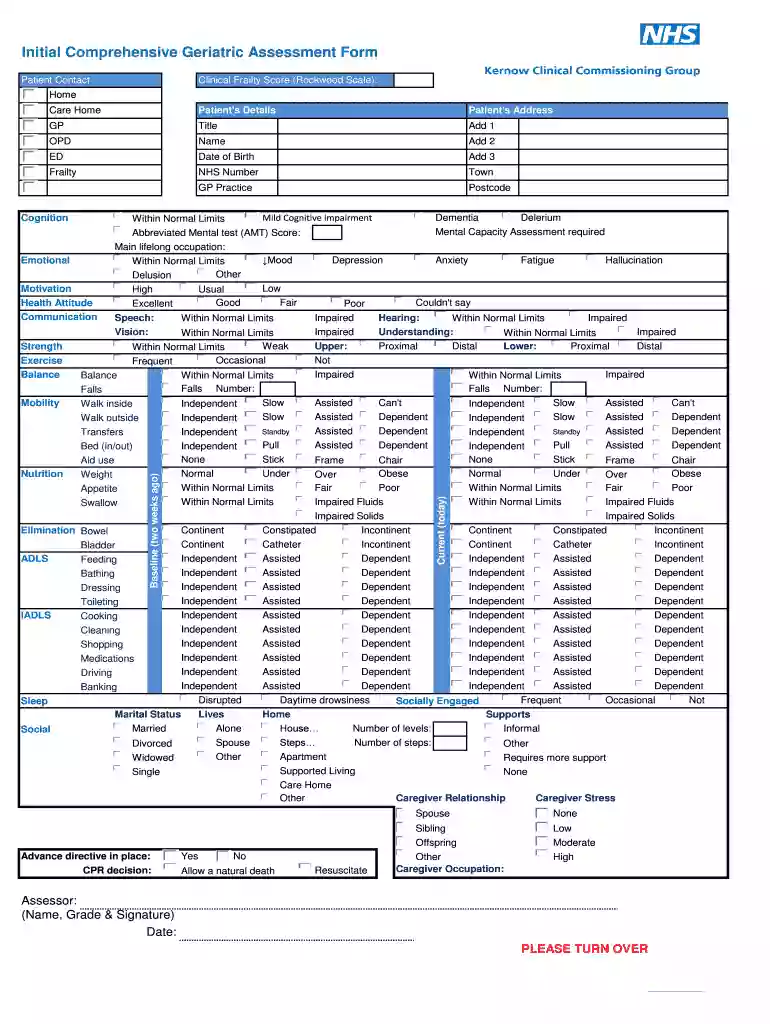
Type text, add images, blackout confidential details, add comments, highlights and more.

Draw your signature, type it, upload its image, or use your mobile device as a signature pad.

Send comprehensive geriatric assessment pdf via email, link, or fax. You can also download it, export it or print it out.
The comprehensive geriatric assessment form pdf is a structured document designed to evaluate the multidimensional health and functional status of older adults. This form plays a crucial role in identifying the needs of elderly patients, guiding healthcare professionals in creating personalized care plans. It often encompasses various components, including medical history, physical health, psychological state, social circumstances, and functional capabilities. The intent is to gather holistic insights that foster comprehensive geriatric care.
Using this form is not limited to medical professionals; it serves various stakeholders, including caregivers, geriatric care managers, and family members who are involved in the health management of elderly individuals. A well-executed comprehensive geriatric assessment allows for better treatment decisions, more efficient resource allocation, and improved quality of life for the elderly population.
Completing the comprehensive geriatric assessment form pdf requires attention to detail and careful consideration of the patient’s unique circumstances. Here’s a structured approach to ensure that all critical elements are captured effectively:
Gather Preliminary Information: Start by collecting the patient's demographic information, including name, age, and contact details. Understanding social context is fundamental.
Conduct a Medical Review: Analyze the patient’s medical history thoroughly. This section might include:
Evaluate Physical Health: Assess physical functioning, which can involve:
Assess Cognitive and Psychological State: Utilize mini-cognitive tests to gauge mental clarity and emotional well-being. Responses should be documented accurately to facilitate follow-up assessments where necessary.
Review Activities of Daily Living (ADLs): Identify the patient's abilities regarding daily tasks, including bathing, dressing, eating, and toileting. This information is vital for determining the level of community or home care needed.
Finalize the Form: Ensure that all sections are filled out completely. Review for accuracy to minimize errors, as this form will direct crucial healthcare decisions and interventions.
The comprehensive geriatric assessment form pdf contains several key elements essential for evaluating the multifaceted nature of geriatric health. Each section serves to gather specific information that contributes to an overall understanding of the patient’s needs. The following are crucial components commonly included:
Patient Demographics: Basic information that captures important data on the identity of the individual being assessed.
Clinical Frailty Score: An essential metric used to categorize the patient’s frailty level, which can inform treatment plans and interventions.
Cognitive Assessment: This section assesses memory, attention, and judgment, often utilizing tools like the Mini-Mental State Examination (MMSE).
Physical Activity and Mobility: Evaluates how well the patient can move and perform physical tasks, helping to identify risks for falls or injuries.
Emotional Well-Being: Includes scales for measuring depression and anxiety, contributing to the mental health aspect of overall care.
Social Support System: Evaluates the patient’s network of support, which is crucial for recovery and maintaining independence.
The comprehensive geriatric assessment form pdf is utilized by a diverse group of professionals and entities involved in the care of elderly individuals. Understanding who uses this form aids in recognizing its importance across various sectors:
Healthcare Providers: Physicians, nurse practitioners, and geriatric specialists often use this form in outpatient and inpatient settings to establish baseline health assessments for elderly patients.
Case Managers: Coordinators of care often utilize the form to ensure that all patient needs are being met and to streamline communications among diverse caregiving teams.
Family Caregivers: Family members involved in the elderly individuals' care may find the form useful for understanding the comprehensive needs of their loved ones and serving as an advocate within the healthcare system.
Social Workers: They often utilize the information gathered in the assessment to connect patients with community resources and support systems.


Understanding the legal implications surrounding the use of the comprehensive geriatric assessment form pdf is crucial for compliance and ethical management of patient information.
Confidentiality Regulations: Healthcare providers must comply with the Health Insurance Portability and Accountability Act (HIPAA). This law sets standards for the protection of patient health information, mandating confidential handling and storage of the completed forms.
Informed Consent: Patients should provide informed consent before their assessments. This entails understanding the purpose of the assessment and how their information will be used.
Record Keeping: Providers should maintain accurate records of all assessments in accordance with regulations. Proper documentation helps to ensure continuity of care and can be crucial in legal contexts.
Failure to Comply: Non-compliance with legal requirements can result in penalties, loss of credibility, and potential harm to patients. Therefore, adherence to ethical and legal standards is paramount.
We've got more versions of the comprehensive geriatric assessment template form. Select the right comprehensive geriatric assessment template version from the list and start editing it straight away!
| Versions | Form popularity | Fillable & printable |
|---|---|---|
| 2014 | 4 Satisfied (30 Votes) |
Yes, electronically drawing your signature is appropriate, but only if you use a tool that complies with industry laws and regulations. Try DocHub, which ensures eSignature validity under ESIGN and UETA requirements. All you need to eSign your geriatric assessment example is an account with DocHub and an internet connection. When you open your file in our editor, click Sign and select the Draw tool.
If you edit your 10 minute geriatric assessment pdf with DocHub, you only need a stable web connection and virtually any browser installed on your device. No need to install any third-party software or research tutorials. Simply open a tab with DocHub, drag and drop your file, and modify it on the spot.
At DocHub, your data security is our priority. We follow HIPAA, SOC2, GDPR, and other standards, so you can work on your documents with confidence.
by TJ Welsh 2014 Cited by 365 CGA is a process which is used to manage frail or vulnerable older people. It is interdisciplinary meaning that it takes account of inputs not only fromRead more
No information is available for this page.
Dec 9, 2024 and comprehensive geriatric assessment (CGA), assessing the risks and benefits of treatment, preventing or decreasing complications from.Read more


