brief substance craving scale Preview on Page 1

Brief substance craving scale 2026

Here's how it works

  • 01. Edit your brief substance craving scale online

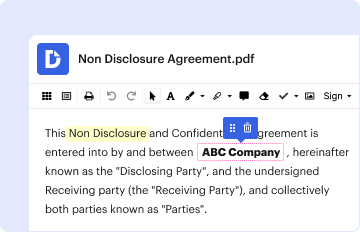
    Type text, add images, blackout confidential details, add comments, highlights and more.

  • 02. Sign it in a few clicks

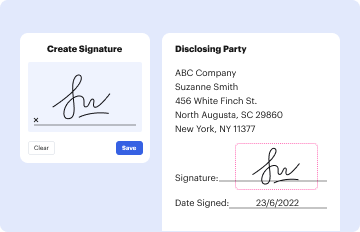
    Draw your signature, type it, upload its image, or use your mobile device as a signature pad.

  • 03. Share your form with others

    Send brief substance craving scale scoring via email, link, or fax. You can also download it, export it or print it out.

How to use or fill out brief substance craving scale with our platform

Form edit decoration
9.5
Ease of Setup
DocHub User Ratings on G2
9.0
Ease of Use
DocHub User Ratings on G2
  1. Click ‘Get Form’ to open the brief substance craving scale in the editor.
  2. Begin by entering your ID number and the date at the top of the form. This helps in tracking and organizing your responses.
  3. In the 'Agency Name' and 'Site Name' fields, provide the relevant details about your treatment facility.
  4. For section A, identify the primary substance dependence by selecting one option from the list provided. If applicable, specify any other substance.
  5. Proceed to answer questions 1 through 4 regarding your cravings for the primary drug. Use the scale provided to indicate intensity, frequency, length of time spent craving, and number of cravings experienced.
  6. If you have craved a second substance, repeat steps 4 and 5 for that substance in section B.

Start using our platform today to easily fill out your brief substance craving scale for free!

See more brief substance craving scale versions

We've got more versions of the brief substance craving scale form. Select the right brief substance craving scale version from the list and start editing it straight away!

VersionsForm popularityFillable & printable
20194.9 Satisfied (30 Votes)
20074.8 Satisfied (22 Votes)

be ready to get more

Complete this form in 5 minutes or less

Got questions?

We have answers to the most popular questions from our customers. If you can't find an answer to your question, please contact us.

There are four levels of addiction: physical, emotional, mental, and spiritual. We will discuss each level in-depth and provide tips for overcoming addiction. Most people who try drugs or engage in risky behaviors dont become addicted.
The Craving Scale is a 3-item measure of craving that has been previously validated in -dependent samples. This brief measure has also demonstrated predictive validity in both alcohol and opioid use disorder; however, its psychometric properties in these disorders are not well characterized.
These criteria fall under four basic categories impaired control, physical dependence, social problems and risky use: Using more of a substance than intended or using it for longer than youre meant to. Trying to cut down or stop using the substance but being unable to.
The Penn Alcohol Craving Scale (PACS) is a 5-item questionnaire that measures an individuals craving to drink alcohol in the past week.
The BSCS is a 16 item, self-report instrument assesses craving for and other substances of abuse over a 24 hour period. Intensity and frequency of craving are recorded on a five-point Likert scale.

Security and compliance

At DocHub, your data security is our priority. We follow HIPAA, SOC2, GDPR, and other standards, so you can work on your documents with confidence.

People also ask

In this section, we explain the four basic models of addiction that are dominant in U.S. society: the moral view, the disease model, a sociological approach, and a public health perspective. We will discuss these four views or models in this section, as well as where these models can be found in action within society.

substance craving scale

Brief Substance Craving Scale

STAFF USE ONLY. A. Identify the primary substance dependence for which the participant is being treated at this clinic. Downers or Sedatives (Barbiturates,Read more

Learn more
Validation of the Craving Scale in a Large Sample of Adults

by RK McHugh 2020 Cited by 43 This brief measure has also demonstrated predictive validity in both alcohol and opioid use disorder; however, its psychometric properties inRead more

Learn more
If you believe that this page should be taken down, please follow our DMCA take down process here