




01. Edit your form online
Type text, add images, blackout confidential details, add comments, highlights and more.

Type text, add images, blackout confidential details, add comments, highlights and more.

Draw your signature, type it, upload its image, or use your mobile device as a signature pad.

Send it via email, link, or fax. You can also download it, export it or print it out.
Forms online refer to digital versions of traditional paper forms that can be accessed, filled out, and submitted through the internet. These forms serve various purposes, including applications, registrations, and data collection for different organizations, both governmental and private. Transitioning to online forms streamlines processes by reducing the need for physical paperwork, facilitating faster data processing, and enhancing accessibility for users across different locations.
Online forms can range from simple contact forms to complex legal documents requiring multiple sections and approvals. They often include functionalities like dropdown lists, checkboxes, and signature fields to capture user inputs accurately.
Using forms online involves accessing the form, filling out the required information, and submitting it electronically. Here's a step-by-step guide on how to utilize these forms effectively:
Access the Form: Use a web browser to navigate to the website offering the desired form. This could involve logging into an online portal or clicking a direct link to the form.
Read Instructions Carefully: Before filling out any fields, go through any instructions provided at the beginning or within the form to understand the requirements and necessary documents.
Fill Out the Form: Enter your information into each section. Many online forms will highlight mandatory fields that you must complete; skipping these can prevent submission.
Review Your Information: Before submission, take a moment to review your entries for accuracy and completeness.
Submit Form: Once satisfied with your entries, submit the form. Most online systems will provide a confirmation message or email upon successful submission.
Save or Print a Copy: It might be helpful to save a digital copy or print the form for your records, as this serves as proof of submission.
Completing a form online typically involves several key steps to ensure all required information is provided accurately. Here’s a detailed look at the steps necessary for completion:
Preparation: Gather all necessary documents and information you might need, such as personal identification numbers, addresses, or financial details.
Login or Registration: Depending on the platform, you may need to create an account or log in using existing credentials to access the form.
Form Navigation: Use the navigation tools provided in the form to move through different sections, ensuring you cover all necessary areas.
Data Entry: Enter data carefully, utilizing each field’s specific input method, such as text boxes for written responses or radio buttons for selections.
Attachments: Some forms may require additional documents to be uploaded. Ensure these files meet the specified format and size requirements.
Validation and Error Checking: Use any validation features to check for missed fields or errors, often indicated by warnings or highlighted sections.
Final Submission: Submit the form once all sections are complete and correct. Look for any submission receipts or reference numbers for your records.
Online forms incorporate numerous components designed to optimize user experience and data collection. Here are some critical elements:
Text Fields: Allowing users to type responses where open-ended information is required.
Dropdown Menus: Presenting users with a range of selectable options, helping standardize responses for easier processing.
Checkboxes and Radio Buttons: Facilitating multiple and single-choice answers respectively, particularly useful for survey-style questions.
Date Selectors: Enabling users to pick dates ensuring consistent date formats.
Signature Fields: Collecting electronic signatures to confirm the legitimacy of the information provided and agreement to terms.
Validation Scripts: Automatically checking data accuracy, such as ensuring email addresses are formatted correctly.
Using forms online, particularly for legal or official purposes, requires compliance with specific regulations to ensure validity and legality. Electronic forms often adhere to standards like the ESIGN Act in the U.S., which gives electronic signatures the same legal standing as handwritten signatures.
It’s crucial to understand that when completing forms requiring official consent or sensitive information, the platform should use encryption and secure channels to protect user data. Additionally, users should ensure their digital consent forms are binding by following prescribed terminologies and processes.
Online forms are often designed for compatibility with various software and systems, facilitating seamless integration with tools like DocHub:
Web Browsers: Modern web browsers such as Chrome, Firefox, and Safari support online form functionalities, including dynamic fields and interactive elements.
PDF Readers: Applications like Adobe Acrobat or built-in browser PDF viewers are vital for accessing PDF-based online forms.
Cloud Storage Integration: Platforms often support direct interactions with services like Google Drive, Dropbox, and Microsoft OneDrive for saving or retrieving documents.
API Compatibility: Many services offer API access, allowing online forms to be integrated into larger enterprise systems for automated workflow management.
Third-party Software Integration: Compatibility with third-party applications such as TurboTax for tax-related forms or QuickBooks for business documentation streamlines data transfer and processing.
Forms online are utilized across various sectors with several practical applications:
Government Forms: Online applications for driver's licenses, social security, or tax forms like the W-9 or 1099.
Business Contracts: Using online forms to create, modify, and sign business contracts such as non-disclosure agreements or employment contracts.
Healthcare Registrations: Patient intake forms and medical history documents are filled out online to expedite processing at clinics or hospitals.
Educational Enrollments: Admission and registration forms for schools and universities to handle student applications and enrollments.
Such examples illustrate how online forms can improve efficiency and reduce error rates across industries and applications.
Non-compliance with forms online can lead to several penalties, particularly if the forms are related to legal or governmental processes. Here are common ramifications:
Late Fees and Fines: Missing deadlines for submissions, such as tax filing dates, can result in penalties or interest on unpaid obligations.
Legal Consequences: Providing false information or using fraudulent data can lead to legal action, fines, or invalidation of documents.
Revocation of Privileges: Failure to comply with submission standards can result in revoked access or denial of applications, such as permits or licenses.
To avoid such pitfalls, it's essential to follow guidelines meticulously and ensure all submitted information is current and truthful.
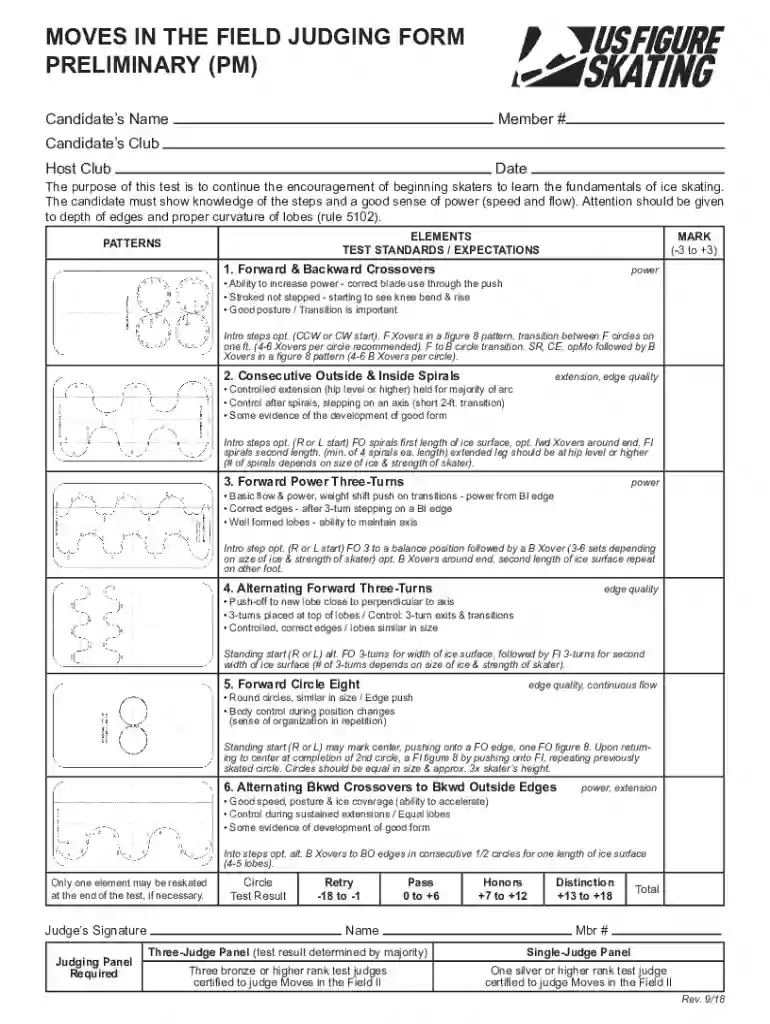
We've got more versions of the Moves in the Field Judging Form form. Select the right Moves in the Field Judging Form version from the list and start editing it straight away!
At DocHub, your data security is our priority. We follow HIPAA, SOC2, GDPR, and other standards, so you can work on your documents with confidence.
Moves in the Field tests: Pre-Preliminary Moves in the Field (for any age), or Adult Pre-Bronze Moves in the Field (for ages 21+ only)
Bronze Medal Criteria. Criteria, Details. Competition Deliverables, Wiki, Judging form. Presentation Video and judging session to be completed.Read more


