




01. Edit your form online
Type text, add images, blackout confidential details, add comments, highlights and more.

Type text, add images, blackout confidential details, add comments, highlights and more.

Draw your signature, type it, upload its image, or use your mobile device as a signature pad.

Send it via email, link, or fax. You can also download it, export it or print it out.
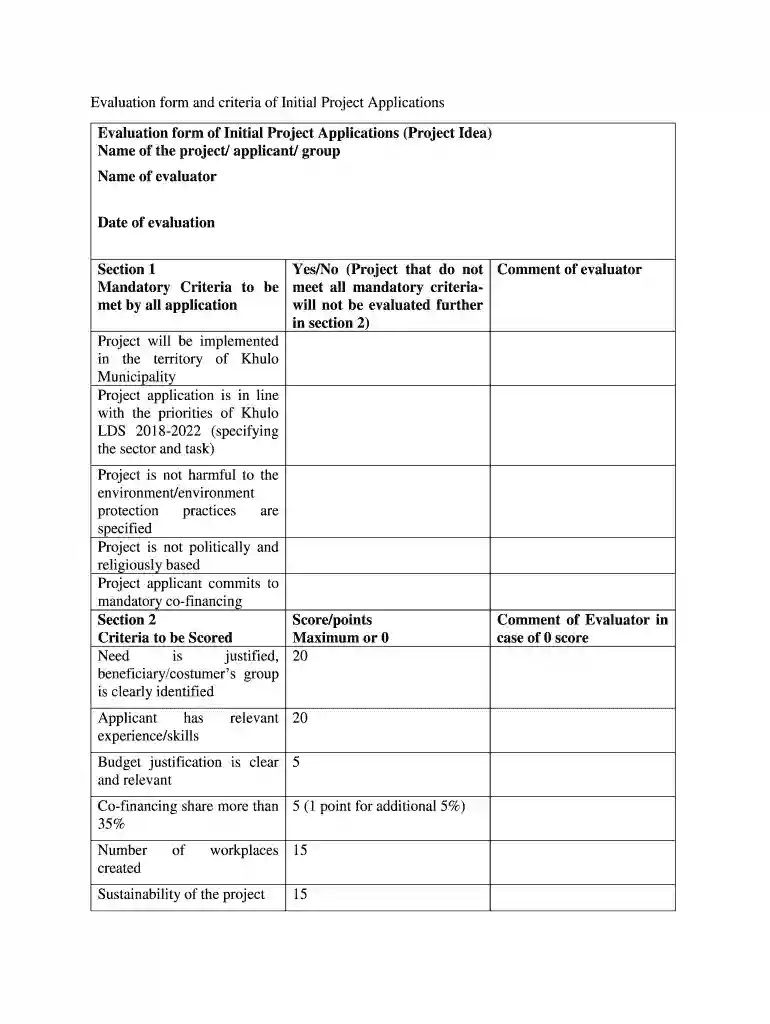
Project Evaluation Templates serve as a structured framework that aids in systematically assessing the viability and impact of various projects. These templates are vital tools for project managers, offering a clear roadmap for evaluating key components such as objectives, resources, and outcomes. By standardizing the evaluation process, these templates ensure consistency and comprehensiveness in project assessments.
Using the Project Evaluation Template involves several key steps to ensure a thorough analysis of the project at hand:
Familiarize with the Template Layout:
Input Relevant Project Data:
Evaluate Project Criteria:
Analyze and Record Findings:
Completing the Project Evaluation Template involves a methodical approach to cover each aspect of the project:
Preparation:
Completion of Template Sections:
Final Review:
Feedback and Iteration:
The Project Evaluation Template typically includes several critical components:
Objectives and Goals:
Budget and Resources:
Timeline and Milestones:
Risk Analysis:
Impact Assessment:
Illustrative examples highlight how the Project Evaluation Template facilitates project management:
Community Development Projects:
IT and Software Projects:
A diverse range of professionals and organizations leverage Project Evaluation Templates:
Project Managers:
Non-Profit Organizations:
Government Agencies:


The Project Evaluation Template is compatible with numerous software programs, enhancing its usability:
Microsoft Word and Excel:
Document Management Platforms:
Different versions or alternatives of the Project Evaluation Template may exist:
Basic Versions:
Advanced Versions:
Industry-Specific Variants:
We've got more versions of the Project Evaluation Template - 7+ Free Word,PDF Documents Project Evaluation Planning: The General Gu form. Select the right Project Evaluation Template - 7+ Free Word,PDF Documents Project Evaluation Planning: The General Gu version from the list and start editing it straight away!
| Versions | Form popularity | Fillable & printable |
|---|---|---|
| 2018 | 4.7 Satisfied (23 Votes) |
At DocHub, your data security is our priority. We follow HIPAA, SOC2, GDPR, and other standards, so you can work on your documents with confidence.
This Project Evaluation Template is best used at the conclusion of a project and should be completed by every project team member. Planning and Process. WhatRead more
Contains text in pdf format, photos in pdf format, Disc contains land cover and beach evaluation data, Includes 2 ArcView project files, ready-to-print pdf


