




01. Edit your kaufvertrag für occasionswagen online
Type text, add images, blackout confidential details, add comments, highlights and more.

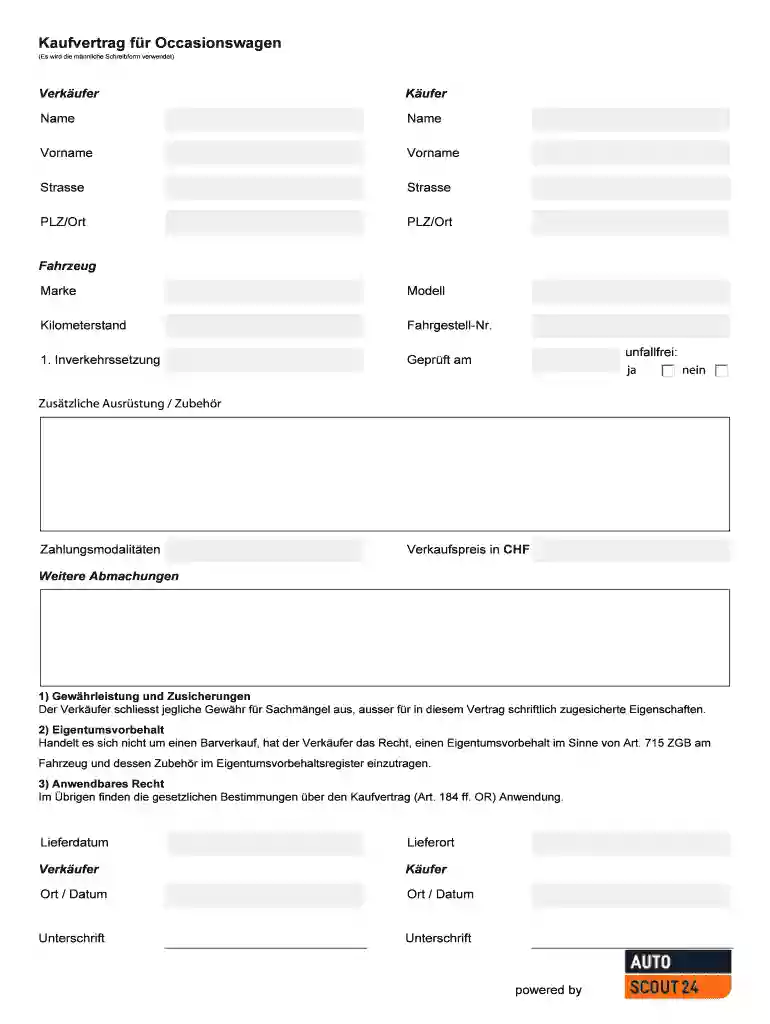
Type text, add images, blackout confidential details, add comments, highlights and more.

Draw your signature, type it, upload its image, or use your mobile device as a signature pad.

Send kaufvertrag autoscout via email, link, or fax. You can also download it, export it or print it out.
The term "occasionswagen" refers to a type of used car that is often categorized by its previous ownership, condition, and quality. In many instances, occasionswagens are vehicles that have been well-maintained and are sold at a lower price compared to new cars. Not to be confused with simply "used cars," occasionswagens often come with assurances of quality, such as service records or certifications, making them an appealing option for budget-conscious buyers. They typically include models from reputable manufacturers, ensuring a blend of reliability and cost-effectiveness.
Understanding the essence of what comprises an occasionswagen is critical. These vehicles are often detailed through various channels, including dealerships and online marketplaces like Autoscout, where buyers can find models that suit both their needs and preferences. Knowing this term is particularly useful for those wishing to navigate the complex world of car buying, providing a clearer understanding of the market and varying degrees of vehicle quality.
The distinction between occasionswagens and other types of used vehicles often hinges on factors like mileage, maintenance history, and warranty availability. This clarity in definition helps potential buyers assess their options more effectively.
Using an occasionswagen involves several steps that ensure a smooth purchasing process. Start by researching different makes and models, focusing on the reliability and user reviews of specific occasionswagen. Websites like Autoscout provide essential tools for comparing vehicles, viewing detailed specifications, and checking ownership history.
Follow these steps to effectively use an occasionswagen:
Define Your Needs: Before beginning the search, determine what you need in a vehicle. Consider aspects such as body type, fuel efficiency, and technology features.
Research Available Models: Utilize online platforms to browse various occasionswagens within your budget. Filter your search based on brand, price range, and mileage history.
Inspect Vehicle History: Once you've shortlisted potential vehicles, checking their service history records is crucial. Look for information about previous accidents, maintenance procedures, and any outstanding recalls.
Test Drive the Vehicle: Always arrange for a test drive before finalizing the purchase. This allows you to assess the car's performance, comfort, and any potential issues firsthand.
Review Purchase Agreement: Before signing any documents, carefully review the purchase agreement to ensure that all terms are clearly stated. This includes understanding the warranty, return policies, and any additional fees.
Being thorough in these steps helps buyers select an occasionswagen that is not only affordable but also reliable and suited to their lifestyle.
Completing the process of purchasing an occasionswagen requires attention to detail and careful planning. The following steps are essential for a successful transaction:
Select the Right Vehicle: Begin with a list of desired features and specifications. Use online tools and dealership resources to find occasionswagens that meet these criteria.
Gather Necessary Documentation: Before engaging in negotiations, ensure you have the necessary documentation. This includes identification, proof of insurance, and financing pre-approval if needed.
Negotiate the Price: Engage the seller in friendly negotiation, using comparative pricing data from similar occasionswagens. Try to secure a deal that reflects the vehicle's market value.
Complete a Pre-Purchase Inspection: If working with a private seller, consider hiring a certified mechanic to conduct an inspection. This step can uncover hidden issues that may not be readily apparent.
Finalize the Purchase Agreement: Upon satisfactory negotiation and inspection, review and sign the purchase agreement. Ensure you understand all aspects of the contract, including any return policies or warranties.
Transfer Vehicle Ownership: After signing the papers, follow the local regulations to formally transfer ownership. This step might involve visiting a DMV or similar authority to obtain new registration documents.
By following these steps, buyers can navigate the process with confidence, ensuring they make an informed decision about their occasionswagen purchase.
When dealing in occasionswagens, understanding specific terminology can greatly enhance your knowledge and decision-making abilities. Here are some essential terms:
Certified Pre-Owned (CPO): This refers to used vehicles that meet specific manufacturer standards and have undergone rigorous inspections. CPO vehicles usually come with extended warranties.
Vehicle History Report: This document provides a detailed history of a vehicle, including accidents, service records, and past ownership. It's essential for assessing the condition of an occasionswagen.
Odometer Reading: This indicates the total distance a vehicle has traveled. A lower reading typically signifies less wear and tear, although overall condition and service history should also be taken into account.
Warranty: Coverage that offers protection against specific defects or issues for a certain period or mileage after purchase. Understanding what warranties already exist on an occasionswagen can inform your buying decision.
Trade-in Value: The amount a dealer is willing to deduct from the price of a new vehicle in exchange for a used one. Understanding trade-in values can help in negotiations.
Familiarity with these terms helps buyers approach the process with clarity and confidence, leading to more educated purchasing decisions.
The legal use of an occasionswagen involves adhering to state regulations regarding vehicle ownership, registration, and sales. Here are crucial aspects to be aware of:
Title Transfer: After purchasing an occasionswagen, transferring the vehicle title is mandatory to establish legal ownership. This process may differ by state, requiring documentation to be filed with the state’s motor vehicle department.
Registration Requirements: Most states mandate vehicle registration within a specific timeframe after purchase. Buyers should check local regulations to confirm their obligations, including any necessary emissions tests or inspections.
Insurance Obligations: Before using the vehicle on public roads, buyers must typically secure at least a minimum level of car insurance as required by state law. This protects both the owner and other drivers.
Disclosure Laws: Sellers are often required to disclose specific information about the vehicle's condition and history. Buyers should be aware of their rights to receive accurate information and report any inconsistencies.
Adhering to these legal considerations ensures that the ownership and operation of the occasionswagen comply with local laws, providing peace of mind to the buyer.
We've got more versions of the kaufvertrag für occasionswagen form. Select the right kaufvertrag für occasionswagen version from the list and start editing it straight away!
| Versions | Form popularity | Fillable & printable |
|---|---|---|
| 2010 | 4 Satisfied (34 Votes) |
Sure, it is possible with DocHub. This safe and compliant online service features a phone-based signing option. Once you log in to your DocHub account and import your occasionswagen to our editor, fill out all empty fields and use the Sign feature on the upper barf. Click on Create your signature and select Phone from the available choices. Here, you scan a QR code with your smartphone and draw your signature on your phone screen, as you usually do when approving hard copies. If you access DocHub right from your mobile device, you can electronically sign your template by drawing your eSignature, uploading its picture, or simply with a typed name.
With a swift editing platform like DocHub, you do not require anything but a browser and internet connection to edit your occasionswagen on the internet easily. Upload your file or find the appropriate form in DocHub’s catalog, open our editor with a single click, and complete it digitally. To edit your forms anytime, sign up a free profile with DocHub.
At DocHub, your data security is our priority. We follow HIPAA, SOC2, GDPR, and other standards, so you can work on your documents with confidence.


