Definition and Purpose of the Illinois Claims Form
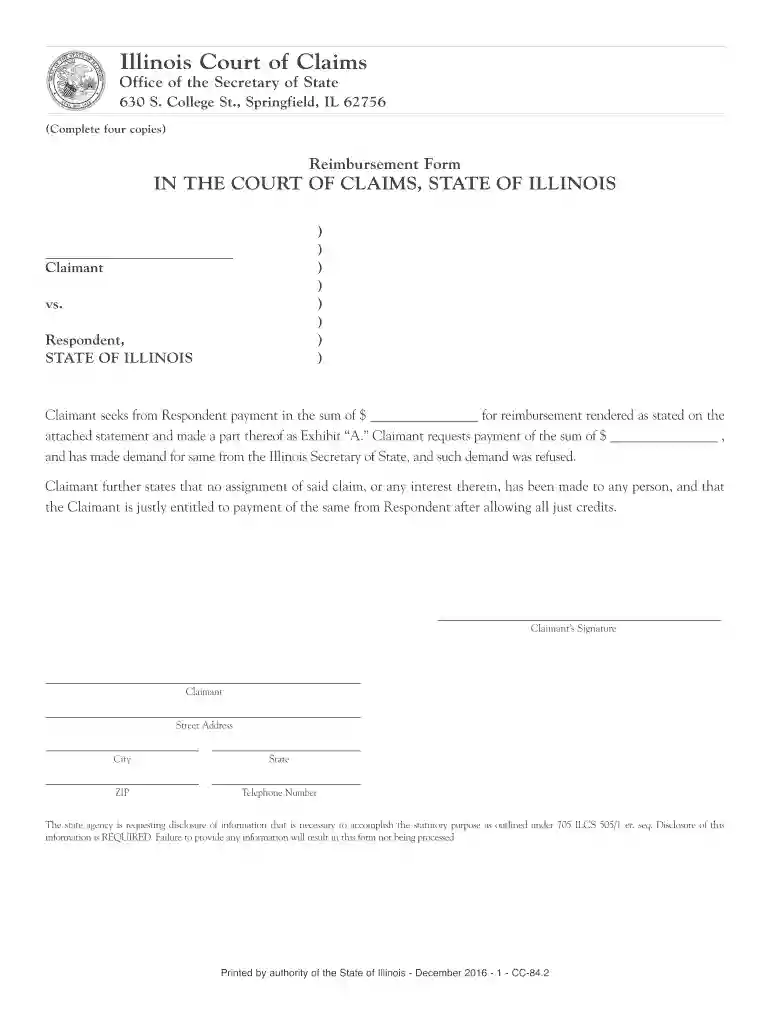
The Illinois claims form is a document used for filing reimbursement claims against the State of Illinois in the Court of Claims. It is primarily utilized to request payment for services rendered to the state, where claimants provide all necessary information and documentation to support their claim. This form is instrumental in formalizing the process of seeking financial compensation from the state, ensuring that all procedures and legal requirements are adhered to without the need for a filing fee.
Understanding Key Aspects of the Form
- Reimbursement Process: The form details the method for reimbursing services provided to state agencies.
- Legal Framework: It operates within the legal confines of the Illinois Court of Claims, providing a structured approach to addressing disputes over payments.
- Claimant Information: Applicants are required to furnish all pertinent information, including identification and service details.
How to Use the Illinois Claims Form
Using the Illinois claims form involves several structured steps to ensure completeness and compliance with state requirements. This process is crucial for claimants to follow accurately to prevent delays or rejection of their claims.
Detailed Steps for Completion
- Gather Required Information: Collect all necessary details, including service descriptions, dates, and the agency involved.
- Fill in Personal Details: Enter accurate claimant identification, including name, address, and contact information.
- Provide Service Details: Itemize the services provided, detailing the scope and timelines.
- Attach Supporting Documentation: Include invoices, contracts, and any other relevant documents that substantiate the claim.
- Review for Accuracy: Double-check all entries for correctness and completeness before submission.
Common Mistakes to Avoid
- Inaccurate Information: Ensure that all personal and service-related details are precise to avoid processing delays.
- Missing Documents: Double-check that all required documentation is attached to the form.
- Unclear Descriptions: Provide clear and concise descriptions of the services rendered to facilitate quick review.
Steps to Complete the Illinois Claims Form
Completing the Illinois claims form requires attention to detail and adherence to specific state guidelines outlined for reimbursement claims.
Comprehensive Guide to Form Completion
- Download or Obtain the Form: Access the Illinois claims form through official state websites or relevant agencies.
- Fill Out Personal Information: Input correct claimant details, focusing on accuracy and completeness.
- Outline the Claim: Clearly describe the services performed, including pertinent dates and agencies served.
- Attach Documentation: Ensure all evidence supporting the claim is included.
- Sign and Date the Form: Provide all necessary signatures to authenticate the claim.
- Submit for Processing: Send the completed form and attachments to the designated state department.
Tips for Efficient Completion
- Use Digital Tools: Utilize platforms like DocHub to type and edit your form digitally, ensuring neatness and ease of sharing.
- Consult State Resources: Leverage state-provided resources or support for any uncertainties during the completion process.
Required Documents for the Illinois Claims Form
Proper documentation is crucial to substantiate a claim with the State of Illinois. This includes everything from invoices to contracts that validate the services rendered.
Key Documents to Include
- Service Invoices: Detailed billing statements for services provided.
- Contracts or Agreements: Official documents outlining the terms and conditions of the service.
- Correspondence Records: Any communications between the claimant and state representatives related to the claim.
Importance of Comprehensive Documentation
- Supports Claim Legitimacy: Adequate documentation provides the basis for a valid claim and assists in verifying the authenticity of services.
- Speeds Up Processing: Well-documented claims expedite the review and reimbursement process, minimizing back-and-forth communications.
Legal Use of the Illinois Claims Form
The Illinois claims form falls under specific legal guidelines that dictate its use in claiming reimbursements from state agencies.
Legal Considerations
- Court of Claims Procedures: The form is used within the framework provided by the Illinois Court of Claims.
- Authorization for Payment: Submission of the form does not guarantee payment until it passes legal scrutiny.
- Compliance with State Laws: Ensure all claims adhere to Illinois state laws to prevent legal issues.
When Legal Advice is Necessary
- Complex Claims: Seek legal guidance for claims involving large sums or complex service agreements.
- Disputed Services: Legal counsel might be needed if the state contests aspects of the claim.
Form Submission Methods: Online, Mail, In-Person
Claim submissions can be done through various methods, each offering different levels of convenience and processing times.
Available Submission Options
- Online: Submit digital copies via approved state portals, benefiting from faster processing.
- Mail: Send physical copies to designated state offices, keeping track of delivery through certified mail.
- In-Person: Hand-deliver submissions to ensure accuracy and receive immediate feedback on form completeness.
Choosing the Right Method
- Consider Urgency: Online submissions are ideal for urgent claims due to their swift processing.
- Documentation Needs: Use mail or in-person submissions for more complex claims requiring detailed verification.
State-Specific Rules for the Illinois Claims Form
Understanding the nuances of Illinois-specific rules governing claims forms can significantly impact the success rate of submissions.
Important State Guidelines
- No Filing Fees: Illinois does not require a filing fee for claims submitted against the state.
- Mandatory Document Checks: Ensure that all required documents meet the Illinois Court of Claims' specifications.
- State-Specific Language: Ensure language used aligns with Illinois state terminologies and legal interpretations.
Common Challenges and Solutions
- Documentation Standards: Stay informed about any changes in state requirements to avoid rejections.
- Interpretation of Guidelines: Consult state-provided resources or legal experts if any part of the guidelines is unclear.
Key Elements of the Illinois Claims Form
Several critical components make up the Illinois claims form, each essential in validating a claim.
Major Components of the Form
- Claimant Information Section: Details of the individual or entity filing the claim.
- Service and Product Description: Detailed explanations of what services or products were provided to the state.
- Amount Claimed: Specification of the total amount requested for reimbursement, supported by documentation.
Importance of Each Component
- Validates the Claim: Each element must be accurately completed to establish the claim's validity.
- Facilitates Review: Clear, concise claims make it easier for state officials to review and process the application efficiently.
This comprehensive guide provides an in-depth exploration of the Illinois claims form, offering practical information on its purpose, usage, legal considerations, and submission methods. Through diligent preparation and adherence to state guidelines, claimants can efficiently navigate the submission process for a successful outcome.