




01. Edit your michigan special transitory food unit online
Type text, add images, blackout confidential details, add comments, highlights and more.

Type text, add images, blackout confidential details, add comments, highlights and more.

Draw your signature, type it, upload its image, or use your mobile device as a signature pad.

Send it via email, link, or fax. You can also download it, export it or print it out.
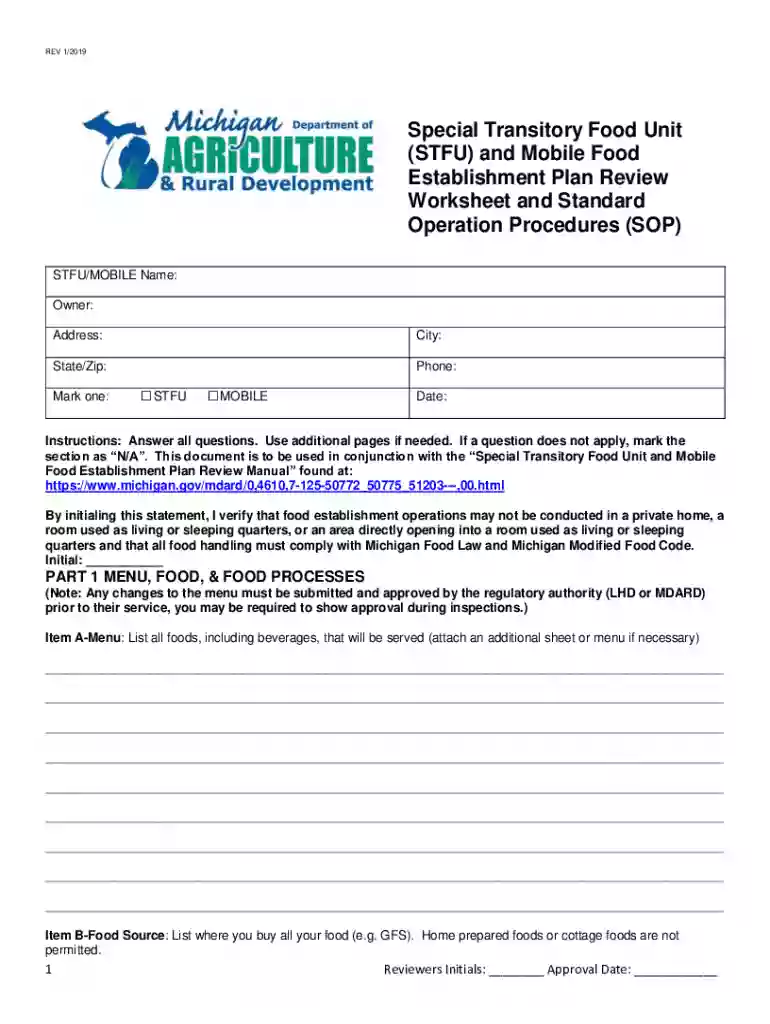
Special Transitory Food Units (STFUs) and Mobile Food Establishments (MFEs) represent innovative solutions within the food service industry that enable operators to provide food services on the move. An STFU typically refers to temporary food service setups designed for short-term events such as fairs, carnivals, or festivals, while MFEs indicate more permanent mobile operations like food trucks or carts. Both units facilitate culinary services beyond traditional restaurant settings, offering flexibility and unique dining experiences. They adhere to specific regulations and guidelines to ensure safety, quality, and hygiene.
Obtaining the necessary permissions for operating a Special Transitory Food Unit or Mobile Food Establishment involves several critical steps. Here is a detailed outline of the typical process:
Research Local Regulations: Begin by understanding the specific requirements and regulations of the state or locality where you plan to operate. Regulations may vary significantly between different jurisdictions.
Business Registration: Ensure your business is legally registered. This involves obtaining a business license and meeting any other business registration requirements.
Health Department Approval: Apply for a permit through the local health department. This generally includes a review of your food safety procedures and an inspection of your food unit.
Plan Submission: Submit a detailed plan of your food unit operations, covering aspects like menu items, food preparation procedures, equipment specifications, and layout.
Fees and Certifications: Be prepared to pay any applicable fees and obtain necessary certifications, such as food handler’s permits or managerial certifications.
Inspection: Arrange for a final inspection by the health department to ensure compliance with health and safety regulations before beginning operations.
Completing the form for registering a Special Transitory Food Unit or Mobile Food Establishment requires careful attention to detail and accuracy. The typical process involves:
Gathering Required Information: Collect all necessary details, including business name, owner information, food unit type, and intended operation locations.
Detailing the Menu: Provide a comprehensive list of menu items, including a description of the ingredients and preparation methods.
Equipment Specifications: List all equipment that will be used, ensuring everything meets safety and health standards.
Sanitation Plans: Submit documentation outlining cleaning and sanitation procedures to be followed in the unit.
Staff Training Details: Include information on staff training related to food safety and hygiene practices.
Application Submission: Submit the completed form along with any supporting documents and required fees to the relevant local authority.
The effective operation of a Special Transitory Food Unit or Mobile Food Establishment hinges on several key elements:
Compliance with Food Safety Standards: Ensuring all procedures and operations align with state and federal food safety regulations.
Operational Flexibility: Designing the unit to adapt to various locations and event requirements.
Efficient Use of Space: Configuring the layout to maximize functionality within a compact mobile space.
Quality Equipment: Investing in durable, reliable equipment that withstands the demands of mobile operations.
Hygiene and Cleanliness: Maintaining high standards of cleanliness and sanitation at all times.
Understanding the terminology associated with Special Transitory Food Units and Mobile Food Establishments is crucial:
Food Handler Certification: A requirement for employees to demonstrate knowledge of safe food handling practices.
Temporary Event Permit: A short-term license required for operating food services at events.
Food Safety Plan: A document outlining procedures for preventing foodborne illness.
Health Inspection Certificate: Certification obtained following a successful health inspection.
Legal compliance is essential for operating STFUs and MFEs. Operators must adhere to:
Federal Food Safety Laws: These regulations are designed to protect public health by ensuring the safety of the food supply.
State and Local Regulations: Vary by jurisdiction and dictate specific operational procedures and requirements.
Zoning Laws: Determine where mobile food units can legally operate.
Liability Insurance: Required to protect the business in case of incidents or accidents.
State regulations can significantly impact the operation of STFUs and MFEs:
Inspection Frequency: Some states may require more frequent health inspections.
Permitting: Variations exist in the types of permits and licenses required.
Operational Hours: Specific restrictions may apply to operating hours and locations.
Menu Limitations: Certain states may impose limitations on menu items or preparation methods.
Special Transitory Food Units and Mobile Food Establishments provide versatile solutions across numerous scenarios:
Festivals and Fairs: Ideal for offering quick, diverse food options at temporary events.
Urban Areas: Food trucks thrive in busy metropolitan locations, providing convenient dining options for commuters.
Private Events: These units can be hired for private functions, such as weddings or corporate gatherings, offering bespoke menus.
Each of these examples highlights the adaptability and expanding popularity of mobile food services in a variety of contexts.
We've got more versions of the michigan special transitory food unit form. Select the right michigan special transitory food unit version from the list and start editing it straight away!
At DocHub, your data security is our priority. We follow HIPAA, SOC2, GDPR, and other standards, so you can work on your documents with confidence.


