13 Applicable Laws - About USPS home 2026

Get Form
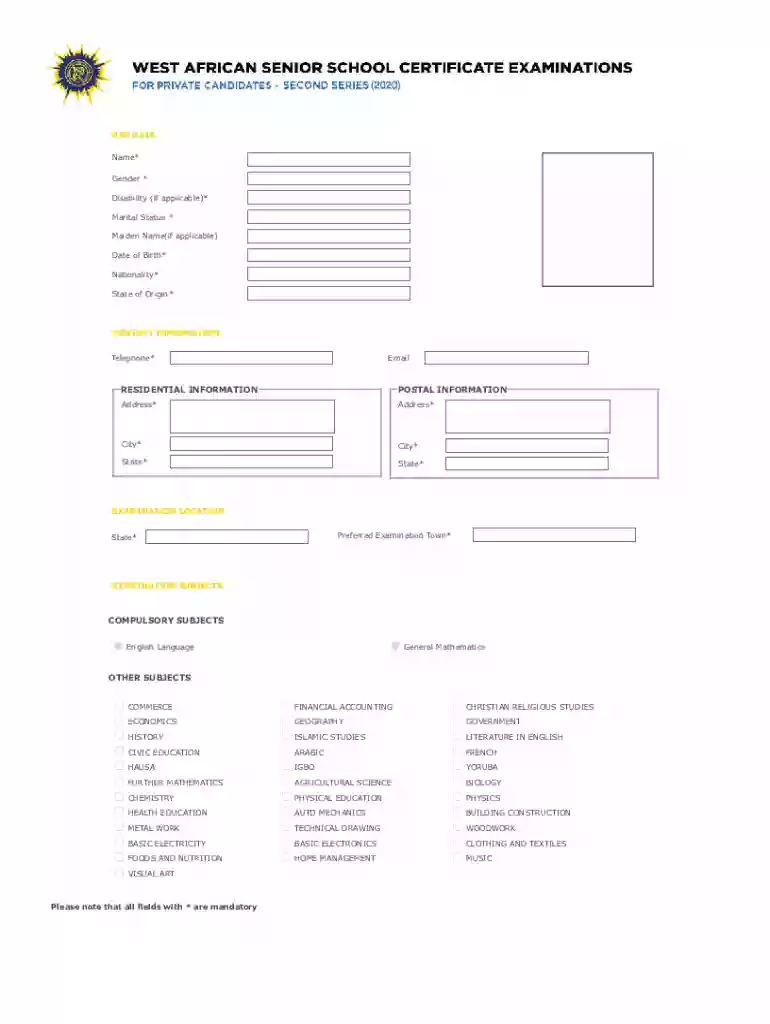
waec registration template Preview on Page 1

Here's how it works

01. Edit your waec registration template online
Type text, add images, blackout confidential details, add comments, highlights and more.

02. Sign it in a few clicks
Draw your signature, type it, upload its image, or use your mobile device as a signature pad.

03. Share your form with others
Send it via email, link, or fax. You can also download it, export it or print it out.

Definition & Meaning

The "13 Applicable Laws - About USPS Home" refers to a set of legal guidelines and regulations that govern the operations and services provided by the United States Postal Service (USPS) to residential customers. These laws encompass a wide range of topics, such as postal rates, delivery standards, service times, and privacy protections for postal customers. Understanding these laws is crucial for anyone who uses USPS services to ensure compliance and optimal use of postal resources.

Specific Areas Covered by These Laws

  • Postal Rates and Fees: Determining how rates are set and what fees may apply to various postal services.
  • Delivery Standards: Guidelines on how quickly and efficiently mail and packages should reach their destination.
  • Privacy Protections: Laws that protect the confidentiality of customer information during mail handling.

By following these laws, individuals and businesses can ensure smooth postal transactions and avoid legal issues.

How to Use the 13 Applicable Laws - About USPS Home

Understanding and leveraging these laws can enhance your postal operations. To effectively use these regulations, familiarize yourself with the full scope of each law, how it applies to your particular situation, and any conditions or exceptions involved.

  1. Review and Understand the Laws: Examine all aspects of the laws for their relevance to your postal needs.
  2. Implementation: Apply the relevant laws to your postal practices, such as adhering to delivery standards and postal rates.
  3. Compliance Checks: Regularly audit your postal operations to ensure ongoing compliance with the laws.

Using these laws effectively can streamline postal operations and prevent potential violations.

How to Obtain the 13 Applicable Laws - About USPS Home

Accessing these laws is imperative for compliance and efficiency. One can obtain them through multiple official and credible sources.

  1. USPS Website: The official USPS site provides comprehensive details on postal laws and regulations.
  2. Government Publications: Websites like those of the Government Printing Office may offer official documentation.
  3. Legal Libraries: Many public and university libraries possess copies of these laws for research and reference.

Consulting these sources ensures you have the most current and accurate information.

Steps to Complete the 13 Applicable Laws - About USPS Home

Successfully adhering to these laws involves several steps. Outlining these can guide users in implementing them effectively in their postal activities.

  1. Research and Documentation: Begin by gathering all necessary legal documentation related to USPS operations.
  2. Stakeholder Education: Educate all relevant stakeholders on these laws to ensure collective compliance.
  3. Integration into Policy: Amend current postal policies to align with the applicable laws.
  4. Compliance Tracking: Develop a method to track compliance and address any identified gaps.

Following these steps ensures that all legal requirements are met efficiently.

Who Typically Uses the 13 Applicable Laws - About USPS Home

These laws are pertinent to a diverse group of users, from private individuals to large organizations, each benefiting differently.

  • Individual Consumers: Gain clarity on their rights and responsibilities when using USPS services.
  • Small Businesses: Use this information to optimize shipping operations and comply with postal requirements.
  • Corporations: Ensure complex logistics and mass mail outs meet legal standards.
  • Legal Professionals: Reference these laws for cases involving postal services.

Understanding the typical users helps tailor the implementation of these laws to varied contexts.


decoration image ratings of Dochub

Legal Use of the 13 Applicable Laws - About USPS Home

Correct legal use of these laws minimizes the risk of legal infractions and promotes smooth postal operations.

  • Mail Handling: Ensure mail is handled following prescribed delivery and privacy guidelines.
  • Dispute Resolution: Utilize the laws for mediation in disputes over postal services.
  • Customer Benefits: Protect customer rights and enhance satisfaction by adhering to legal standards.

Legal compliance not only avoids penalties but also builds trust with stakeholders.

Key Elements of the 13 Applicable Laws - About USPS Home

Several critical elements define the framework of these laws, crucial for proper implementation.

  • Mandatory Compliance Areas: Outline areas like prices, service conditions, and customer privacy.
  • Exceptions and Limitations: Identify any exceptions that may apply under specific circumstances.
  • Impact on Operations: Understand how each element affects daily postal operations.

By recognizing these key elements, users can apply the laws more accurately and effectively.

Important Terms Related to 13 Applicable Laws - About USPS Home

Familiarity with legal terminology aids in correctly interpreting and applying these laws.

  • Postage Rate: The cost associated with sending mail through USPS.
  • Delivery Confirmation: Proof provided by USPS that a shipment was delivered.
  • Express Mail: A faster delivery option offered by USPS both domestically and internationally.

Understanding these terms ensures precise communication and application of postal laws.

See more 13 Applicable Laws - About USPS home versions

We've got more versions of the 13 Applicable Laws - About USPS home form. Select the right 13 Applicable Laws - About USPS home version from the list and start editing it straight away!
Versions Form popularity Fillable & printable
2020 4.5 Satisfied (34 Votes)
2016 4.9 Satisfied (56 Votes)
be ready to get more

Complete this form in 5 minutes or less

Get form

Got questions?

We have answers to the most popular questions from our customers. If you can't find an answer to your question, please contact us.
Contact us
The followings laws are applicable to the Postal Service: Service Contract Act of 1965 (P.L. 89286, 41 U.S.C. Davis-Bacon Act (40 U.S.C. The Copeland Anti-Kickback Act (18 U.S.C. Randolph-Sheppard Act (20 U.S.C. Miller Act (40 U.S.C. Contract Work Hours and Safety Standards Act (40 U.S.C.
Just like you cant steal, damage, destroy, or interfere with someone elses property, you cant open, steal, damage, destroy, hide, or withhold someone elses mail. The consequences for mail tampering include severe fines of up to $250,000 and up to five years in jail.
The United States Postal Service (USPS), also known as the Post Office, U.S. Mail, or simply the Postal Service, is an independent agency of the executive branch of the United States federal government responsible for providing postal service in the United States, its insular areas and associated states.
Congress exercised those powers with the passage of The Post Office Act of 1792, which made the Postal Service a permanent fixture of the Federal Government.
1:41 3:17 And security. However you do not own the airspace. Inside the mailbox. That is controlled by theMoreAnd security. However you do not own the airspace. Inside the mailbox. That is controlled by the USPS. In summary while you purchase and the mailbox it becomes federal property.

Security and compliance

At DocHub, your data security is our priority. We follow HIPAA, SOC2, GDPR, and other standards, so you can work on your documents with confidence.

Learn more
ccpa2
pci-dss
gdpr-compliance
hipaa
soc-compliance
be ready to get more

Complete this form in 5 minutes or less

Get form

People also ask

2:02 3:13 They are part of the federal system participate in federal benefit programs and are subject toMoreThey are part of the federal system participate in federal benefit programs and are subject to federal laws and regulations. This status is a key aspect of their employment. And benefits.
The Service Contract Act of 1965 (Public Law 89-286, 41 U.S.C. 351 et seq.) applies to any contract whose principal purpose is to provide services to be performed by service employees.

Related links