




01. Edit your saskatchewan rental agreement pdf download online
Type text, add images, blackout confidential details, add comments, highlights and more.

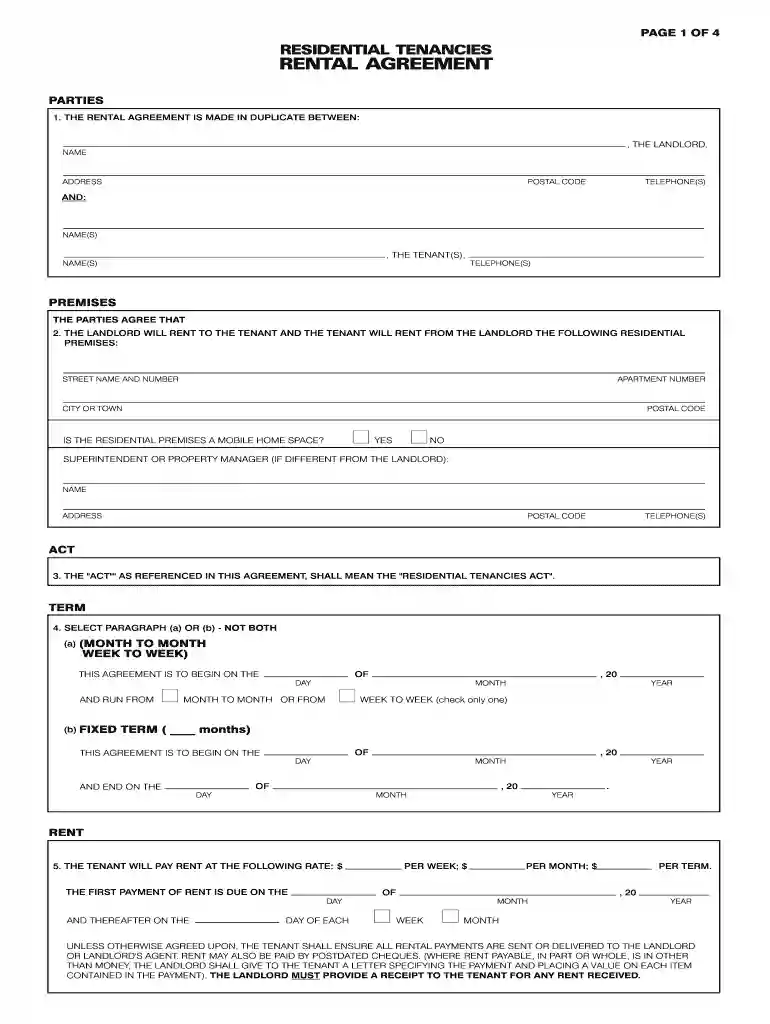
Type text, add images, blackout confidential details, add comments, highlights and more.

Draw your signature, type it, upload its image, or use your mobile device as a signature pad.

Send rental agreement saskatchewan via email, link, or fax. You can also download it, export it or print it out.
A rental agreement template is a foundational document that outlines the terms and conditions under which a rental property is leased. This template serves as a guideline for landlords and tenants in Canada, ensuring that both parties understand their rights and responsibilities. Typically, the template includes key details such as the names of the landlord and tenant, property address, rental price, duration of the lease, deposit requirements, and any other specific terms agreed upon.
In Canada, the legal framework governing rental agreements may vary slightly by province, but certain essential elements remain consistent nationwide. For instance, it is vital that the rental agreement adheres to the Residential Tenancies Act relevant to each province, which provides the legal rights for both tenants and landlords. Understanding these definitions and legal terminologies is crucial to avoiding disputes and ensuring a smooth rental process.
A comprehensive rental agreement template should contain several critical components to ensure clarity and compliance with applicable laws. Important elements often included are:
By including these elements, the rental agreement establishes a clear and enforceable contract that protects both parties' interests.
Familiarity with key terms associated with rental agreements is essential for both landlords and tenants. Understanding these terms can help navigate potential rental disputes and promote fair negotiation practices. Some important terms include:
By understanding these fundamental terms, both parties can engage in negotiations and discussions with greater confidence and awareness.
Each province in Canada has its own regulations affecting rental agreements. It’s important for both landlords and tenants to familiarize themselves with their local laws, as these can influence the terms of the rental agreement template. For example:
Each province’s rules not only protect tenants but also provide legal recourse for landlords, so both parties must consult their local legislation when using a rental agreement template.
Completing a rental agreement template in Canada involves several methodical steps to ensure all legal requirements are met and both parties are satisfied with the terms of the lease. Follow these steps:
Going through these steps methodically minimizes misunderstandings and reinforces each party's expectations regarding the rental relationship.
At DocHub, your data security is our priority. We follow HIPAA, SOC2, GDPR, and other standards, so you can work on your documents with confidence.







This template aims to protect both landlords and tenants by providing a comprehensive outline of the rental arrangement, including rent details, rules about theRead more
Apr 19, 2021 NO RENTAL/COMMERCIAL HOSTING. You may not rent, lease, lend, or provide commercial hosting services with the. SOFTWARE to others. . SEPARATIONRead more


