




01. Edit your form online
Type text, add images, blackout confidential details, add comments, highlights and more.

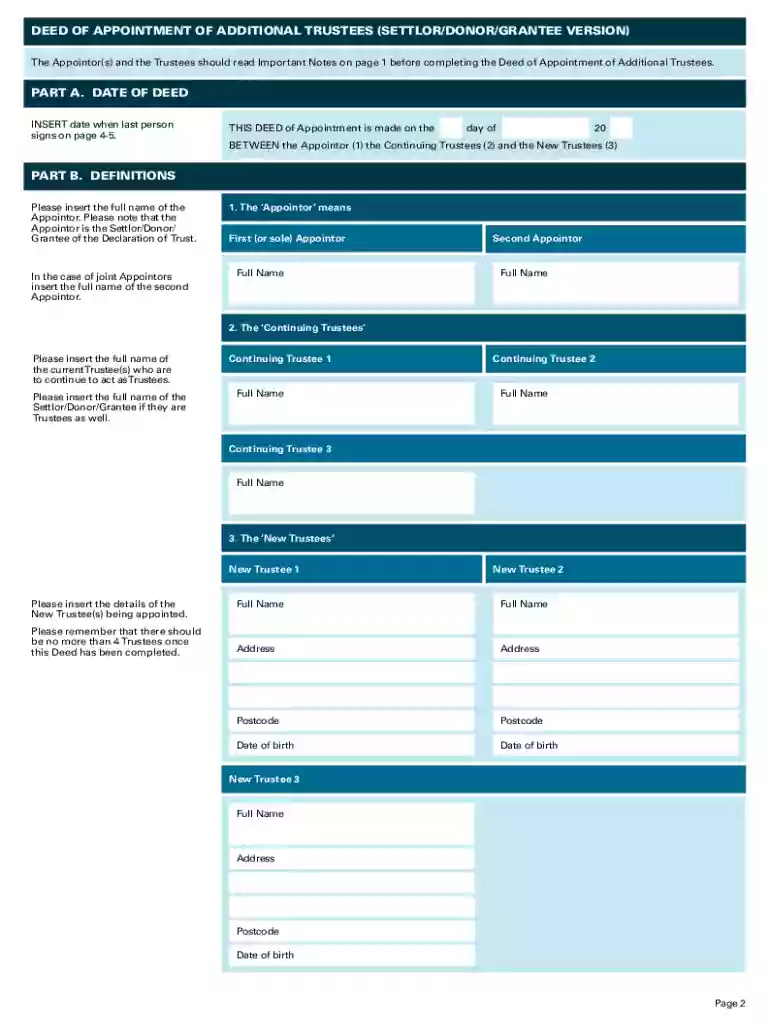
Type text, add images, blackout confidential details, add comments, highlights and more.

Draw your signature, type it, upload its image, or use your mobile device as a signature pad.

Send it via email, link, or fax. You can also download it, export it or print it out.
A deed of appointment template is a legal document used to appoint new trustees to an existing trust. The template serves as a structured format that outlines the process of adding or replacing trustees, ensuring that the transition adheres to legal requirements and maintains the integrity of the trust’s purpose. This document formalizes the Settlor or Donor's decision to change trustees and includes sections that clarify the roles, responsibilities, and identities of involved parties.
The legal use of a deed of appointment template centers on maintaining compliance with trust law and relevant statutory obligations. It is designed to facilitate the lawful addition of trustees while safeguarding the trust's assets and interests.
The template typically consists of several crucial sections that need careful attention to ensure that all parties’ roles and responsibilities are legally binding and clear.
Completing a deed of appointment template requires a detailed understanding of its components and the specific needs of the trust.
A wide range of individuals and entities may find themselves in need of executing a deed of appointment, including those involved in estate planning, family trusts, or business trusts.



Different states in the U.S. may have varying regulations that affect the content and execution of a deed of appointment template.
Practical scenarios illustrate the diverse situations where a deed of appointment is necessary or advantageous.
Understanding specific terms can aid in the effective use of the deed of appointment template, ensuring all parties are in agreement.
These blocks provide comprehensive coverage of key aspects of the deed of appointment template, offering a clear understanding of its uses, implications, and steps to completion.
We've got more versions of the deed of appointment template form. Select the right deed of appointment template version from the list and start editing it straight away!
At DocHub, your data security is our priority. We follow HIPAA, SOC2, GDPR, and other standards, so you can work on your documents with confidence.
AND WHEREAS, the present holder of the said Note desires to appoint [a] substitute trustee(s) in the place and stead of said under the aforesaid Deed of Trust.Read more
Nov 2, 2022 SAID LIFE. ESTATE SHALL BE PERSONAL TO THE GRANTOR AND SHALL NOT BE SUBJECT TO. ASSIGNMENT OR LEASE, EXCEPT AS OTHERWISE PROVIDED IN THIS DEED.Read more


