




01. Edit your form online
Type text, add images, blackout confidential details, add comments, highlights and more.

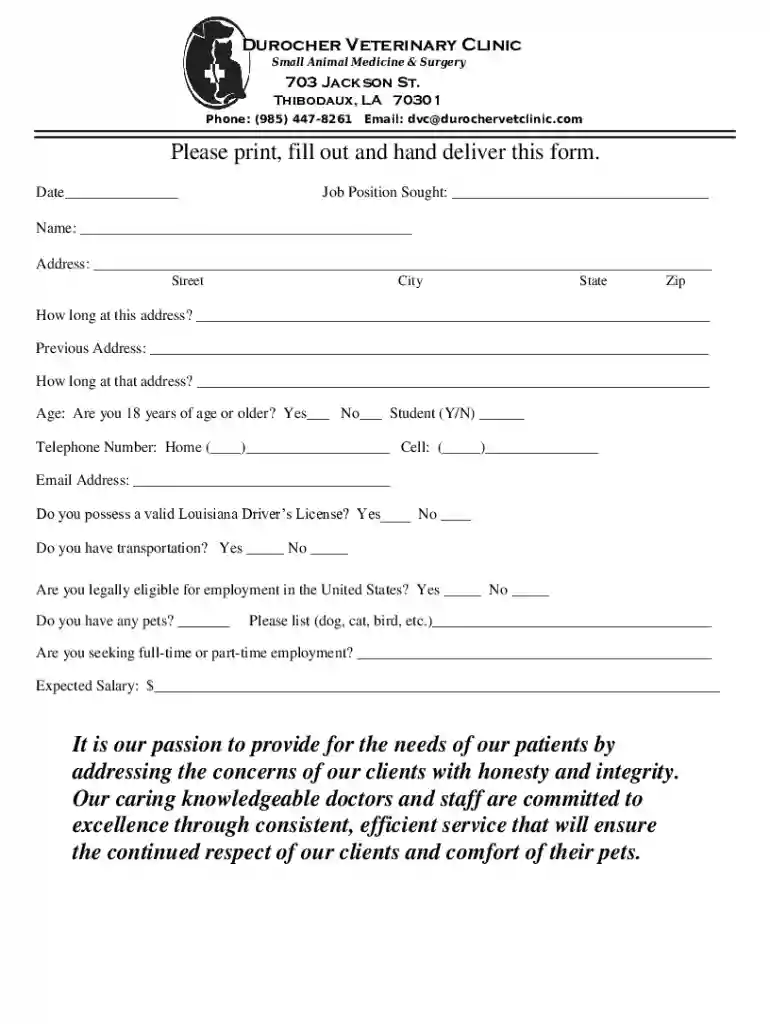
Type text, add images, blackout confidential details, add comments, highlights and more.

Draw your signature, type it, upload its image, or use your mobile device as a signature pad.

Send it via email, link, or fax. You can also download it, export it or print it out.
The "Small Animal Internal Medicine SpecialistHong Kong" form addresses a specific niche within veterinary medicine focused on diagnosing and treating small animals. This specialization entails understanding complex medical conditions affecting animals such as cats and dogs, as well as less common pets like guinea pigs and rabbits. Specialists in this field often collaborate with other veterinary professionals to provide holistic care plans tailored to each animal's needs.
Using this form typically involves interactions between pet owners and veterinary professionals. Designed for detailed communication, it aids in documenting medical history, ongoing treatments, and future care plans for small animals.
This ensures all parties involved have access to vital information, enhancing the care provided.
Completing this form requires detailed and accurate information:
The form is structured to capture essential information critical to the specialist's role.
These components ensure a thorough and effective approach to animal care.
Understanding specific terminology is crucial for accurate form completion and communication among veterinary professionals.
This shared vocabulary helps streamline professional interactions and enhances understanding.
The form aligns with regulatory standards by ensuring all medical advice and treatments adhere to established veterinary guidelines and ethical standards.
These legal frameworks maintain the integrity of veterinary practices, safeguarding the welfare of the animals under care.
The use of this form is typically restricted to qualified veterinary professionals who are trained in small animal internal medicine.


These qualifications ensure that practitioners possess the knowledge necessary to interpret and utilize the form effectively.
The form can be submitted electronically through specialized veterinary software or, in regions where applicable, in paper form.
These methods guarantee the form's adaptability to various practice environments, ensuring broad accessibility.
Professionals utilize this form in a variety of contexts, providing a framework for quality veterinary care.
These examples highlight the form's versatility and importance in delivering high-quality veterinary services.
We've got more versions of the Small Animal Internal Medicine SpecialistHong Kong form. Select the right Small Animal Internal Medicine SpecialistHong Kong version from the list and start editing it straight away!
Microsoft Word doesn’t have signing tools to create legitimate eSignatures and enforceable paperwork. Luckily, DocHub is an online eSignature-compliant editor that works with various document formats, such as .doc files. Sign in to your account and add the Word version of your Small Animal Internal Medicine SpecialistHong Kong from your device and cloud, or URL - our editor will automatically turn it into an editable PDF. Make all required adjustments in your form and click Sign to create your own legally-binding eSignature. You will find four signing options from which to choose.
In case your go-to electronic mail service is Gmail, you can easily incorporate your DocHub editor in your work. Edit your Small Animal Internal Medicine SpecialistHong Kong with DocHub tools and attach it to your drafts in Gmail. See how easy it is to exchange files and collaborate with a swift PDF editing solution at hand.
At DocHub, your data security is our priority. We follow HIPAA, SOC2, GDPR, and other standards, so you can work on your documents with confidence.
Jan 29, 2025 A veterinary internal medicine specialist diagnoses and treats complex diseases affecting major organ systems in animals, such as the heart,
May 22, 2025 *Michael B. Streiff, MD/Chair . Johns Hopkins Kimmel Cancer Center. Bjorn Holmstrom, MD/Vice-Chair . Moffitt Cancer Center.Read more
by KM Tam 2025 Cited by 2 To assess the prevalence and factors associated with increased caregiver burden among owners of dogs and cats undergoing anti‐cancer therapy


