






Definition and Meaning of a Wisconsin Boarding Contract
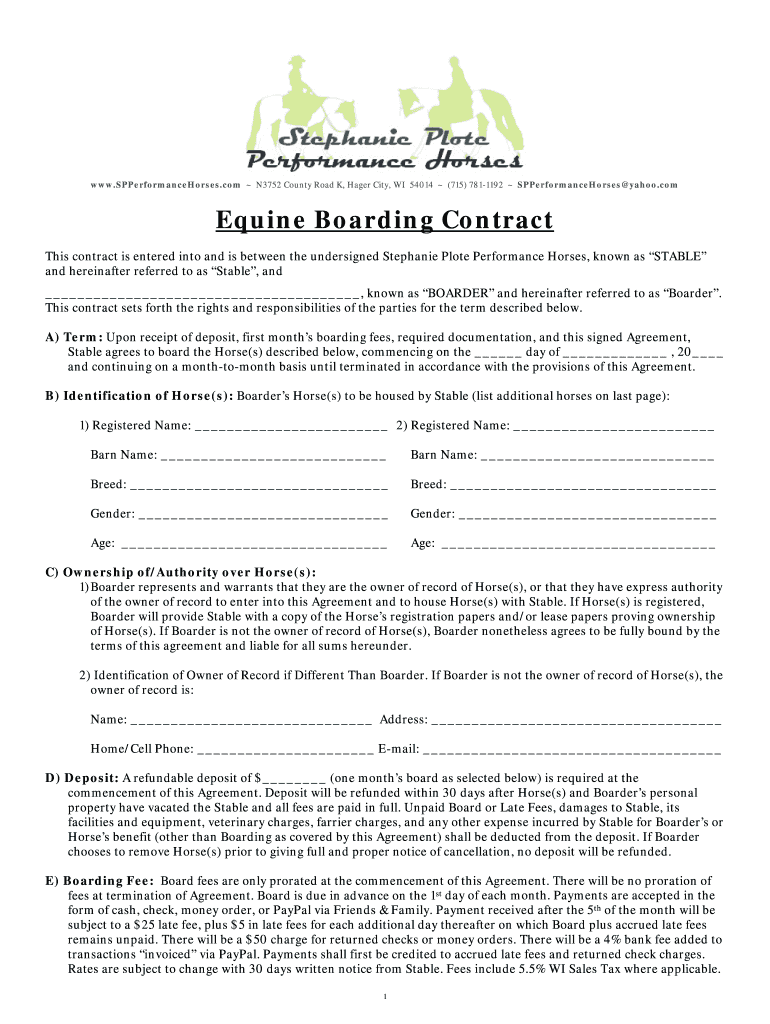
A Wisconsin Boarding Contract is a legally binding agreement between a facility owner and an individual seeking to board an animal, often a horse. This contract outlines the terms and conditions under which the facility will care for the boarder's animal. It establishes responsibilities for both parties, including care routines, feeding, and daily maintenance. The contract serves to protect the rights of both the stable owner, referred to as the "Stable," and the animal owner, known as the "Boarder."
Detailed in this contract are the types of services provided, payment structures, and termination clauses. It specifies any additional services that the stable may offer and the fees associated with these services. For example, additional care such as grooming or specialized feeding might incur extra costs. This arrangement reduces misunderstandings and potential conflicts by making both parties fully aware of their obligations.
How to Use the Wisconsin Boarding Contract
Utilizing a Wisconsin Boarding Contract involves understanding and adhering to the terms specified within the document. Before signing, both parties should carefully review each clause to ensure mutual understanding and agreement. The contract typically includes sections on horse care, payment terms, veterinary care, and liability waivers.
To effectively use the contract, boarders should:
- Identify the specific services required for their animal.
- Confirm payment schedules and methods.
- Understand the protocol for veterinary care and emergencies.
- Recognize the inherent risks involved in equine boarding and how they are mitigated through the contract.
For stables, it ensures they maintain consistent standards of care, manage client expectations, and provide clarity on procedures for special circumstances, such as unforeseen horse behavior or medical emergencies.
Key Elements of the Wisconsin Boarding Contract
The Wisconsin Boarding Contract contains several crucial components designed to ensure comprehensive coverage of all aspects of animal boarding. Key elements include:
- Identification of Parties and Animals: Clearly identifies both the Stable and the Boarder, including contact information and a detailed description of the boarded animal.
- Service Details: Outlines the specific services provided, including feeding routines, stall cleaning, and turnout schedules.
- Financial Terms: Specifies the boarding fees, payment schedule, and additional costs for extra services, ensuring clarity and transparency.
- Veterinary Care: Describes the procedures for routine and emergency veterinary care, including who is financially responsible for these services.
- Liability Waivers: Addresses the inherent risks of equine activities and includes waivers to protect the stable from certain liabilities, safeguarding both parties legally.
Legal Use of the Wisconsin Boarding Contract
The legal use of a Wisconsin Boarding Contract involves its enforceability under state laws governing animal care and contracts. This contract is designed to protect both parties' rights, facilitating smooth operations for the stable and offering peace of mind to the boarder.
Legally, it is important for:
- Outlining dispute resolution methods, should conflicts arise.
- Defining acceptable animal care standards according to Wisconsin law.
- Specifying grounds for termination of services and contract renewal conditions.
Parties are encouraged to seek legal advice to ensure the contract aligns with local regulations and comprehensively covers all necessary legal aspects.
Steps to Complete the Wisconsin Boarding Contract
Completing the Wisconsin Boarding Contract involves several important steps to ensure that all necessary information is accurately captured. Here’s how to complete the contract effectively:
- Contact Information: Fill in the names, addresses, and contact details of the Stable and the Boarder.
- Animal Identification: Provide detailed information about the animal, including breed, age, health status, and any special needs.
- Service Agreement: Agree upon and list all services to be provided, such as feeding, cleaning, and exercise.
- Payment Details: Specify the fee structure, payment intervals, and due dates. Include provisions for late payments if applicable.
- Emergency Protocol: Outline the preferred veterinary procedures in emergencies, including who bears the costs.
- Signature and Date: Both parties must sign and date the contract to signify their agreement to the terms listed.
Using this structured approach ensures that the contract is thorough and clearly states the expectations and obligations of both parties.
Important Terms in the Wisconsin Boarding Contract
The Wisconsin Boarding Contract may use specific terms critical for understanding the agreement:
- Boarder: The individual who owns the animal being boarded.
- Stable: The facility owner or operator responsible for housing and caring for the boarder's animal.
- Boarding Fee: The financial amount paid by the boarder for care and housing of the animal.
- Liability Waiver: A clause that limits the stable's liability in the event of accidents or injuries.
- Service Agreement: Details the exact services that the stable will provide, and conditions under which they are delivered.
Understanding these terms ensures both parties are aware of their rights and obligations within the agreement.
State-Specific Rules for the Wisconsin Boarding Contract
Wisconsin state laws impact various aspects of the boarding contract. Key state-specific considerations include:
- Animal Welfare Laws: The contract must adhere to Wisconsin's provisions on animal care standards.
- Liability Regulations: State statutes may have specific requirements for liability waivers, affecting how limitations are presented within the contract.
Wisconsin’s legal framework includes aspects of equine safety and boarding practices that contracts must respect. Consulting legal professionals familiar with Wisconsin laws can ensure compliance and protect both parties’ interests effectively.