




01. Edit your hair extension waiver form template online
Type text, add images, blackout confidential details, add comments, highlights and more.

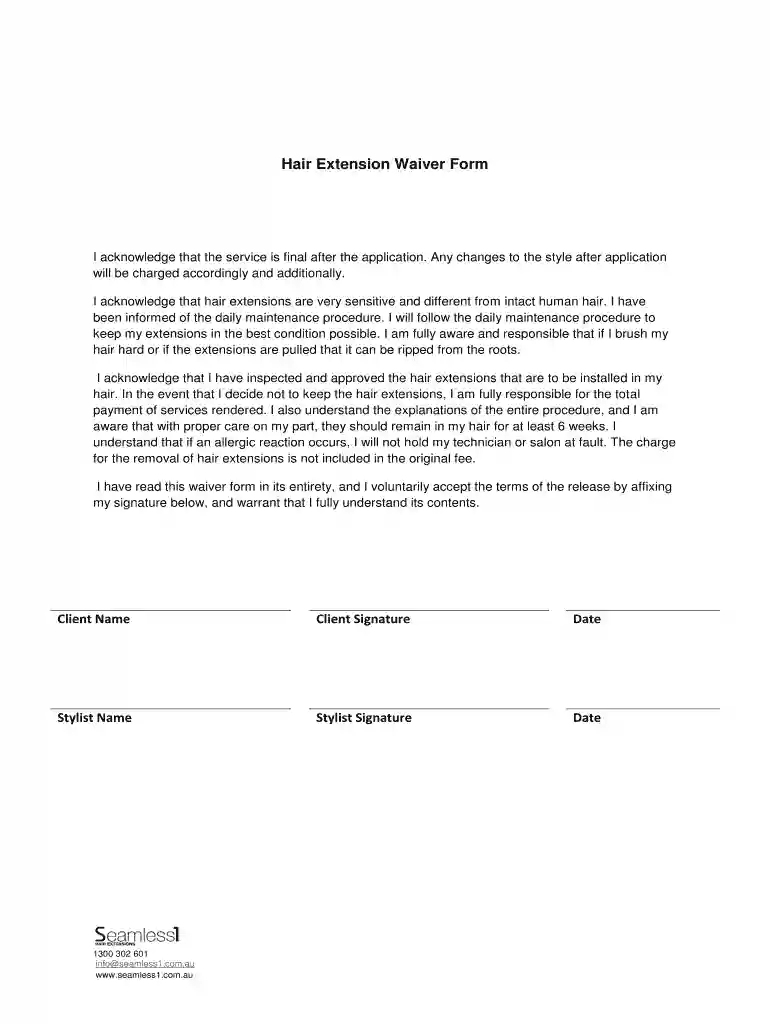
Type text, add images, blackout confidential details, add comments, highlights and more.

Draw your signature, type it, upload its image, or use your mobile device as a signature pad.

Send waiver extensions via email, link, or fax. You can also download it, export it or print it out.
The "hair extension waiver form" is a critical document used in salons and beauty establishments to outline the terms and conditions associated with receiving hair extension services. It serves as a formal acknowledgment from clients, affirming their understanding of the procedures, potential risks, and responsibilities associated with hair extensions. This form primarily aims to protect businesses by ensuring clients are aware of the important aspects related to maintenance, potential allergic reactions, and financial obligations. By signing the waiver, clients are legally agreeing to the terms outlined, which minimizes disputes and enhances the professionalism of the service offered.
Using the hair extension waiver form involves a straightforward process designed to streamline interactions between service providers and clients. Here's a step-by-step breakdown:
Review the Contents: Before presenting the form to a client, ensure it comprehensively details all necessary information regarding the service, including any potential risks and aftercare requirements.
Explain the Terms: During the initial consultation, discuss the sections of the form with the client. Clarify any queries regarding maintenance practices and potential sensitivities related to hair extensions.
Client's Agreement: After explaining, give clients sufficient time to read and understand the waiver. Reiterate the importance of carefully reviewing the document before signing.
Collect Signatures: Once the client agrees with the terms, obtain their signature, making the form legally binding. If available, use digital signing tools to simplify the process if you provide this service online.
Ensure Documentation: Keep a signed copy in the client's file for business records. If applicable, provide a duplicate to the client for their records.
The hair extension waiver form should encompass several key elements to address all necessary legal and procedural aspects:
Client Information: Collect the client’s full name, contact information, and any relevant medical history related to allergies or skin sensitivities.
Service Details: Outline the specific type of hair extension service being provided, including types of extensions and application methods.
Potential Risks: Detail possible adverse reactions or complications, such as allergic responses or dissatisfaction with aesthetic results.
Aftercare Instructions: Provide comprehensive guidance on caring for the extensions to ensure their longevity and minimize damage.
Financial Obligations: Clearly state any costs associated, including service charges and potential penalties for missed appointments or damages to the extensions.
Acknowledgment and Consent: Include a space for the client to acknowledge their understanding of the terms and consent to proceed with the service.
Completing the hair extension waiver form is a methodical process that ensures all crucial elements are addressed:
Gather Necessary Information: Prior to the appointment, gather essential client details like personal information and any pertinent medical history.
Facilitate Discussion: During the service consultation, go through each part of the form, ensuring the client comprehends every aspect.
Highlight Critical Sections: Relate specific points such as maintenance guidelines and the importance of following them to prolong the life of the extensions.
Obtain Consent: After thorough explanation and client understanding, proceed to collect the client’s signature for legal binding.
Finalize Documentation: Ensure that the signed waiver is filed correctly and a copy provided to the client, if necessary, for transparency and record-keeping.
Understanding the terminology associated with the hair extension waiver form is crucial for both service providers and clients:
Extensions: Artificial hair integrations, usually applied for increased length or volume.
Allergic Reaction: Adverse response some clients might experience to certain chemicals or materials used in hair extensions.
Aftercare: A set of instructions provided to clients post-service to maintain the quality and longevity of the extensions.
Consent: A formal agreement from the client, acknowledging their understanding and acceptance of all outlined terms.
Liability Waiver: The legal provision shielding the service provider from certain responsibilities, provided the terms are mutually agreed upon.
Legally, the hair extension waiver form serves as a contract between the service provider and the client, ensuring clarity and mutual understanding of the service terms:
Contractual Obligation: Once signed, the document acts as a legal contract, compelling clients to adhere to agreed terms, reducing scope for disputes.
Protective Measure: Shields businesses from potential legal action by establishing clear terms regarding potential risks and accepted responsibilities.
Binding Agreement: A signed waiver binds the client to the outlined conditions, which may include aftercare duties and financial responsibilities.
Dispute Resolution: In cases where claims arise, the form provides a go-to document demonstrating the original agreement and acceptance of risks by the client.
Variations in regulatory requirements mean the hair extension waiver form might need tailoring to meet state-specific guidelines:
Licensing Requirements: Certain states mandate specific licenses for the provision of hair extension services, which should be verifiable in the waiver.
Health & Safety Protocols: Compliance with state health and safety standards is critical, and these should be affirmed within the waiver form.
Consumer Rights: Familiarize and incorporate any state-specific consumer rights related to personal care services to ensure compliance and transparency.
Legal Compliance: Ensure the waiver language aligns with local legal standards, particularly concerning rights waiver and consumer protection laws.
The hair extension waiver form is predominantly used by:
Salons and Beauty Parlors: Establishments providing beauty services that require a legal acknowledgment from clients.
Independent Hair Stylists: Freelance or traveling professionals who provide extension services at varied locations.
Cosmetology Schools: Educational institutions offering practical training in hair extensions, using waiver forms to ensure students comprehend risks and care requirements.
Specialty Shops: Boutique services focusing specifically on hair extensions or makeovers that might expose particular risks.
These include a diverse range of service providers, each necessitating the form to protect their business and clientele legally.


We've got more versions of the hair extension waiver form template form. Select the right hair extension waiver form template version from the list and start editing it straight away!
| Versions | Form popularity | Fillable & printable |
|---|---|---|
| 2016 | 4.9 Satisfied (53 Votes) |
Approving paperwork on a mobile device is fast, simple, and doesn’t require software installation when you have an account with DocHub. Log in from any browser, fill in your empty fields with your data, and click on Sign → Create your signature. You can draw your electronic signature just as you usually do on paper, add its image to your hair extension waiver form, or type in your name and stylize its look. No matter what option you select, your document will be valid.
You can easily edit and complete your extensions client waiver on any iOS device. Open an internet browser of your liking, visit the DocHub website, authorize or create a new account, add your file for editing, and make your required adjustments. Our service is mobile-friendly, so using its functions on your smartphone will be a no-brainer, even on the first try.
At DocHub, your data security is our priority. We follow HIPAA, SOC2, GDPR, and other standards, so you can work on your documents with confidence.


