







Definition & Meaning
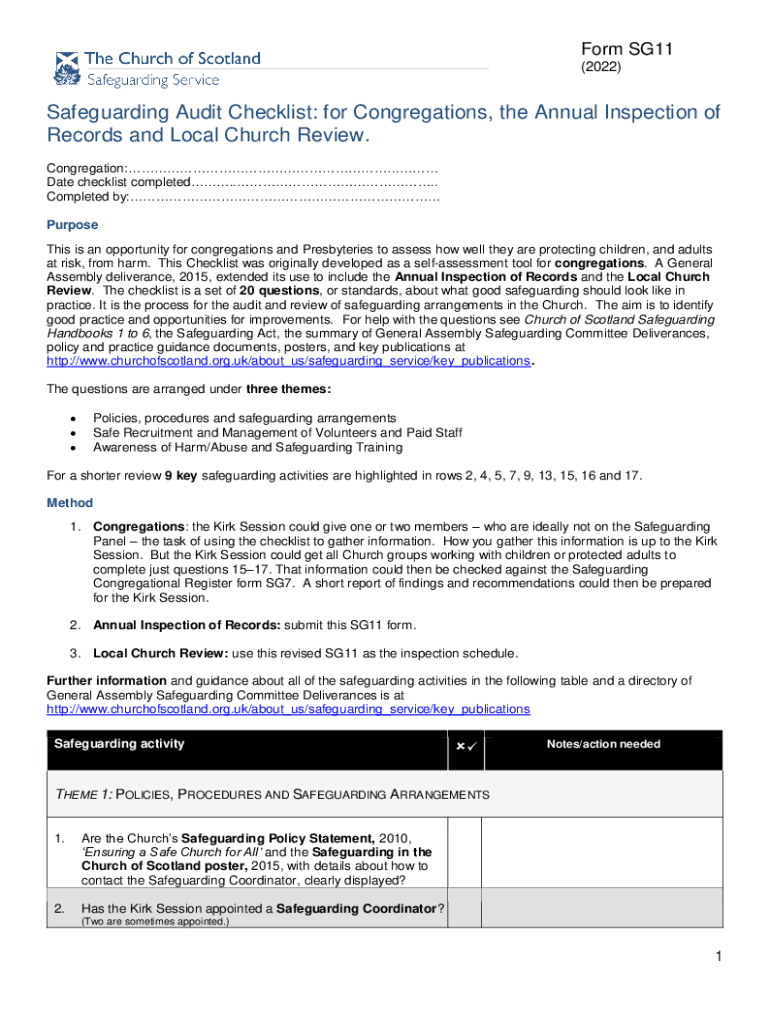
The "Church of Scotland Handbook for Child Protection Unit 8 - forms" serves as a crucial tool for congregations within the Church of Scotland, specifically focusing on safeguarding children and vulnerable adults. This set of forms is essential in documenting and standardizing procedures related to child protection, ensuring that congregation members follow the necessary protocols to prevent harm and promote safety.
Importance of Protocol
- Consistency: Establishes a universal approach across different congregations.
- Documentation: Serves as an official record, ensuring accountability.
- Guidance: Provides a clear framework and guidelines for compliance with child protection policies.
Elements Included
- Policies and Procedures: Detailed steps for implementing child protection protocols.
- Monitoring Tools: Checklists and forms to assess adherence and identify areas for improvement.
How to Use the Church of Scotland Handbook for Child Protection Unit 8 - Forms
Utilizing the Church of Scotland Handbook for Child Protection forms involves several key steps to ensure correct implementation.
Step-by-Step Process
-
Familiarization:
- Review the purpose and overall content of the handbook.
- Understand the underlying principles of safeguarding within the church context.
-
Training:
- Conduct training sessions for staff and volunteers on how to correctly fill out and use the forms.
- Emphasize the importance of each section and the correct procedures for completion.
-
Implementation:
- Follow the provided guidelines to incorporate the forms into regular practice.
- Use the forms during relevant situations, such as new staff recruitment or after an incident.
-
Review:
- Schedule periodic reviews to ensure the forms are utilized correctly and make updates as necessary.
- Gather feedback from staff to optimize the use of the forms.
Practical Examples
- Recruitment: Use forms to verify safe recruitment practices for new staff or volunteers.
- Incident Reporting: Document any occurrences of concern and subsequent actions taken.
Key Elements of the Church of Scotland Handbook for Child Protection Unit 8 - Forms
The forms contain several critical components designed to protect at-risk individuals.
Main Components
- Personal Information Sections: Required fields for collecting relevant data from individuals involved.
- Consent and Declaration Areas: Sections where signatories confirm information accuracy and agree to procedures.
- Incident Documentation Fields: Spaces for detailing specific incidents, including responses and outcomes.
Steps to Complete the Church of Scotland Handbook for Child Protection Unit 8 - Forms
Completing these forms accurately is essential for maintaining compliance and ensuring the protection of vulnerable groups.
Detailed Instructions
-
Complete Personal Information:
- Gather all necessary personal details for individuals involved.
-
Fill Out Relevant Sections:
- Enter required details in sections like policies, procedures, and training documentation.
-
Review for Accuracy:
- Double-check for any errors or omissions before submission.
-
Obtain Required Signatures:
- Ensure all necessary parties have signed the form to validate its contents.
-
Submit Appropriately:
- Deliver forms to the designated authority for review or filing.
Examples of Using the Church of Scotland Handbook for Child Protection Unit 8 - Forms
Understanding how to apply these forms in real-world scenarios enhances their effectiveness.
Use Cases
- New Volunteer Induction: Use forms to document that new volunteers understand and commit to safeguarding policies.
- Safeguarding Audits: Utilize forms during audits to measure adherence to child protection standards.
Real-World Scenarios
- Emergency Incidents: Immediately document details of any safeguarding concerns and actions taken.
- Committee Reviews: Regularly review forms during safeguarding committee meetings to ensure ongoing compliance.
Legal Use of the Church of Scotland Handbook for Child Protection Unit 8 - Forms
The legal framework surrounding the use of these forms emphasizes their significance in safeguarding practices.
Compliance Requirements
- Adherence to Safeguarding Laws: Ensures compliance with relevant child protection legislation.
- Data Protection: Maintains confidentiality and privacy of all personal data collected.
Responsibilities
- Record Keeping: Churches must securely store completed forms as part of their official records.
- Legal Accountability: Forms serve as evidence in the event of any legal scrutiny or investigations.
Eligibility Criteria
Determining who needs to use these forms depends on specific roles and responsibilities within the congregation.


Key Participants
- Church Leaders: Responsible for implementation and oversight of child protection measures.
- Volunteers: Required to acknowledge and adhere to safeguarding policies.
- New Recruits: Must complete relevant sections as part of the onboarding process.
Consideration Factors
- Position Held: Specific requirements may vary depending on the individual’s role within the church.
- Type of Interaction: Forms required for individuals regularly interacting with children or vulnerable adults.
Important Terms Related to Church of Scotland Handbook for Child Protection Unit 8 - Forms
A clear understanding of key terminology used within these forms is crucial for accurate completion and compliance.
Glossary of Terms
- Safeguarding: The process of protecting vulnerable people from abuse, harm, or neglect.
- Mandatory Reporting: A legal requirement to report suspicions or evidence of harm to authorities.
- Confidentiality: The ethical principle of keeping personal information private.
Contextual Examples
- Safeguarding Training: Topics covered may include recognizing signs of abuse and how to report them.
- Incident Reporting: Details procedures to follow when suspicion or evidence of abuse arises.




