
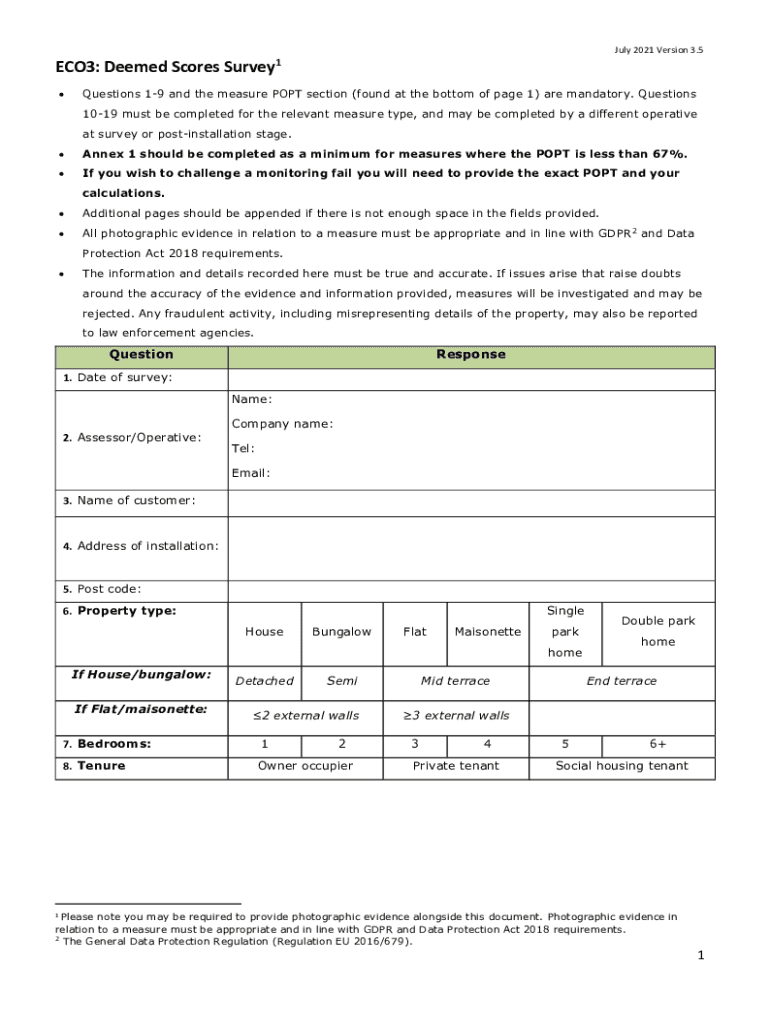







Definition and Purpose of the ECO Deemed Scores Survey
The ECO Deemed Scores Survey is a critical form designed to assess the energy efficiency measures implemented in properties. Managed by Ofgem, it plays an integral role in the Energy Company Obligation (ECO) program, which aims to reduce carbon emissions and tackle fuel poverty. The survey provides a framework to evaluate various energy-saving measures, with the objective of determining the Percentage of Overall Performance Target (POPT) for each property. This measurement is essential for energy suppliers to ensure compliance with statutory obligations and to promote energy efficiency within residential environments.
Key Components of the ECO Deemed Scores Survey
- Heating Measures: This includes the evaluation of new heating systems installed within the property, such as boilers, electric heat pumps, and smart thermostats.
- Insulation Types: Assesses the installation of different insulation types, including loft, cavity wall, and solid wall insulation, which significantly impact a property's thermal efficiency.
- Compliance Standards: Ensures measures adhere to set standards and guidelines for energy efficiency, reducing the risk of fraudulent activities by validating all installed features against specified criteria.
Steps to Complete the ECO Deemed Scores Survey
Successfully completing the survey involves a step-by-step evaluation process that encompasses several key actions:
- Gather Necessary Information: Collect detailed data on existing and newly implemented energy measures within the property.
- Photographic Evidence: Capture images of installed measures as proof for compliance checks and submit them alongside the survey.
- Calculate POPT: Use the provided guidelines to determine the Percentage of Overall Performance Target, ensuring accuracy in calculations to align with regulatory requirements.
- Submission: Ensure that all sections of the survey are completed and submitted by the designated deadline to facilitate timely assessment.
Special Considerations
- Data Protection: Comply with GDPR by ensuring all information gathered is securely stored and handled in accordance with data protection laws.
- Accuracy Requirement: Perform verification checks on collected information to prevent submission errors that could affect evaluation outcomes.
Who Typically Uses the ECO Deemed Scores Survey
The ECO Deemed Scores Survey is primarily used by energy suppliers who must meet certain energy efficiency targets imposed by national regulations. However, it is also relevant to:
- Property Owners and Landlords: Seeking to understand the energy efficiency status of their properties for lowering utility costs and increasing property value.
- Energy Auditors and Consultants: Engaged by property owners or energy suppliers to carry out detailed assessments and ensure compliance with energy-saving initiatives.


Case Studies
- Residential Buildings: Typically benefit from the assessment to showcase improvements in energy efficiency post-renovation or retrofitting.
- Commercial Properties: While less common, can also utilize the survey to align with sustainability goals and regulatory demands.
Key Elements of the ECO Deemed Scores Survey
Understanding the fundamental elements of this survey is crucial for effective completion and compliance:
- Mandatory Questions: Must be answered to provide comprehensive data on energy measures.
- Documentation Requirements: A clear record of evidence supporting each installed measure, necessary for validation and processing.
- Feedback System: Allows for follow-up and clarification on specific measures, ensuring precision in reporting and evaluation.
Critical Considerations
- Timing: Ensure submissions are made within prescribed timelines to avoid penalties or delays in processing.
- Precision: Accurate measurement and reporting are essential, particularly in the context of determining energy savings and compliance levels.
Legal Requirements for Using the ECO Deemed Scores Survey
The survey aligns with legal frameworks and standards that govern energy efficiency improvements:
- ESIGN Act Compliance: Any electronic submissions should meet the criteria for legally binding electronic records and signatures.
- Energy Efficiency Standards: All measures reported in the survey must conform to national and regional standards for energy conservation.
Enforcement and Penalties
- Non-compliance: May result in financial penalties or legal repercussions for energy providers failing to meet mandated efficiency targets.
- Audit Trails: Provide an evidence-based pathway to trace survey data back to source documentation, enhancing transparency and accountability.
Obtaining the ECO Deemed Scores Survey
Access to the survey is typically facilitated through energy regulatory bodies or directly via Ofgem. It is important to ensure that you obtain the latest version, as regulatory updates could impact the survey's content and focus areas.
Distribution Channels
- Online Platforms: Commonly available for digital download, enabling easy access and completion of the survey.
- Third-party Consultants: Can also provide guidance and access to the necessary documentation for completion and submission.
Form Submission Methods for the ECO Deemed Scores Survey
Submission of the completed survey can typically be done through several channels:
- Online Portal: Allows for straightforward electronic submissions directly to Ofgem or a designated regulatory body.
- Mail or In-person: While less common, these methods remain viable for parties preferring traditional submission routes.
Real-world Application
- Energy Suppliers: Often use proprietary systems integrated with Ofgem's submission portals for seamless data transfer and survey compliance.
- Consultants: Frequently manage submissions on behalf of clients, ensuring adherence to legal and procedural requirements.
Software Compatibility and Tools
The survey's digital format ensures compatibility with popular document management and editing software, enhancing accessibility for users:
- DocHub Compliance: Provides editing and form-filling capabilities that align with the survey's requirements, facilitating streamlined workflows and collaborative review processes.
- Integration Tools: Support exporting and importing documents across systems, ensuring a seamless data flow between various platforms and stakeholders.
Scenario-Based Usage
- Property Managers: Utilize document management software to handle multiple properties' surveys efficiently.
- Energy Consultants: Often rely on integrated tools to maintain submissions and keep track of compliance in real-time.




