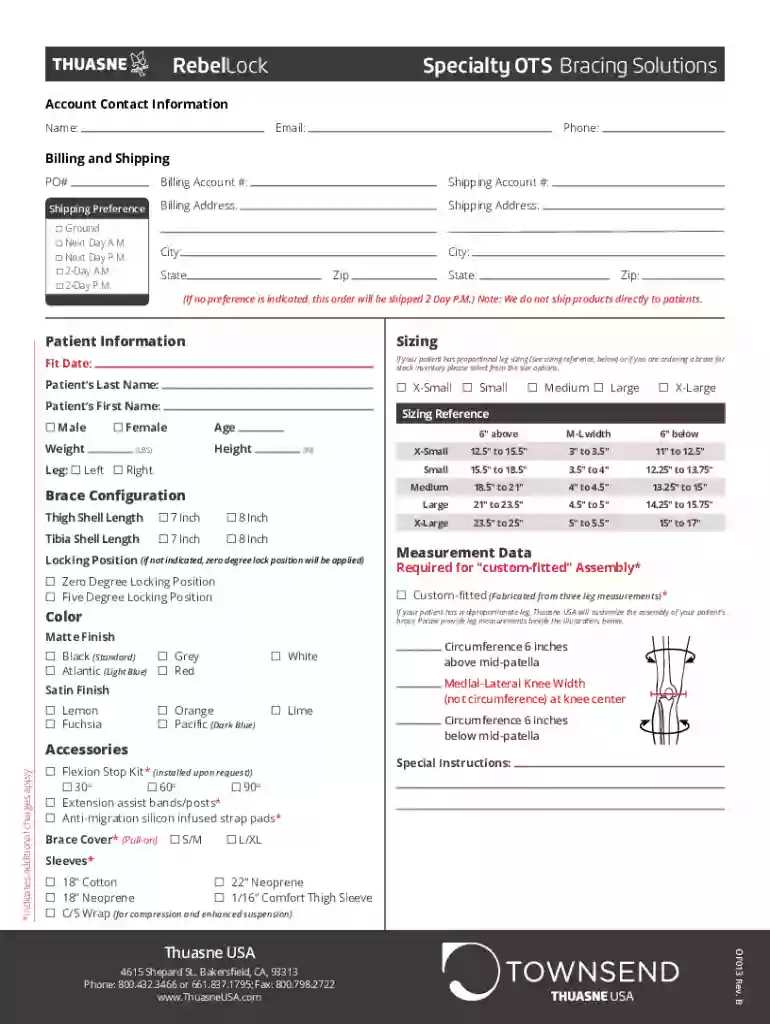
Durable Medical Equipment, Prosthetics Orthotics & 2026

Get Form
Durable Medical Equipment, Prosthetics Orthotics & Preview on Page 1

Here's how it works

01. Edit your form online
Type text, add images, blackout confidential details, add comments, highlights and more.

02. Sign it in a few clicks
Draw your signature, type it, upload its image, or use your mobile device as a signature pad.

03. Share your form with others
Send it via email, link, or fax. You can also download it, export it or print it out.

Definition and Importance

Durable Medical Equipment, Prosthetics, Orthotics, and Supplies (DMEPOS) are essential medical devices and aids designed to support the functional needs of patients, especially those with mobility challenges or physical disabilities. This category encompasses items like wheelchairs, prosthetic limbs, orthotic supports, and other necessary equipment that aids in daily living and enhances the quality of life. Understanding DMEPOS helps healthcare providers, patients, and caretakers make informed decisions regarding the best equipment to suit individual needs.

Key Characteristics of DMEPOS

  • Durability: These items are built to withstand repeated use and provide long-term support.
  • Medical Purpose: They serve a crucial role in the treatment or management of medical conditions or injuries.
  • Customization: Many DMEPOS items can be tailored to the specific requirements of the user, such as prosthetics and orthotic supports.

How to Use Durable Medical Equipment, Prosthetics, and Orthotics

Using DMEPOS effectively involves understanding each item's function, limitations, and correct usage. Correct usage not only ensures safety but also maximizes the benefits of the equipment.

Steps for Effective Use

  1. Consultation: Engage with healthcare professionals to understand which equipment best meets the patient's needs.
  2. Training: Many suppliers offer training on the safe and effective use of devices. This can entail supervised practice sessions or instructional materials.
  3. Adjustment and Fitting: Particularly with prosthetics and orthotics, a proper fit is essential for comfort and functionality. Follow-up visits may be necessary to adjust the equipment as needed.
  4. Maintenance: Regular maintenance is vital to ensure the longevity and proper functioning of the equipment. Follow the manufacturer's guidelines for cleaning and upkeep.

Steps to Obtain Durable Medical Equipment, Prosthetics, and Orthotics

Acquiring DMEPOS requires a combination of prescriptions, insurance approvals, and selecting the right suppliers.

Process Overview

  1. Prescription: A healthcare provider must assess and prescribe the necessary equipment.
  2. Insurance Verification: Determine coverage options through health insurance plans, including Medicare or Medicaid, as applicable.
  3. Choose a Supplier: Utilize a network of approved suppliers to ensure quality and coverage assistance.
  4. Approval and Delivery: Complete any required forms and obtain authorization from the insurance provider. Once approved, coordinate the delivery and fitting of the equipment with the supplier.

Key Elements of the Durable Medical Equipment, Prosthetics, and Orthotics Form

Understanding the critical components of the DMEPOS form ensures accurate completion and processing.

Essential Components

  • Patient Information: Personal and contact details of the patient.
  • Medical Justification: A detailed explanation of the medical necessity for the equipment.
  • Equipment Details: Description and specifications of the requested device, including size and customization needs.
  • Provider Credentials: Information about the prescribing healthcare provider and their qualifications.
  • Insurance Details: Policy numbers and authorization documentation from the insurance provider.

Important Terms Related to Durable Medical Equipment, Prosthetics, and Orthotics

Familiarity with the terminology used in the context of DMEPOS enhances understanding and communication among all parties involved.

Glossary of Terms

  • Durable Medical Equipment (DME): Medical devices designed for long-term use, such as oxygen tanks and wheelchairs.
  • Prosthetics: Artificial devices that replace missing body parts.
  • Orthotics: Supports and braces that assist in limb functionality and alignment.
  • Referral: A recommendation from a healthcare provider for specific medical equipment.
  • Reimbursement: The process by which expenses for equipment are covered by insurance plans.

Legal Use of the Durable Medical Equipment, Prosthetics, and Orthotics

Complying with legal requirements ensures the ethical and covered use of DMEPOS items.

Legal Considerations

  • Prescriptions: Only allow the acquisition and use of DMEPOS with a legitimate prescription.
  • Insurance Compliance: Follow insurance stipulations for coverage and reimbursement to avoid fraud allegations.
  • Documentation: Maintain thorough records of all transactions, prescriptions, and communications related to DMEPOS.

Examples of Using Durable Medical Equipment, Prosthetics, and Orthotics

Real-world scenarios highlight how DMEPOS items are utilized effectively.

Practical Scenarios

  • Prosthetics: An athlete using a prosthetic limb for competitive sports demonstrates how these devices can restore an active lifestyle.
  • Orthotics: An adult with scoliosis using an orthotic brace to prevent further curvature of the spine and maintain posture.
  • DME: Elderly individuals using power wheelchairs for mobility independence, participating in social activities without assistance.

State-Specific Rules for Durable Medical Equipment, Prosthetics, and Orthotics

State regulations can affect the acquisition and usage of DMEPOS, making awareness of these laws essential.

State Regulations and Variations

  • Medicaid Coverage: Each state may have different coverage policies under Medicaid for DMEPOS.
  • Licensing Requirements: Suppliers and providers must adhere to specific state licensing regulations to operate legally.
  • Custom Equipment Approval: Some states require additional approval processes for custom DMEPOS orders based on medical needs.

See more Durable Medical Equipment, Prosthetics Orthotics & versions

We've got more versions of the Durable Medical Equipment, Prosthetics Orthotics & form. Select the right Durable Medical Equipment, Prosthetics Orthotics & version from the list and start editing it straight away!
Versions Form popularity Fillable & printable
2020 4.2 Satisfied (38 Votes)
2011 4 Satisfied (30 Votes)
be ready to get more

Complete this form in 5 minutes or less

Get form

Got questions?

We have answers to the most popular questions from our customers. If you can't find an answer to your question, please contact us.
Contact us
Durable medical equipment (DME) is equipment that helps you complete your daily activities. It includes a variety of items, such as walkers, wheelchairs, and oxygen tanks. Medicare usually covers DME if the equipment: Is durable, meaning it is able to withstand repeated use.
Durable Medical Equipment, Prosthetic Devices, Prosthetics, Orthotics, Supplies (DMEPOS)
Durable medical equipment (DME) is equipment that is considered medically necessary as prescribed by a physician for use in a patients home.
DURABLE MEDICAL EQUIPMENT Reference List ItemCoverage Mobile Geriatric Chair (See Rolling Chairs.) Motorized Wheelchairs (See Wheelchairs (power operated).) Muscle Stimulators Covered for certain conditions. (See 250.4 of the NCD Manual.) Nebulizers Covered if patients ability to breathe is severely impaired.123 more rows
Medicare payment for most durable medical equipment (DME), prosthetics, orthotics, and supplies (DMEPOS), as well as surgical dressings, therapeutic shoes, and parenteral and enteral nutrition, is based on a fee schedule amount.

Security and compliance

At DocHub, your data security is our priority. We follow HIPAA, SOC2, GDPR, and other standards, so you can work on your documents with confidence.

Learn more
ccpa2
pci-dss
gdpr-compliance
hipaa
soc-compliance
be ready to get more

Complete this form in 5 minutes or less

Get form

People also ask

Standard DMEPOS: A durable medical equipment, prosthetic, orthotic or supply that will adequately meet the medical needs of the patient and is not designed or customized for a specific individuals use. Activities of Daily Living: Includes eating, toileting, transferring, bathing, dressing and mobility.
Medicare-covered DME includes, but isnt limited to: Blood sugar meters. Blood sugar test strips. Canes. Commode chairs. Continuous passive motion machines, devices accessories. Continuous Positive Airway Pressure (CPAP) machines. Crutches. Hospital beds.

Related links